

Civilizations rise and fall across the world, but few have endured with the continuity, influence, and profound impact that China has left on Asia. For more than 4,000 years, Chinese civilization has shaped the identity, culture, philosophy, political systems, language patterns, trade networks, and social fabric of nearly every society in East and Southeast Asia. To understand Asia today—whether in terms of culture, geopolitics, food, diplomacy, or economic power—one must first understand China’s long and complex civilization.
China’s story is not simply a sequence of dynasties. It is a continuous civilizational thread that survived wars, invasions, division, revolution, and dramatic modernization. Through these cycles of disruption and renewal, China consistently influenced its neighbors—Korea, Japan, Vietnam, Mongolia, Tibet, and later Southeast Asia—acting as a cultural gravitational force that set the foundation for what we recognize as “Asian civilization” today.
This article explores how China’s 4,000-year legacy shaped Asia’s development, from early dynastic systems to Confucian philosophy, literature, science, trade, statecraft, and even modern-day geopolitics. It is a journey across time—one that reveals how ancient ideas continue to shape the world of today.
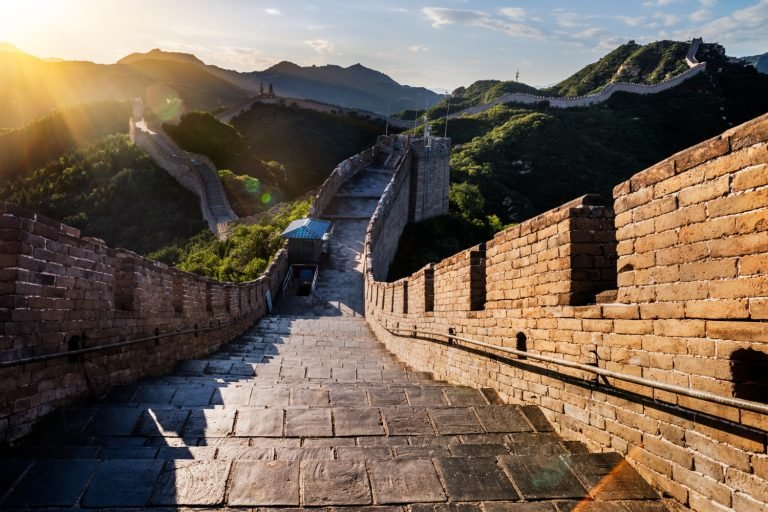
Chinese civilization began along the fertile Yellow River, where early agricultural communities developed systems of writing, bronze technology, and political organization. By the time of the Xia, Shang, and Zhou dynasties, China had established a cultural identity based on moral governance, ritual systems, ancestor worship, and the Mandate of Heaven—an idea that leaders rule with divine approval so long as they maintain virtue and harmony.
This concept would become one of China’s greatest intellectual exports. It shaped how rulers in Korea, Japan, and Vietnam envisioned authority, legitimacy, and political stability. The belief that rulers must uphold moral duty influenced Asia’s governance for centuries.
The Zhou dynasty also laid the foundation for Chinese philosophy. Thinkers like Confucius, Laozi, Mozi, and Sun Tzu emerged during the Spring and Autumn and Warring States periods, offering ideas on social order, ethics, warfare, governance, and cosmology. Their ideas did not remain within China’s borders. They spread across East Asia and became part of the shared cultural DNA of an entire region.
Confucianism: The Moral Glue of East Asian Society
No philosophical system has shaped Asia as profoundly as Confucianism. At its core, Confucianism emphasizes family loyalty, respect for elders, social hierarchy, education, harmony, and moral governance. It became the code of conduct for imperial China’s bureaucracy and served as its political backbone for nearly two millennia.
Confucian principles traveled through diplomatic missions, trade networks, and cultural exchange into the courts of Korea’s Joseon dynasty, Japan’s Tokugawa shogunate, and Vietnam’s imperial dynasties. These societies adopted Confucian exams, rituals, filial piety, and administrative models from China. Even today, the emphasis on education, respect for hierarchy, group harmony, and strong family units can be traced back to Confucian influence.
Across Asia, modern behaviors—such as removing shoes in homes, respecting elders, valuing academic achievement, and maintaining social harmony—owe their foundations to Confucian thinking. China’s philosophical legacy continues to shape cultural norms from Seoul to Tokyo, Hanoi to Singapore.
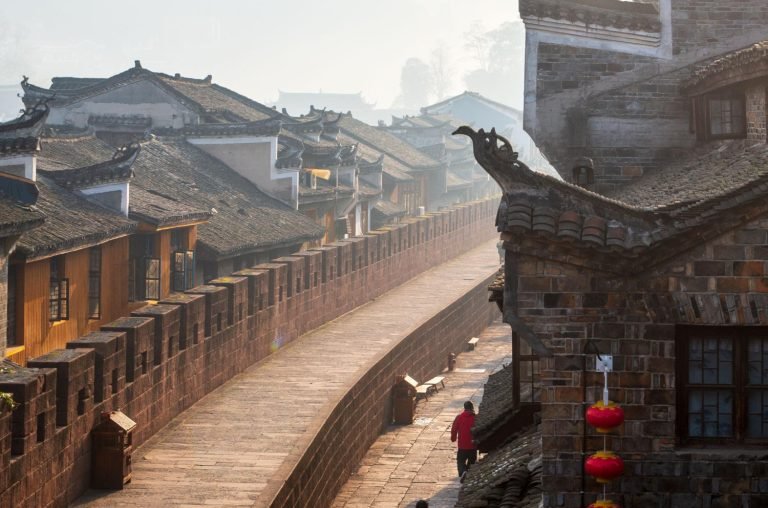
The Imperial Bureaucracy: China’s Model of Governance for Asia
China developed one of the world’s earliest and most advanced bureaucratic systems. The imperial examination system, introduced during the Han and refined under the Tang and Song dynasties, allowed scholars to earn government positions based on merit rather than birth. This idea of meritocracy became a cornerstone of Asian governance.
Neighboring nations adopted variations of China’s bureaucratic model. Korea implemented examinations that mirrored China’s civil service system for nearly a thousand years. Vietnam used Chinese-style governance structures throughout its imperial era. Japan selectively adapted Chinese administrative models while integrating them with samurai and shogunal rule. The influence of Chinese statecraft laid the foundation for political institutions across Asia.
Even in the modern world, the centralized governance models in many East Asian countries reflect this legacy. From Japan’s tightly organized ministries to South Korea’s focus on elite bureaucratic recruitment, China’s historical influence remains embedded in the region’s political DNA.
Language and Writing: Chinese Characters as Asia’s Linguistic Backbone
For centuries, Chinese writing was the shared written language of East Asia. Chinese characters, known as hanzi, were adapted into Japan as kanji, into Korea as hanja, and into Vietnam as chữ Nôm. They became the script of scholarship, government, literature, and religious writings.
This shared written culture allowed ideas, poetry, scientific knowledge, and religious texts to travel seamlessly across cultures. Asian diplomatic communication for more than a thousand years took place in classical Chinese, functioning much like Latin in medieval Europe.
Even though Korea and Vietnam later adopted phonetic writing systems, the influence of Chinese script remains evident in vocabulary, grammar, and cultural expressions. Japan still uses thousands of kanji in everyday life. Chinese characters became one of China’s most powerful cultural exports, leaving a lasting imprint on regional identity.
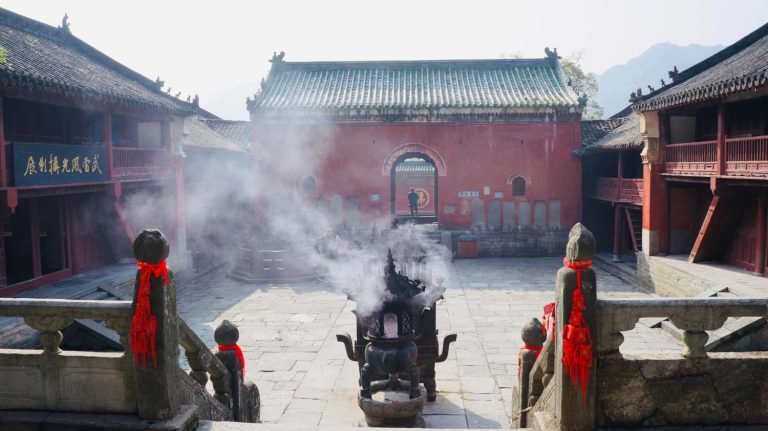
While Buddhism originated in India, it was China’s interpretation of Buddhism that spread throughout East Asia. Chinese monks translated complex Sanskrit texts into Chinese, adapted Buddhist teachings to Chinese culture, and then carried them to Korea and Japan. China’s Buddhist schools—Chan (later Zen in Japan), Pure Land, Tiantai, Huayan—became foundational influences on Asian spiritual life.
Taoism, with its focus on natural harmony, balance, and inner cultivation, also shaped Asian thought, medicine, martial arts, and spiritual practices. Concepts such as yin and yang, qi energy, herbal medicine, acupuncture, and feng shui spread widely and became part of regional culture.
Today, temples across Asia—from Kyoto’s Zen monasteries to Seoul’s Jogyesa temple—reflect China’s spiritual heritage, showing how belief systems moved across borders and took root in new landscapes.
China’s contribution to Asia extended far beyond culture and governance. Through the Silk Road, China connected East Asia with Central Asia, the Middle East, and parts of Europe. Trade in silk, ceramics, spices, tea, and technologies transformed economic relationships across the region.
Chinese inventions such as papermaking, the compass, printing, and gunpowder spread across Asia and later the world. These technological exports revolutionized communication, navigation, and warfare, shaping global history.
The Silk Road also carried ideas, religions, artistic styles, and scientific knowledge. Chinese cartography influenced Asian maritime trade. Chinese ceramics became luxury goods across Southeast Asia. Chinese art styles influenced Korean celadon, Japanese pottery, and Vietnamese imperial ceramics. Trade tied the region together through shared tastes, technologies, and aesthetics.
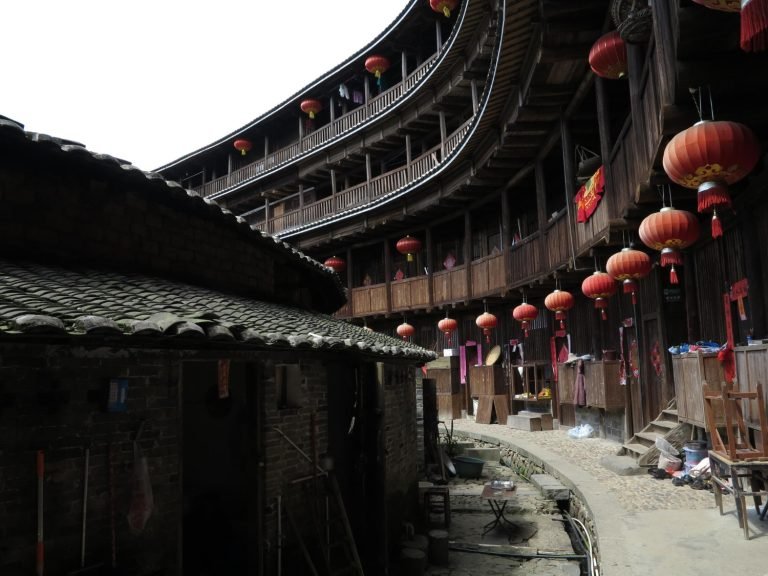
China’s Influence on Japan, Korea, and Vietnam: A Civilizational Web
To understand Asia, one must see the network of cultural exchange radiating outward from China.
Japan absorbed Chinese philosophy, writing, architecture, government models, calendars, and religious practices. Yet Japan reinterpreted these influences through its native traditions, creating a unique hybrid culture that blends Chinese roots with Japanese aesthetics.
Korea served as both a recipient and transmitter of Chinese ideas. The Korean peninsula adopted Confucian governance, Chinese writing, agricultural techniques, and technology. Korea then played a crucial role in transmitting Buddhism and Chinese culture to Japan.
Vietnam adopted Chinese political structures, writing systems, and philosophies during periods of close cultural exchange. The Vietnamese court used Chinese-style bureaucracy, ceremonies, and literature for centuries, while also adapting these influences to their local identity.
The influence was not one-directional; China learned from its neighbors as well. But China remained the center of gravity for East Asia’s cultural and political orbit.
China and Southeast Asia: Trade, Diaspora, and Shared Identity
China’s influence extended deep into Southeast Asia through trade, migration, diplomacy, and cultural exchange. Chinese merchants settled in Thailand, Malaysia, Indonesia, Singapore, and the Philippines, blending with local cultures and shaping urban centers.
Chinese communities played key roles in commerce, agriculture, and diplomacy across the region. Their influence can still be seen in language (loanwords), food (dim sum, noodles, stir fry), festivals (Lunar New Year), and architecture (shop houses, temples, guild halls).
Modern nations such as Singapore and Malaysia preserve strong Chinese cultural elements. The Thai royal court historically maintained diplomatic relations with Chinese dynasties. The overseas Chinese diaspora became an economic powerhouse that shaped regional trade networks.
This shared cultural heritage is part of the reason Asia remains interconnected today. Chinese civilization created bridges that tied the region together long before modern globalization.
Revolutions, Republics, and the Modern Chinese State
China’s influence did not end with the imperial era. The twentieth century brought dramatic transformation that reshaped both China and Asia. The fall of the Qing dynasty in 1911 ended more than 2,000 years of imperial rule and marked the rise of the Republic of China. Later, the establishment of the People’s Republic of China in 1949 introduced a new political model that would influence Asia’s geopolitics for generations.
China’s rapid industrialization, economic reforms under Deng Xiaoping, and emergence as a global power redefined Asia’s economic landscape. Manufacturing, technology, trade agreements, and diplomatic initiatives such as the Belt and Road Initiative extend China’s influence across continents.
In modern Asia, China is not merely a historical influence but a major economic and political force shaping the future of the region. Its economic growth influences the markets of Korea and Japan, drives trade flows in Southeast Asia, and defines regional geopolitics.
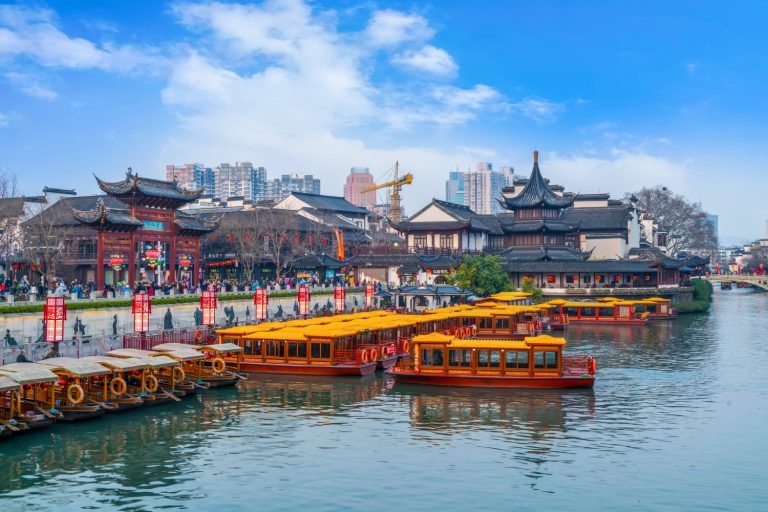
Cultural Continuity: Why China’s Civilization Endured
What makes China’s civilization exceptional is its continuity. Despite invasions, civil wars, dynastic changes, and political transformations, its cultural foundations remained intact. Confucian ethics, Chinese writing, philosophical traditions, and centralized governance survived through every era. China absorbed foreign influences such as Buddhism, steppe nomadic cultures, and Western ideas, yet always reinterpreted them through its own civilizational identity.
This resilience allowed China to remain a cultural anchor for Asia. Neighboring societies looked to China as a model of order, stability, prosperity, and intellectual refinement. Even today, the Chinese worldview—emphasizing harmony, hierarchy, collective identity, and moral governance—continues to shape how Asia views leadership, society, and development.
China’s persistence as a civilizational state explains why its influence remains strong across the region. Modern China inherits not just territory, but a deep-rooted cultural identity that informs everything from education to diplomacy.
China’s Role in Shaping Asia Today
To travel across Asia today is to see the imprint of Chinese civilization everywhere. From the Confucian-inspired education systems of Japan and Korea to the Chinese festivals celebrated in Bangkok and Singapore, the region carries a shared cultural heritage. Asian philosophies of social harmony, hierarchy, and family responsibility stem from Chinese thought. Asian cuisines incorporate Chinese cooking techniques and ingredients. Even Asia’s approach to economic development reflects Confucian values of discipline, long-term planning, and collective welfare.
Moreover, China’s modern economic presence influences supply chains, manufacturing, trade, tourism, urban development, and technological innovation across Asia. China’s diplomatic initiatives shape regional alliances, while its technological advancements influence markets and industries.
Asia’s identity as a region—culturally, economically, and politically—is inseparable from China’s civilizational legacy.
China’s 4,000-year-old civilization is not merely a historical chapter. It is a living force that continues to shape Asia today, influencing how societies think, govern, worship, eat, trade, and interact. From ancient dynastic systems and Confucian philosophy to writing systems, spiritual traditions, and modern geopolitics, China has been the cultural backbone of Asia.
Understanding China is essential for understanding Asia. It is the story of a civilization that not only endured but thrived, adapted, and reshaped an entire region. As Asia rises on the global stage, China’s historical influence becomes even more significant. The future of Asia will continue to be written with the legacy of its oldest civilization at its core.

Comment (0)