6-7 hours
Daily Tour
3 people
English
When travelers visit Thailand, the first images that often come to mind are temples, beaches, and street food.
But deep within the hills of Kanchanaburi lies one of Southeast Asia’s most important war sites—
a railway carved through mountains, jungles, and unforgiving terrain by prisoners of war during World War II.
This tour from Bangkok takes you through a chapter of history that shaped not only Thailand, but the entire Asia-Pacific region.
The Death Railway and Hellfire Pass stand today as reminders of human suffering, resilience, and the desperate will to survive.
Planetale invites you to step into this story—not as a passive tourist, but as a witness walking through the echoes of the past.
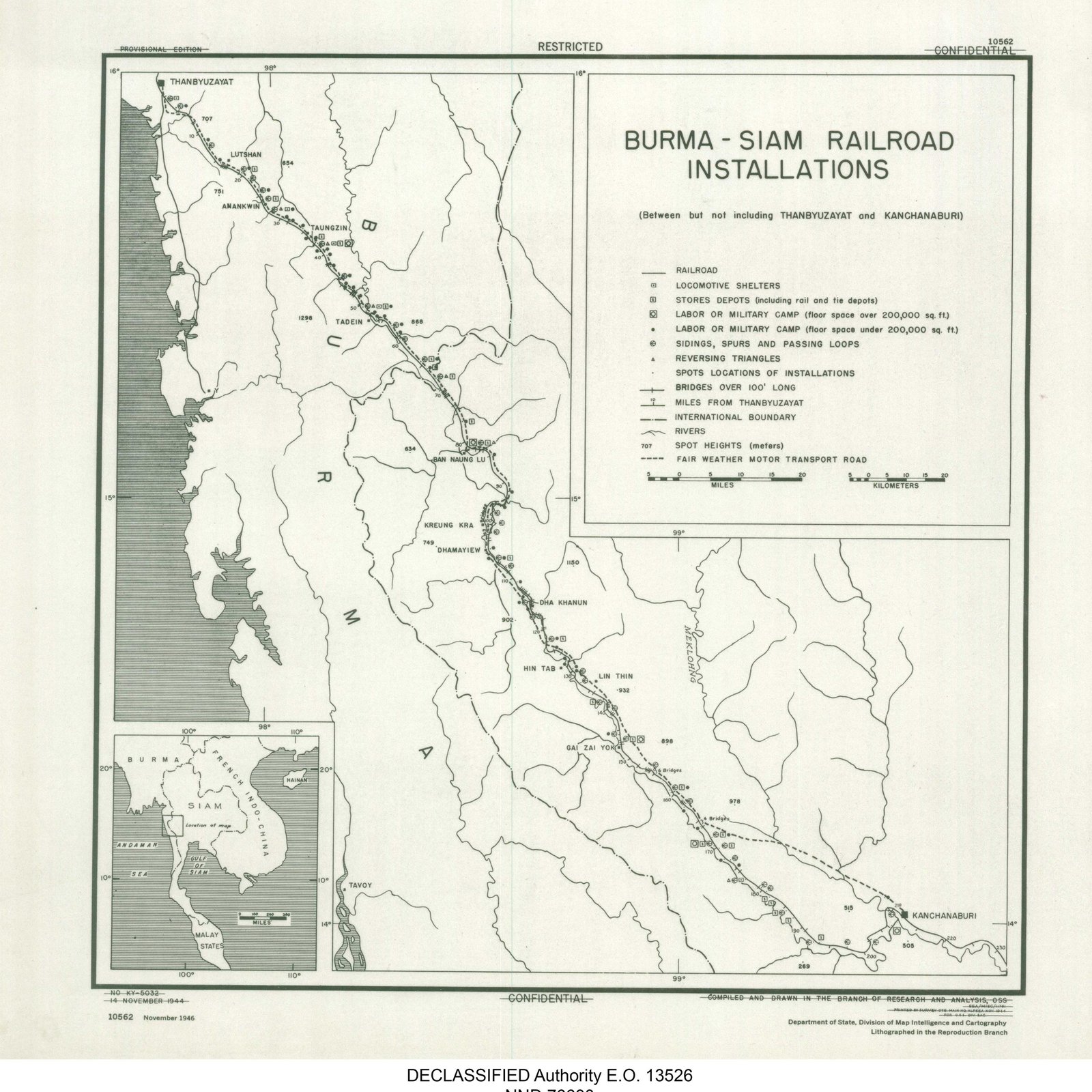
In 1942, Japan occupied much of Southeast Asia and needed a land route to supply its troops in Burma.
The solution: an ambitious 415-kilometer railway connecting Thailand and Myanmar.
It seemed impossible.
The route cut through dense jungle, cliffs, rivers, and mountains.
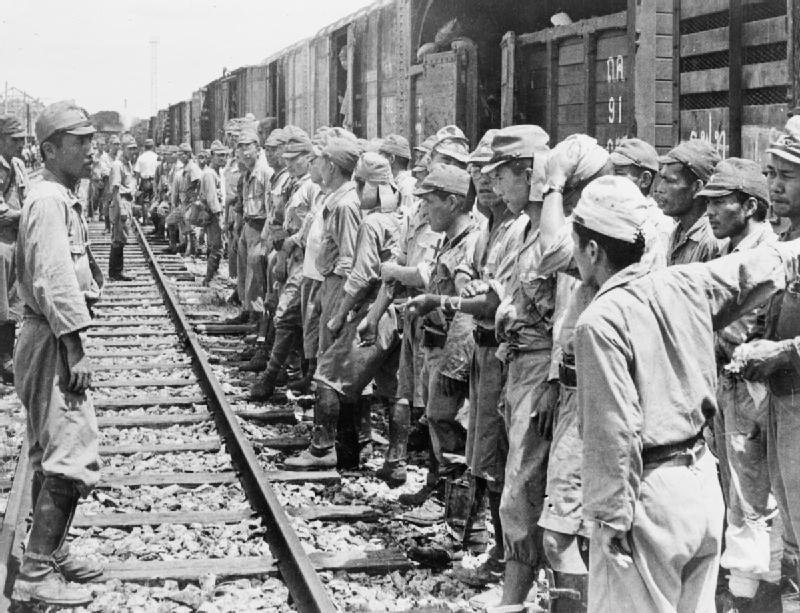
But the Japanese military pushed forward, using forced labor—including:
Allied prisoners of war (POWs)
Asian civilians and conscripted laborers (Romusha)
Conditions quickly deteriorated due to hunger, disease, exhaustion, and brutal oversight.
More than 100,000 people died.
Thus, the name: Death Railway.
Hellfire Pass—one of the most iconic sites on this tour—was the deepest and most difficult cutting along the entire route, carved by hand through solid rock.
At night, the scene was illuminated by bamboo torches, casting shadows reminiscent of hell.
That is how survivors gave the place its haunting name.
Your tour starts early in the morning as you depart Bangkok and head west toward Kanchanaburi.
Slowly, the city’s skyscrapers fade into countryside views—rice fields, rivers, and mountain silhouettes.
This quiet drive serves as a moment of transition, preparing travelers for the emotional weight of Kanchanaburi’s historical sites.
Along the way, your guide shares essential context:
Why the railway was built
Who constructed it
The brutal timeline of the project
How Thailand was involved in the war
By the time you arrive, the story feels alive.
Your first stop is the Kanchanaburi War Cemetery, where nearly 7,000 Allied prisoners of war are buried.
White stone markers line the green lawns in precise symmetry, each engraved with names, ages, and messages from loved ones.
Some of them were only 18 or 19 years old.
Walking here is a solemn experience.
The flowers, the silence, and the carefully maintained grounds reflect the world’s commitment to remembrance.
It is difficult not to feel the emotional impact of standing before rows of graves—each representing a life cut short by war.
This museum is one of the most informative on the subject of the Death Railway.
Through maps, photographs, models, and survivor accounts, you begin to understand the true scale of the project.
You’ll learn about:
Life inside the labor camps
Malnutrition and disease
The speed-up periods (the “Speedo”)
Stories of bravery and camaraderie
How workers resisted despite impossible odds
It is impossible to leave the museum unchanged.
Few war sites are as iconic as this bridge.
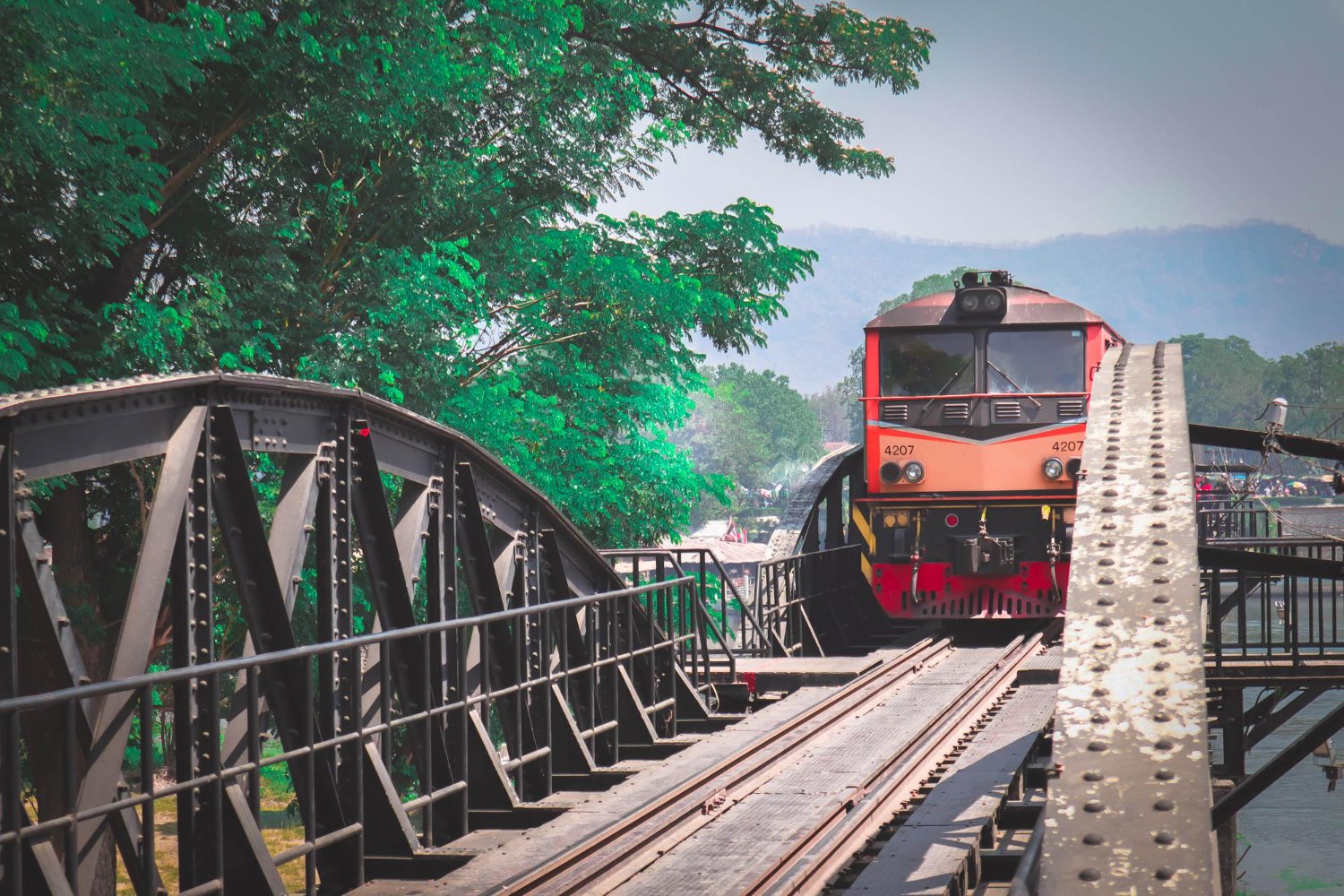
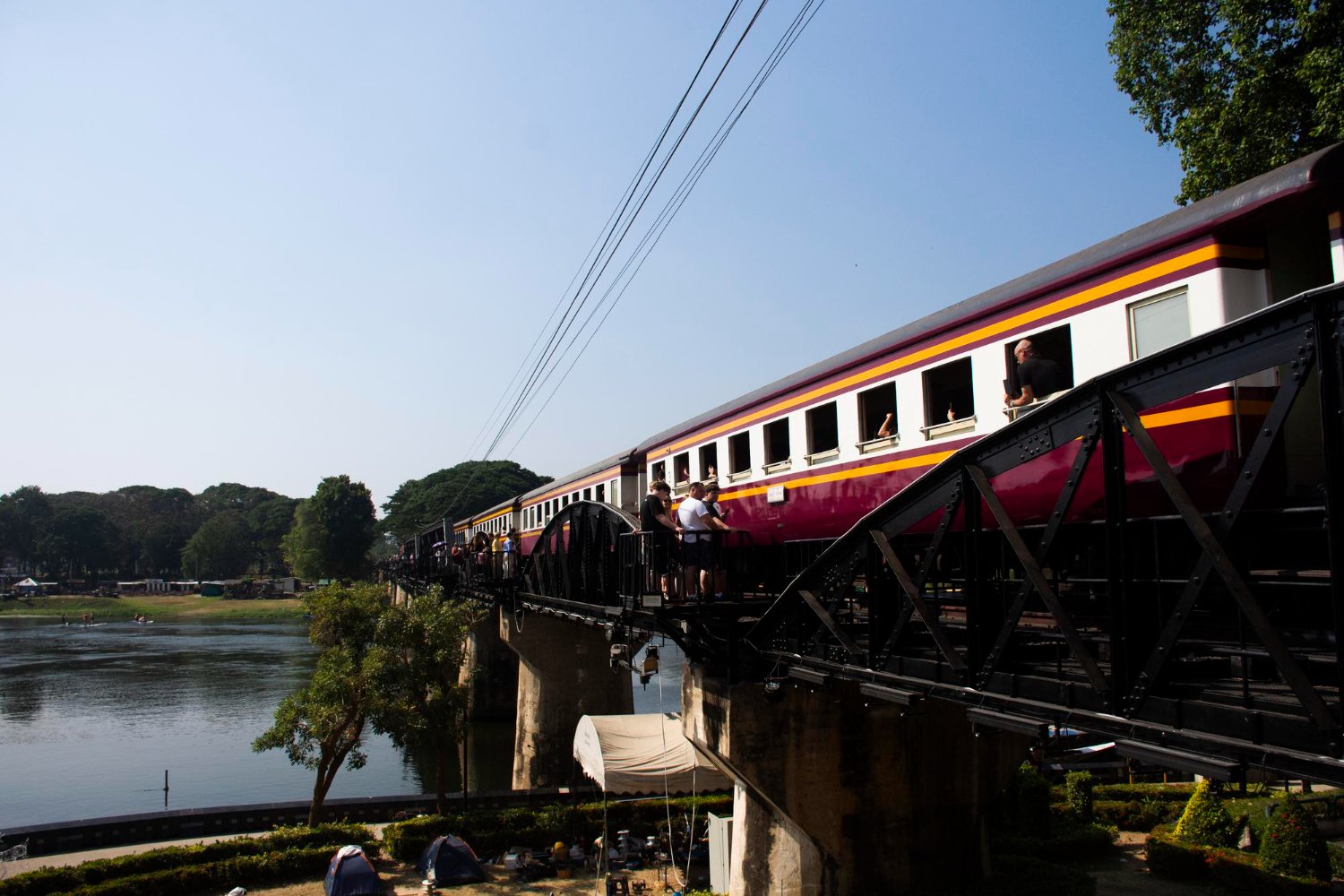
Made famous by books and films, the River Kwai Bridge has become a global landmark symbolizing wartime sacrifice.
Though the film is not historically accurate, it brought attention to the lives of the POWs who built the railway.
Today, you can walk along the bridge, look out over the calm water, and try to imagine the chaos of its construction.
The contrast between past and present is striking.
This is the most powerful moment of the tour.
At Hellfire Pass, you will walk the same path POWs once used—through a section of land carved by hand with picks, shovels, and basic tools.
The cut through the rock is steep and narrow, echoing with footsteps from the past.
As you walk the memorial trail, your guide explains:
Why Hellfire Pass was so deadly
How long workers labored each day
The role of disease and starvation
Survivor stories passed down through generations
The site’s silence is overwhelming.
It is not just a place—it is an experience.
Many travelers describe Hellfire Pass as the most moving location in Thailand.
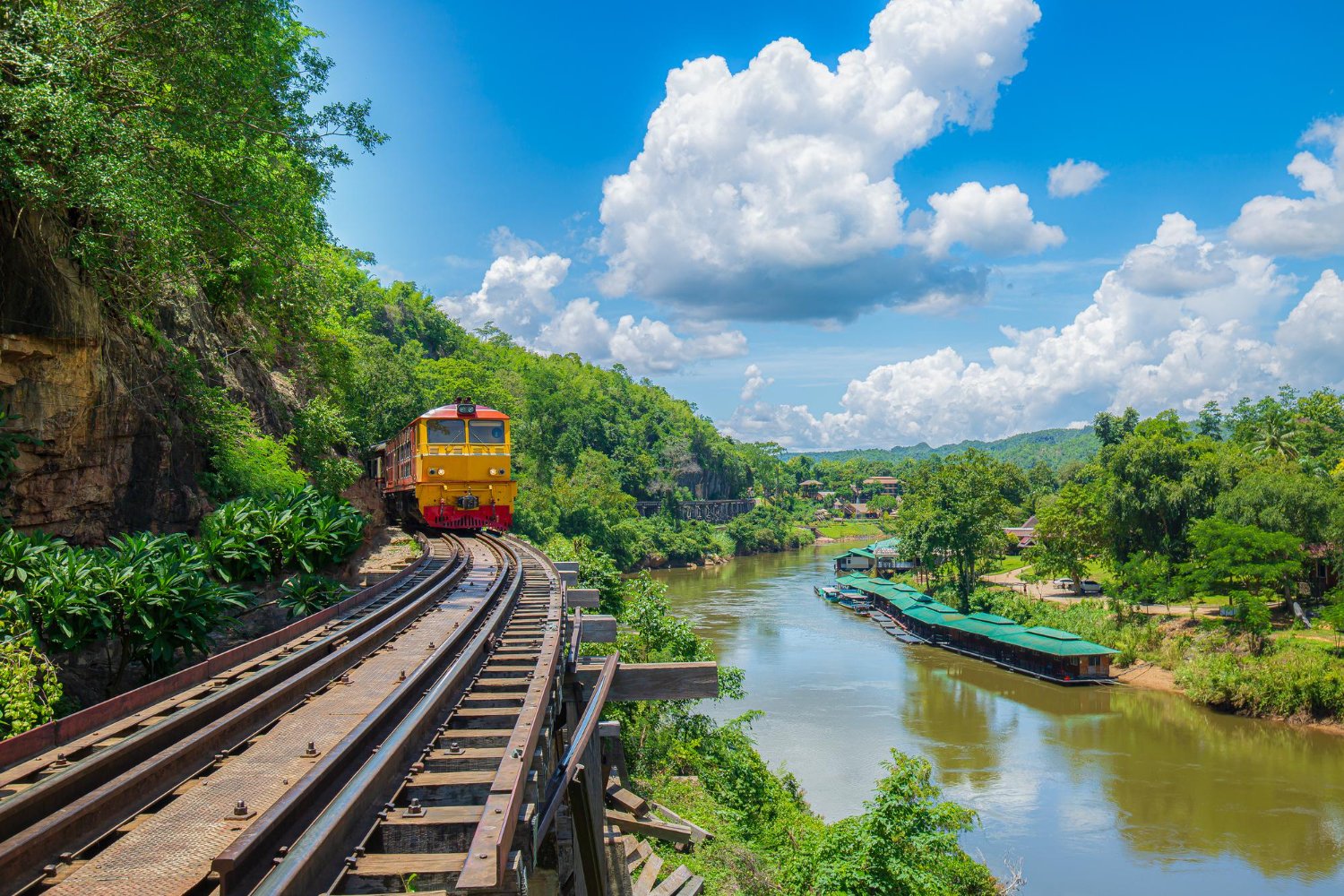
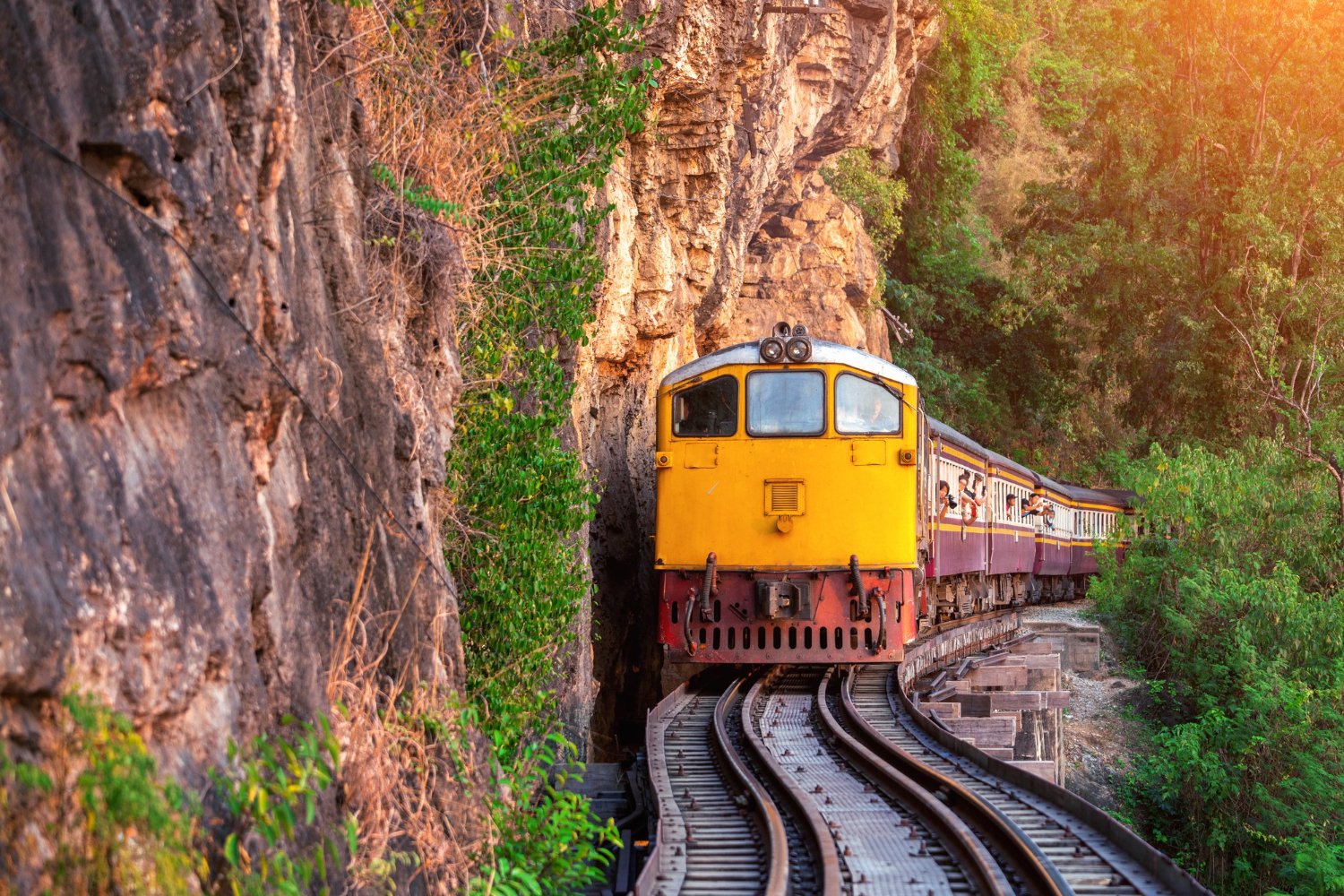
After visiting Hellfire Pass, you board a train that follows part of the historic railway route.
The wooden seats and open windows take you back in time.
As you rumble along the tracks, look out the window:
Rivers wind through the jungle
Cliffs rise dramatically beside the tracks
Local villages appear between palm trees
The river glows under afternoon sunlight
This is not just a scenic train ride.
It is a living museum—one that honors those who built the railroad under unimaginable conditions.
Your tour includes a local Thai lunch, typically served by the riverside.
Dishes vary, but often include classics like:
Stir-fried vegetables
Thai curries
Fried rice or noodles
Fresh fruits
As you eat, guides often continue sharing personal stories, photographs, or additional historical details.
The human connection makes the history feel even more real.
After a full day of learning, exploring, and witnessing, you travel back to Bangkok.
The drive offers quiet time for reflection.
The Death Railway is a reminder:
Of the cost of war
Of the endurance of the human spirit
Of the need to remember so history does not repeat itself
This tour is not “sad” in a negative sense — it is meaningful, grounding, and deeply educational.
Planetale recommends it to any traveler curious about Southeast Asia’s wartime past.
It includes uneven terrain but is manageable for most people with moderate fitness.
Yes, but parents should be aware of sensitive historical content.
Comfortable shoes, sunscreen, hat, and water.
Photos are allowed at most locations, except in certain museum areas.








Leave a review