

Few events in modern Asian history have generated as much historical gravity, emotional weight, and international debate as the episode known as the Rape of Nanking. It stands not merely as a tragic moment within a larger conflict, but as a turning point in how the world understands the consequences of modern warfare on civilian populations. To explore this chapter is not to seek shock or sensationalism, but to confront how history records suffering, how memory is preserved or contested, and why acknowledging difficult truths remains essential for reconciliation and peace in Asia.
Before the war, Nanjing was one of China’s most important cities. As the capital of the Republic of China, it served as a political, cultural, and symbolic center. The city’s history stretched back centuries, marked by imperial dynasties, scholarship, and strategic importance along the Yangtze River. In the early twentieth century, Nanjing embodied China’s attempt to modernize while retaining continuity with its past. Universities, government institutions, and residential neighborhoods coexisted within its ancient walls, giving the city an identity shaped by both tradition and reform.
The outbreak of full-scale war between China and Japan in 1937 dramatically altered this landscape. Following intense fighting in Shanghai, Japanese forces advanced inland toward Nanjing. The Chinese government, facing military pressure, relocated its capital westward. This decision left the city vulnerable and created an atmosphere of uncertainty among the remaining population. Many civilians fled, while others stayed behind due to age, poverty, or belief that the city would be spared extensive harm. The defense of Nanjing collapsed rapidly under the weight of military defeat, opening the city to occupation.
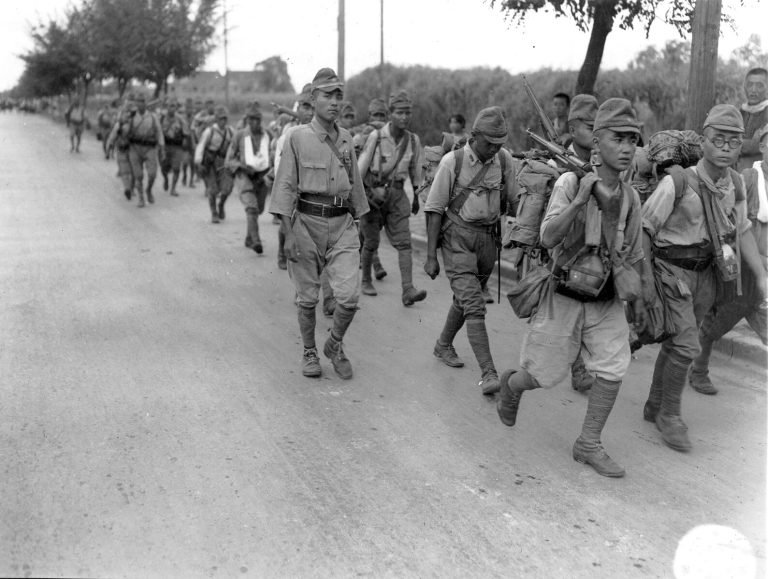
Credit Image: Federal government of the United States
What followed in Nanjing has been documented through a vast body of historical evidence. Chinese records, foreign diplomatic reports, photographs, burial records, and postwar testimonies collectively establish that large-scale atrocities occurred during the early period of occupation. These actions targeted civilians and disarmed soldiers, violating established norms of warfare even by the standards of the time. The historical consensus among mainstream scholars recognizes the scale and seriousness of these events, though estimates and interpretations continue to be discussed within academic circles.
One of the most significant aspects of the Nanjing tragedy is the presence of international witnesses. Western diplomats, missionaries, journalists, and doctors remained in the city and documented what they observed. Their diaries, letters, and reports provide contemporaneous accounts that later became crucial sources for historians. The establishment of the Nanking Safety Zone by foreign residents saved many lives and stands as a rare example of humanitarian intervention during the chaos of occupation. These witnesses did not write as political actors but as individuals attempting to record reality as they saw it, lending global visibility to events that might otherwise have remained obscured.
The international response at the time was limited. The world in the late 1930s was already moving toward global conflict, and attention was fragmented. While reports reached foreign governments, decisive action did not follow. This lack of immediate accountability would later shape postwar debates about justice, responsibility, and historical recognition. After the Second World War, the Nanjing atrocities were addressed during war crimes trials, contributing to the broader effort to establish legal frameworks for crimes against civilians. These proceedings marked an important step in the evolution of international humanitarian law.
Despite extensive documentation, the memory of Nanjing has remained contested. In the decades following the war, political tensions in East Asia influenced how the event was discussed, taught, or omitted in different countries. In China, the massacre became a symbol of national suffering and resilience. In Japan, public discourse evolved unevenly, shaped by internal debates about wartime responsibility, national identity, and historical education. These differing narratives have periodically strained diplomatic relations, demonstrating how unresolved history continues to affect the present.
Understanding the Rape of Nanking therefore requires more than recounting facts. It demands attention to how societies remember trauma and how historical narratives are constructed. Memory is not static. It is shaped by education systems, museums, public commemorations, and political priorities. In Nanjing today, memory is preserved through formal institutions such as the Memorial Hall of the Victims in Nanjing Massacre. The site emphasizes mourning, documentation, and reflection rather than spectacle. Visitors encounter historical context, survivor testimonies, and archival materials designed to educate future generations.

Traveling to Nanjing with historical awareness offers a different perspective on the city. Modern Nanjing is vibrant, expansive, and forward-looking. Skyscrapers rise near ancient gates, and bustling streets coexist with quiet parks and historical landmarks. Yet beneath this modern surface lies a carefully preserved memory culture. The memorial sites do not dominate the city but exist as spaces of contemplation, inviting visitors to pause and consider the weight of history without overwhelming the present.
For travelers, responsible engagement with such sites involves respect and understanding. The purpose of visiting is not consumption of tragedy, but learning. Reading historical background, approaching memorials with sensitivity, and recognizing local perspectives are essential. Nanjing’s approach to remembrance reflects a broader Chinese effort to integrate historical trauma into national consciousness while emphasizing peace and international understanding.
The importance of the Nanking Massacre extends beyond China and Japan. It serves as a case study in how modern societies confront mass violence, how denial and acknowledgment shape reconciliation, and how historical truth is defended through evidence. It also highlights the role of international observers and the importance of documentation in preventing historical erasure. In a world where misinformation can spread rapidly, the careful preservation of primary sources remains crucial.
For Asia, the legacy of Nanjing underscores the interconnected nature of regional history. The events of the 1930s and 1940s did not occur in isolation. They were part of a broader collapse of imperial systems, the rise of militarism, and the devastating human cost of total war. Recognizing this shared history allows for deeper dialogue across borders and generations.
The Rape of Nanking remains one of Asia’s darkest chapters not because it defines the region, but because it challenges it. It forces societies to ask how they will remember suffering, how they will teach future generations, and how they will transform memory into a commitment to peace. History, when confronted honestly, becomes not a source of endless conflict but a foundation for understanding.
Comment (0)