

In February 1942, one of the most powerful empires in modern history suffered its most shocking defeat in Asia. Singapore, long celebrated by the British as an “invincible fortress,” fell in just seven days. The collapse stunned the world, shattered the myth of Western military superiority in the East, and reshaped the political destiny of Southeast Asia. To understand why Singapore fell so quickly, one must look beyond battlefield movements and examine the deeper layers of strategy, imperial arrogance, structural weakness, and psychological warfare that converged in those fateful days.
Before the war, Singapore occupied a central position in Britain’s Asian empire. It was not merely a port city but a symbol of imperial control, prosperity, and permanence. The British invested enormous resources into building naval facilities, coastal defenses, and administrative infrastructure. The city was promoted as the keystone of British defense in the Far East, a fortress that would deter any threat from Asia and protect imperial interests stretching from India to Australia. This belief was repeated so often that it became accepted truth, both in London and among the colonial population.
Yet the fortress was built upon assumptions rather than reality. British planners believed that any major attack would come from the sea. Massive coastal guns were installed facing south, designed to repel naval assault. Little attention was paid to the northern land approaches through Malaya. Dense jungle was assumed to be impassable for modern armies. Air power was underestimated, and the possibility of a rapid overland advance was largely dismissed. These assumptions would prove fatal.
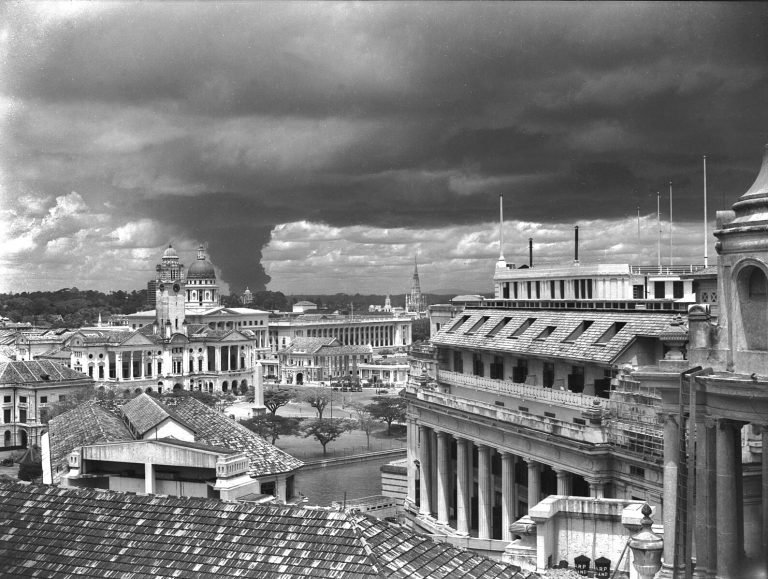
Credit: “Image via United Kingdom Government Public Domain.”
The myth of invincibility also shaped the mindset of command. Confidence bred complacency. Defensive planning focused on deterrence rather than adaptability. Training emphasized static defense rather than mobile warfare. Meanwhile, intelligence assessments underestimated the capabilities of Japanese forces, often portraying them as inferior in technology and discipline. This racialized miscalculation blinded British leadership to the reality unfolding across Asia.
Japan’s approach to Southeast Asia was radically different. Rather than attempting to overwhelm British naval power directly, Japanese planners pursued speed, surprise, and psychological shock. The Malayan Campaign began not with a naval assault on Singapore but with coordinated landings along the Malayan coast. Japanese units moved swiftly southward, using bicycles, light equipment, and flexible tactics to outmaneuver heavier Allied forces. Air superiority allowed them to disrupt supply lines and communication networks, compounding the chaos.
As Japanese forces advanced through Malaya, British and Commonwealth troops retreated steadily. Defensive positions were abandoned faster than anticipated. Coordination between units faltered. The rapid pace of the advance undermined morale and confidence, exposing weaknesses that had been masked by imperial rhetoric. By the time Japanese forces reached the outskirts of Singapore, the city’s defenses were already compromised.
The final week of fighting in Singapore revealed the full extent of British unpreparedness. Command structures were fragmented. Resources were unevenly distributed. Water supplies became a critical vulnerability as infrastructure was damaged and access to reservoirs threatened. Civilian populations faced uncertainty and fear as bombardment intensified. Despite the presence of large numbers of troops, the defensive posture lacked cohesion and clarity.
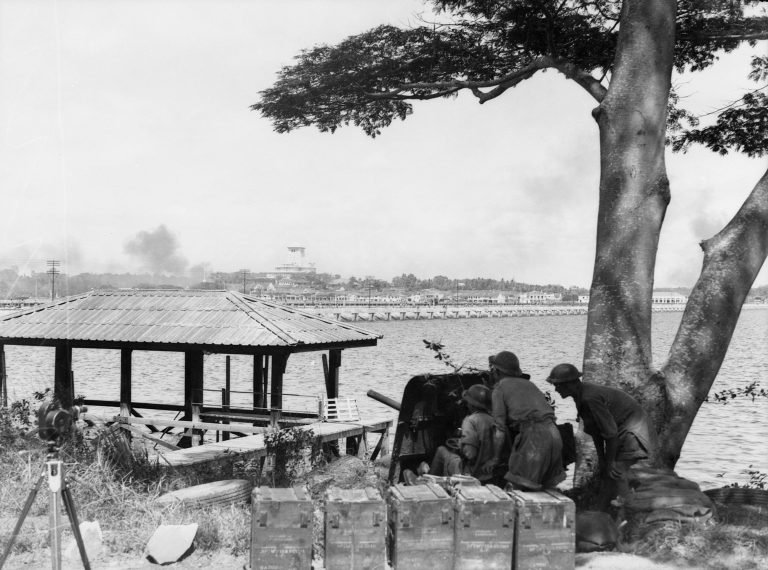
Credit: “Image via (Disability Access and Other Measures) Bill 2017 (Australian Government) Public Domain.”
On 15 February 1942, British commanders made the decision to surrender. It was the largest capitulation in British military history. Tens of thousands of soldiers laid down their arms, and Singapore passed into Japanese control. The psychological impact of the surrender reverberated far beyond the island. Across Asia, colonial subjects watched as the image of European invincibility crumbled. The defeat altered perceptions of power and legitimacy, accelerating anti-colonial movements throughout the region.
The consequences of Singapore’s fall were immediate and profound. British authority in Southeast Asia was irreparably damaged. Japan consolidated control over key territories, reshaping regional geopolitics. For the people of Singapore, life under occupation brought hardship and uncertainty, leaving deep scars that would shape collective memory long after the war ended. The city that had been marketed as impregnable was revealed to be fragile, not because of lack of resources, but because of flawed assumptions and systemic rigidity.
Historians have debated the fall of Singapore for decades, yet several factors consistently emerge. Strategic miscalculation played a central role. Overconfidence prevented meaningful preparation for alternative scenarios. Intelligence failures distorted understanding of the enemy. Leadership struggled to adapt under pressure. Perhaps most importantly, the collapse exposed the limits of imperial power when it relies on myth rather than reality.
Modern Singapore has transformed its wartime trauma into a foundation for resilience. The memory of 1942 occupies a central place in national history, serving as a reminder of vulnerability and the necessity of self-reliance. Museums, memorials, and preserved sites across the city document the events with clarity and restraint, emphasizing learning rather than spectacle. The fall of Singapore is not remembered to glorify defeat, but to reinforce the importance of preparedness, adaptability, and unity.
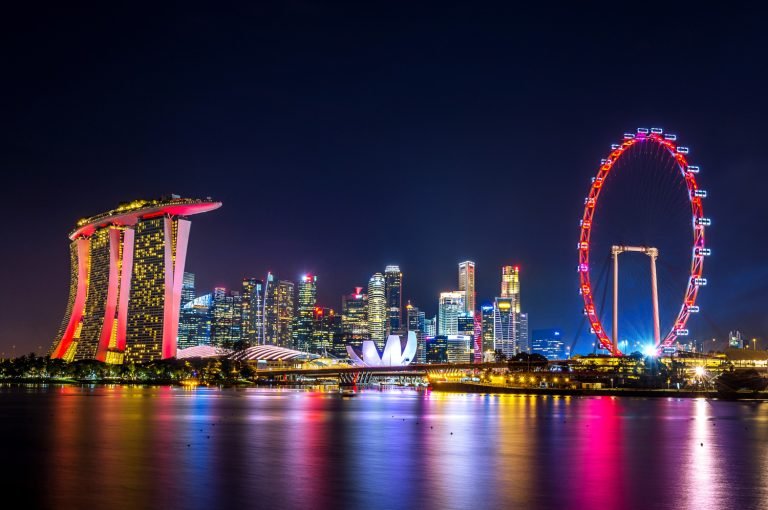
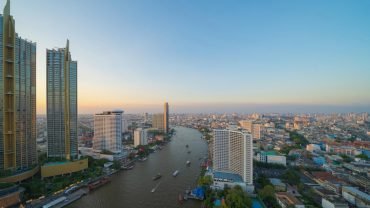
Traveling through Singapore today offers opportunities to engage with this history thoughtfully. Sites such as Fort Siloso, the former military installations, and carefully curated exhibitions provide context without sensationalism. The modern skyline stands in stark contrast to the uncertainties of the past, highlighting how the city-state emerged stronger through reflection and reform. For visitors, understanding 1942 deepens appreciation of Singapore’s modern identity and its emphasis on security, planning, and governance.
The fall of Singapore remains a pivotal moment in global history because it altered the trajectory of empires. It demonstrated that power based on assumption is fragile, and that adaptability often matters more than size or reputation. In Southeast Asia, the event marked the beginning of the end for European colonial dominance. In Britain, it forced a reckoning with imperial overreach. For Singapore, it became the lesson that shaped a nation’s future.
Remembering the fall of Singapore is therefore not an exercise in nostalgia or blame. It is an examination of how systems fail, how myths collapse, and how societies learn from crisis. In a world still shaped by strategic uncertainty, the lessons of 1942 remain deeply relevant. History, when studied honestly, offers guidance not only for understanding the past, but for navigating the challenges of the present.
Comment (0)