

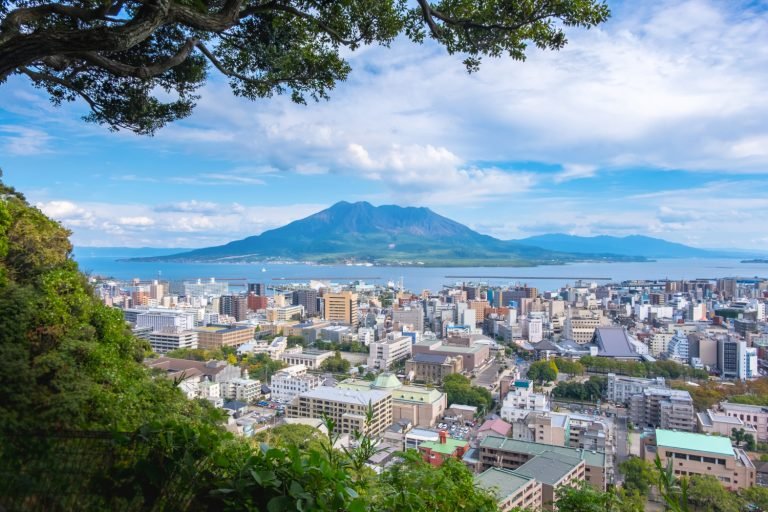
At the southern edge of Kyushu lies Kagoshima, a city shaped by fire, discipline, and reflection. Facing the restless silhouette of Sakurajima volcano, Kagoshima is often remembered for its dramatic landscape and relaxed coastal pace. Yet beneath this calm exterior lies one of the most influential cities in Japanese history. Kagoshima was not merely a regional stronghold. It was a crucible in which the ideals, contradictions, and sacrifices that built modern Japan were forged.
Long before Japan became a centralized modern state, Kagoshima existed as the heart of the Satsuma Domain. Isolated by geography yet empowered by maritime access, Satsuma developed a political culture that valued independence, discipline, and strategic foresight. While the Tokugawa shogunate ruled Japan from Edo, Satsuma quietly built its own power base. This distance from central authority allowed Kagoshima’s leaders to experiment with ideas that would later reshape the nation.
The samurai of Satsuma were not ornamental retainers bound solely to ceremony. They were administrators, scholars, and strategists. Education was emphasized, discipline was strict, and loyalty was understood as service to both lord and principle. Unlike other domains, Satsuma invested heavily in military preparedness and foreign awareness. Even during Japan’s period of isolation, Satsuma maintained covert connections beyond Japan’s borders, absorbing knowledge of global change while the rest of the country looked inward.
This mindset positioned Kagoshima at the forefront of the movement that would eventually dismantle the old order. When the Tokugawa shogunate weakened under external pressure, it was Satsuma, alongside a small number of other domains, that pushed for restoration of imperial authority. The Meiji Restoration did not emerge from consensus. It was driven by men trained in the samurai ethos of decisive action, and many of those men came from Kagoshima.
No figure embodies this paradox more fully than Saigō Takamori. Born into modest samurai circumstances in Kagoshima, Saigō rose through merit, discipline, and moral conviction. He was instrumental in toppling the shogunate and establishing the new imperial government. To many, Saigō represented the ideal samurai: loyal, humble, and guided by principle rather than ambition. Yet his life would come to symbolize the tragedy inherent in Japan’s transformation.
As the Meiji government accelerated modernization, it dismantled the very class that had brought it to power. Samurai stipends were abolished, swords were banned in public, and Western-style conscription replaced hereditary military service. For many former samurai, this was not progress but erasure. Saigō, once a pillar of the new government, became increasingly alienated. His conflict was not simply political; it was existential. The values he had lived by seemed incompatible with the future Japan was creating.
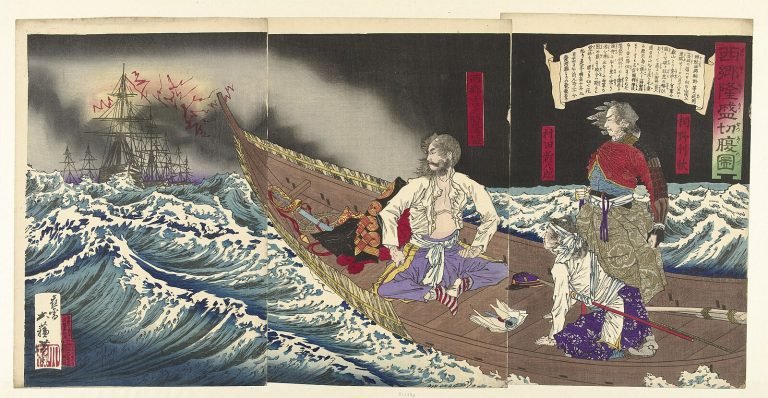
Zelfmoord van Saigyo Takamori Saigo Takamori seppuku no zu
The Satsuma Rebellion of 1877 was the final, tragic expression of this conflict. Centered in Kagoshima, it was not a reactionary attempt to restore feudalism, but a protest against a modernization that appeared to abandon moral grounding. Saigō led former samurai in a doomed uprising against the imperial army, now equipped with modern weapons and conscript soldiers. The rebellion ended in defeat, marking the definitive end of the samurai era.
Saigō’s death transformed him into a symbol rather than a mere historical figure. To some, he was a rebel. To others, a tragic hero. In Kagoshima, his legacy remains complex and deeply personal. Statues, shrines, and local narratives do not glorify rebellion but honor sincerity and sacrifice. Saigō is remembered not because he resisted change, but because he confronted it honestly.
Kagoshima’s role in shaping modern Japan did not end with the samurai. The city continued to supply military leaders, administrators, and thinkers well into the twentieth century. Its people carried forward a cultural emphasis on duty, endurance, and reflection. These qualities would later intersect with another chapter of Japanese history that demanded reckoning with sacrifice and memory.
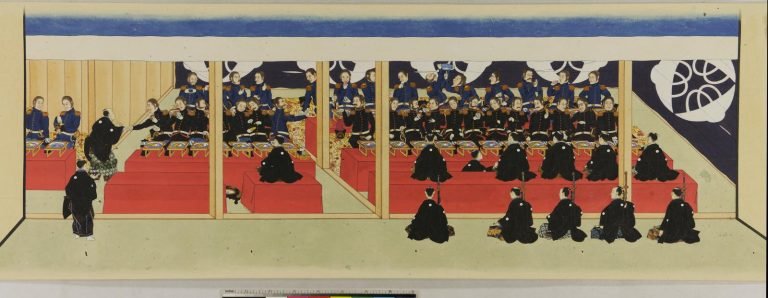
Tokyo cityscape showing transition from imperial era to modern Japan
In Chiran, a quiet town south of Kagoshima City, history takes on a solemn tone. The Chiran Peace Museum stands on land once used as a military airbase during the final stages of World War II. Today, the museum does not frame history through ideology or nationalism. Instead, it presents personal stories, letters, and photographs that invite reflection on youth, duty, and the cost of war. Visitors encounter individuals rather than abstractions, human lives shaped by historical forces beyond their control.
What makes Chiran particularly powerful is its continuity with Kagoshima’s samurai ethos. The emphasis on duty, loyalty, and self-sacrifice did not disappear with the end of the samurai class. It was absorbed into modern structures, sometimes with devastating consequences. The museum’s quiet presentation encourages visitors to consider how cultural values evolve, and how they can be both sources of strength and vulnerability.
Kagoshima’s geography reinforces its historical character. The omnipresence of Sakurajima, with its constant activity, serves as a reminder of impermanence and resilience. Life continues amid uncertainty, shaped by forces that cannot be controlled but must be respected. This awareness permeates local culture, influencing attitudes toward hardship, responsibility, and recovery.
In Ibusuki, south of Kagoshima, the land offers a different form of reflection. The natural sand baths, heated by geothermal activity, invite visitors to slow down and experience physical stillness. Buried beneath warm sand, listening only to breath and waves, one feels the weight of the body and the passage of time. This experience complements Kagoshima’s historical narrative. Healing is not separate from memory. It is part of how societies endure.
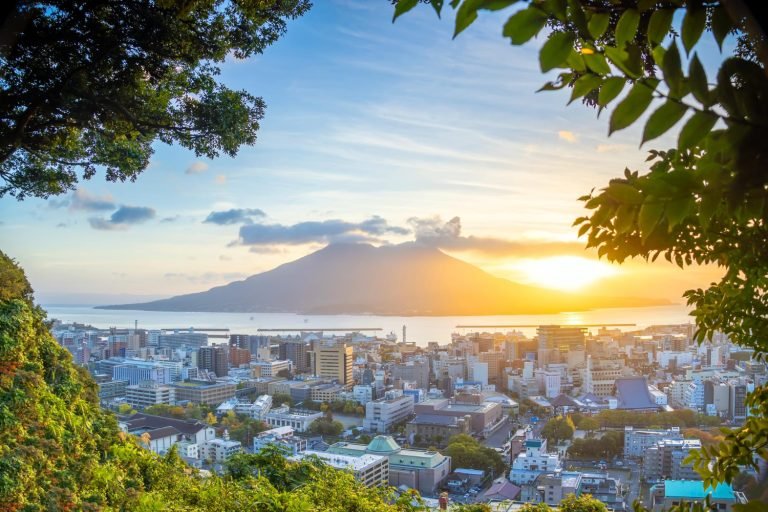
Traveling through Kagoshima today is an exercise in layered understanding. Samurai residences sit near modern streets. Memorials coexist with cafes and ferry terminals. The city does not isolate its history behind museum walls. It allows the past to remain present, integrated into daily life. For travelers willing to engage beyond surface attractions, Kagoshima offers insight into how Japan reconciles tradition with transformation.
Understanding Kagoshima is essential to understanding modern Japan. The city’s influence reaches far beyond its size. It contributed leaders, ideas, and ethical frameworks that shaped national identity. It also reveals the costs of change, the pain of transition, and the necessity of reflection. Kagoshima teaches that modernization is not merely technological or political. It is moral.
To walk Kagoshima’s streets, visit Chiran, and rest in Ibusuki’s sand is to encounter a Japan built not only on success, but on struggle. This is a city that remembers without romanticizing, honors without denying, and moves forward without forgetting. In Kagoshima, history is not distant. It breathes, waits, and invites understanding.
Comment (0)