

Every Lunar New Year, the same question echoes across Asia and far beyond it. Which animal rules the year, and what does it mean for our fortunes, personalities, and future? For many, the Chinese Zodiac appears playful, even decorative, a rotating cast of animals adorning red envelopes and festive lanterns. Yet behind this familiar imagery lies one of the most enduring symbolic systems in human history, a worldview that shaped how Chinese civilization understood time, destiny, power, and human nature itself.
The Chinese Zodiac is not merely a calendar. It is a moral map. Developed over millennia, it links cosmic order with everyday life, blending astronomy, mythology, philosophy, and social values into a single framework. To understand the Zodiac is to understand how ancient China perceived its place between Heaven and Earth.
The origins of the Chinese Zodiac stretch back to early agrarian society, when survival depended on reading the rhythms of nature. Long before mechanical clocks, time was understood cyclically. Seasons returned, harvests repeated, and life followed patterns rather than linear progress. Ancient Chinese thinkers sought systems that reflected this reality. The Zodiac emerged as part of this effort, aligning animal symbolism with the twelve Earthly Branches, a foundational system used to mark years, months, and hours.
In early Chinese cosmology, time was not neutral. It carried moral and energetic qualities. Each cycle influenced behavior, governance, and fate. The animals of the Zodiac were chosen not at random, but because they embodied traits observed in nature and society. Strength, patience, cunning, loyalty, ambition, and generosity were not abstract virtues. They were lived realities reflected in the animal world.
The most famous explanation for the Zodiac’s order comes from legend. According to myth, the Jade Emperor summoned animals to compete in a great race, promising that the order of arrival would determine their place in the calendar. The story, while symbolic rather than historical, reveals deep cultural truths. Intelligence triumphs through strategy, as seen in the Rat’s clever ride on the Ox. Strength alone is not enough without wisdom. Authority demands courage, as shown by the Tiger. Harmony and adaptability ensure survival, embodied by the Rabbit.
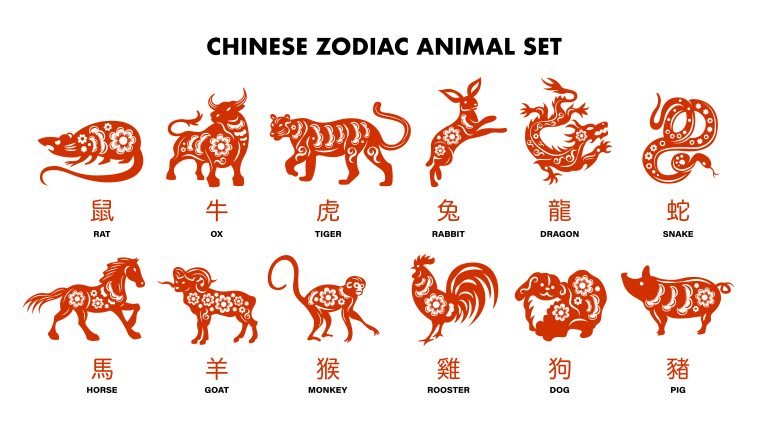
The Dragon’s place in the Zodiac is especially revealing. Unlike the other animals, it is mythical. Its inclusion reflects the belief that power does not only reside in the visible world. Dragons symbolized imperial authority, cosmic balance, and the Mandate of Heaven. The Dragon’s year was never merely fortunate; it was transformative.
Each animal carries layered meaning. The Snake represents hidden knowledge and introspection, valued in a culture that prized strategy over force. The Horse symbolizes freedom and ambition, but also the risk of restlessness. The Goat reflects cooperation and aesthetic sensitivity, qualities essential to social harmony. The Monkey embodies adaptability and intelligence, traits admired in times of change. The Rooster represents moral vigilance, the one who announces dawn and order. The Dog stands for justice and loyalty, while the Pig closes the cycle with abundance, completion, and reward.
What makes the Chinese Zodiac unique is its integration into daily life. Unlike abstract astrology, Zodiac belief influenced marriage compatibility, career choices, governance decisions, and even military planning. Emperors consulted astrologers. Farmers timed planting. Families named children with Zodiac harmony in mind. The system offered guidance, not prediction, emphasizing balance rather than destiny.
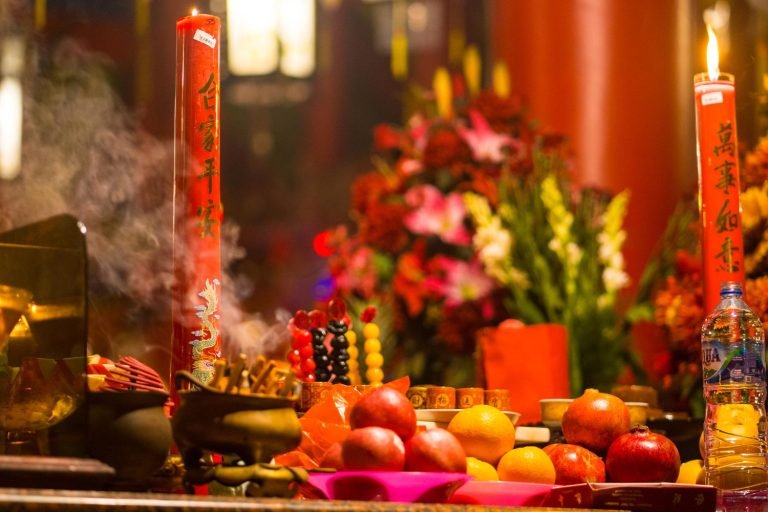
During Lunar New Year, Zodiac symbolism comes alive. Rituals honor both the outgoing and incoming animal, acknowledging continuity and change. Red decorations ward off misfortune, while offerings express gratitude to ancestors and Heaven. These practices reinforce the Zodiac’s role as a bridge between past and future, individual and collective memory.
In modern Asia, the Chinese Zodiac remains influential. While few interpret it literally, its language persists. People describe personalities through animal traits. Businesses consider Zodiac cycles when launching products. Engagement peaks every Lunar New Year because the Zodiac offers meaning amid uncertainty, a shared cultural vocabulary that transcends borders.
Traveling through Asia during Lunar New Year reveals the Zodiac’s living presence. In Beijing, temple fairs display animal motifs rooted in imperial tradition. In Hong Kong, fortune tellers reinterpret ancient symbols for modern anxieties. In Vietnam, the Zodiac adapts, replacing the Rabbit with the Cat, reflecting local ecology and belief. In Thailand, Chinese communities integrate Zodiac imagery into temples and shrines, blending traditions seamlessly.

Understanding the Chinese Zodiac allows travelers to see beyond surface celebration. It reveals how deeply time, morality, and identity are intertwined in East Asian cultures. The animals are not mascots. They are mirrors, reflecting human strengths, weaknesses, and aspirations across generations.
The endurance of the Zodiac lies in its flexibility. It adapts without losing its core. It offers narrative rather than doctrine, symbolism rather than command. In a rapidly changing world, this adaptability ensures its relevance. The Chinese Zodiac reminds us that history does not disappear. It cycles, returns, and reshapes itself, just as it has for thousands of years.
To engage with the Chinese Zodiac is to participate in a conversation that began long before written history and continues into the present. It is a system that invites reflection rather than belief, connection rather than certainty. And perhaps this is why, every Lunar New Year, millions still look to the animals not for answers, but for understanding.



Comment (0)