

Few cities in Asia carry history as densely as Nanjing. Set along the Yangtze River, Nanjing has repeatedly stood at the center of China’s political, cultural, and moral turning points. It has been an imperial capital, a revolutionary heart, a site of unimaginable wartime suffering, and a modern metropolis attempting to reconcile memory with progress. To walk through Nanjing is not simply to visit a city, but to move through layers of empire, collapse, and reconstruction that shaped China itself.
Nanjing’s importance begins with geography. Positioned at the meeting point of river networks and fertile plains, it served as both a gateway and a stronghold. Control of Nanjing meant access to southern China’s economic heartland while maintaining strategic proximity to the north. This balance made it an ideal capital during periods when rulers sought legitimacy without overexposure.
The city’s earliest prominence came during the Six Dynasties period, when successive regimes ruled from Nanjing despite political instability elsewhere. Unlike capitals built to project permanence, Nanjing reflected a worldview shaped by impermanence. Dynasties rose and fell, yet the city endured, adapting to each transformation. This rhythm of continuity amid change became part of its identity.
When the Ming dynasty established Nanjing as its first capital, the city reached new heights of imperial ambition. Massive walls were constructed, still standing today as some of the longest surviving city walls in the world. These fortifications were not merely defensive structures. They were expressions of cosmic order, aligning earthly authority with Heaven’s mandate. Within these walls, governance was imagined as moral responsibility rather than sheer power.
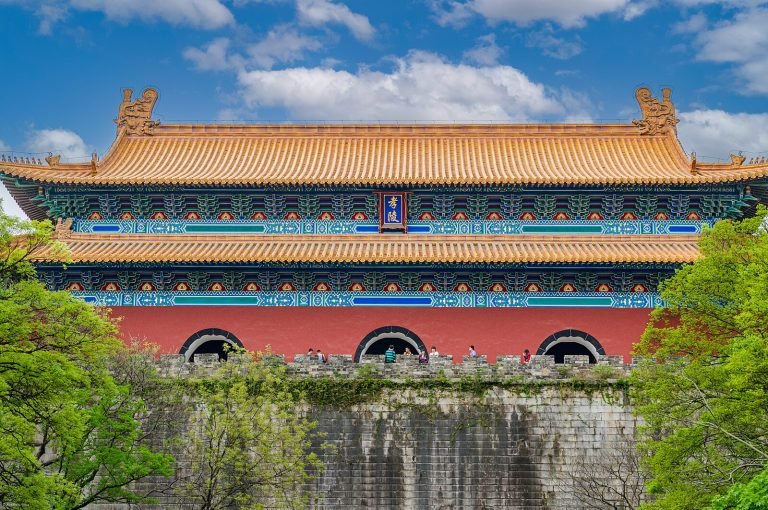
Nanjing’s role as a capital was never static. Even after the Ming court moved north, the city retained symbolic weight. Scholars, officials, and reformers continued to view Nanjing as a legitimate seat of authority. This lingering prestige made it a natural focal point when China confronted the collapse of imperial rule in the early twentieth century.
The fall of the Qing dynasty shattered centuries of imperial continuity. In this vacuum, Nanjing reemerged as the capital of the Republic of China. The choice was not accidental. Nanjing represented both historical legitimacy and revolutionary renewal. It was close enough to tradition to command respect, yet distant enough from the imperial past to symbolize change.
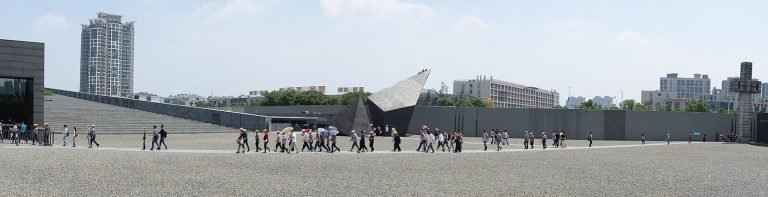
Under the republic, Nanjing became a laboratory for modern China. New institutions, education systems, and urban planning projects reflected a desire to align with global modernity while retaining Chinese identity. This period was filled with optimism, tension, and unresolved contradictions. The city stood at the crossroads between inherited tradition and an uncertain future.
That future collapsed violently with the arrival of war. In 1937, Japanese forces captured Nanjing after fierce resistance. What followed remains one of the darkest chapters in modern history. The massacre that occurred in the city was not simply a military event but a moral rupture. Nanjing became a symbol of civilian vulnerability in total war, its trauma reverberating across generations.
Understanding Nanjing requires acknowledging this suffering without reducing the city to it. Memory in Nanjing is neither erased nor sensationalized. It is embedded in space. Museums, memorial halls, and preserved sites create an environment where reflection is unavoidable. The city does not allow visitors to separate history from place.
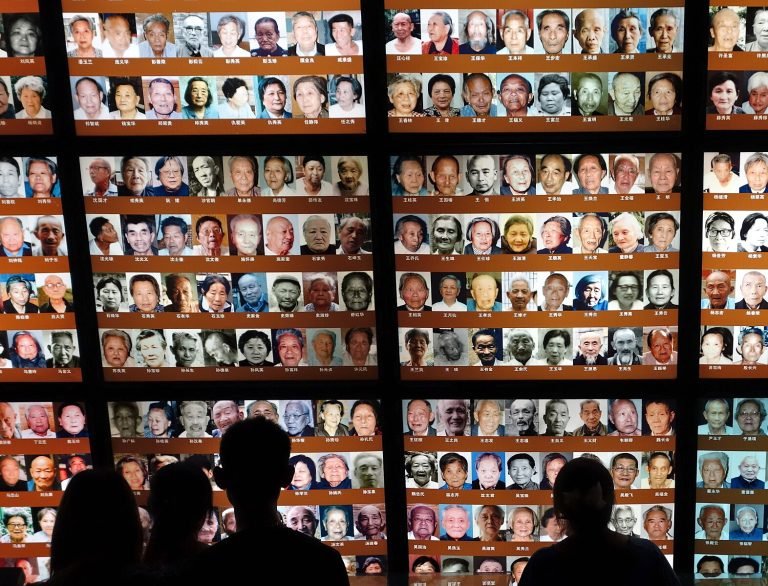
Today, Memorial Hall of the Victims in Nanjing Massacre stands as a quiet, somber reminder of human cost. Its design avoids spectacle, guiding visitors through silence, names, and absence. The experience is not about numbers alone, but about restoring individuality to lives erased by violence.
Yet Nanjing’s story does not end in tragedy. The city rebuilt, industrialized, and expanded. Universities flourished, technology hubs emerged, and cultural life resumed. Modern Nanjing does not hide its past, but it refuses to be defined solely by it. This balance between remembrance and renewal shapes the city’s atmosphere.
Walking through Nanjing reveals this coexistence. Along the ancient city walls, joggers pass beneath stones laid centuries ago. At Xiaoling Mausoleum, the tomb of the Hongwu Emperor anchors Ming ambition in quiet forested hills. Nearby, modern districts pulse with life, commerce, and ambition.
The Presidential Palace tells another story. Once an imperial administrative complex, later a republican seat of power, it embodies China’s political transitions. Its architecture reflects layers of authority rather than a single era, making it one of the most revealing sites in the city.
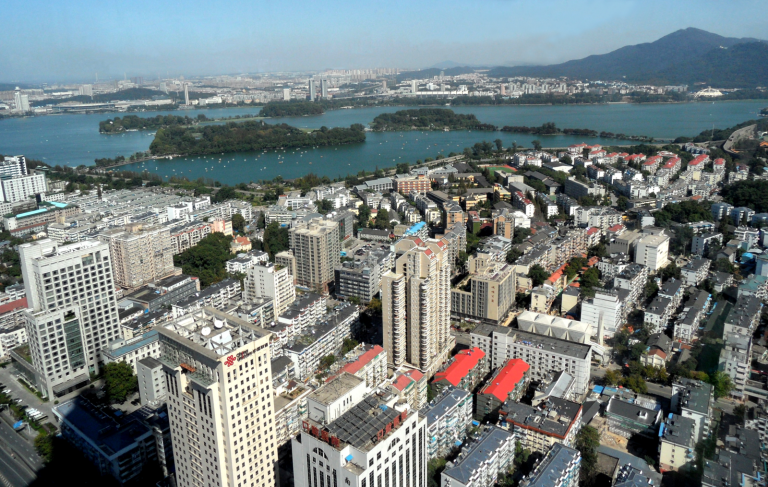
Nanjing’s relationship with memory is deliberate. The city teaches history not through grand narratives, but through spatial experience. Visitors are invited to move, pause, and connect fragments into understanding. This approach aligns with Chinese historical consciousness, which emphasizes continuity over closure.
For travelers following Honey’s path, Nanjing offers a rare opportunity to engage history without mediation. Unlike cities curated primarily for tourism, Nanjing remains grounded in lived reality. Markets, campuses, and neighborhoods exist alongside monuments, creating an honest dialogue between past and present.
Why does Nanjing still matter today? Because it reflects China’s enduring questions. How does a civilization absorb trauma without losing identity? How does memory coexist with modernization? How does a nation honor the dead while serving the living? Nanjing does not provide easy answers, but it demonstrates the process.
In a region where history is often politicized, Nanjing stands as a city of layered truth. Empires sought legitimacy here. Revolutionaries imagined futures here. War exposed humanity’s darkest capacities here. And today, ordinary life continues here, shaped by awareness rather than denial.
To understand China, one must understand Nanjing. Not as a symbol frozen in time, but as a living city shaped by centuries of power, loss, and endurance. Nanjing teaches that history is not behind us. It surrounds us, informs us, and asks to be acknowledged before we move forward.
Comment (0)