

Tokyo did not begin as a capital, nor even as a city destined for greatness. For centuries, it was known as Edo, a marshy settlement on the eastern edge of political imagination. Yet over four hundred years, Edo transformed into Tokyo, a city that absorbed feudal order, imperial ambition, total war, defeat, occupation, and rebirth. Few cities on Earth have been destroyed so completely and rebuilt so many times. Tokyo’s story is not linear progress. It is a cycle of power, collapse, and reinvention written into streets that seem modern but rest on deep historical layers.
Before Tokyo existed, Edo was the administrative heart of the Tokugawa shogunate. Power in Japan was deliberately divided. The emperor remained in Kyoto as a symbolic figure, while real authority resided with the shogun in Edo. This separation shaped the city’s identity. Edo was not built for beauty or ceremony. It was built for control. Its wide avenues, canals, and districts reflected a political system designed to manage loyalty, surveillance, and stability.
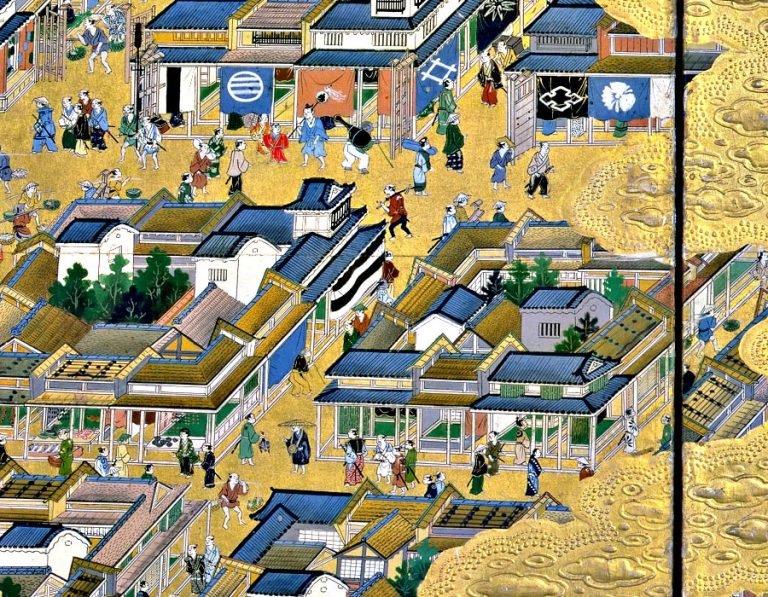
Credit: “Image courtesy of the U.S. National Archives (NARA). Public Domain. Edo Panorama old Tokyo color photochrom”
Edo became one of the largest cities in the world by the eighteenth century, yet it was a city of wood, paper, and impermanence. Fires regularly erased neighborhoods. Earthquakes reshaped districts overnight. This fragility produced a unique urban culture that valued adaptation over permanence. Life in Edo was intensely local, communal, and regulated. Samurai, merchants, artisans, and laborers occupied rigidly defined spaces, but cultural life flourished within constraint.
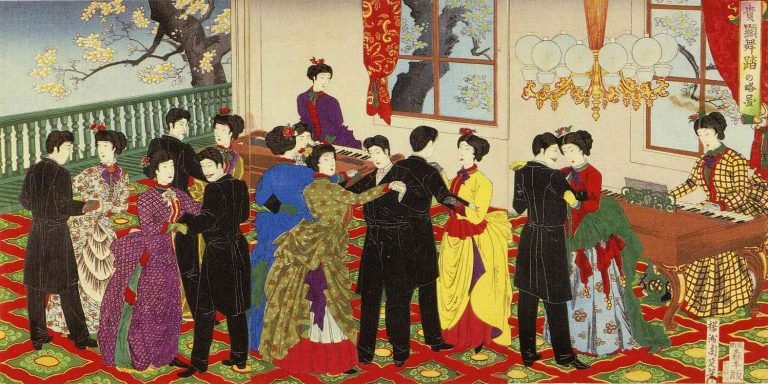
The arrival of the Meiji Restoration shattered Edo’s equilibrium. When the emperor relocated east and Edo was renamed Tokyo, the city was thrust into modernity with unprecedented speed. Feudal order collapsed. Western technology, institutions, and ideas flooded in. Tokyo became a laboratory where Japan tested how to modernize without losing itself. Railways cut through former samurai districts. Brick buildings replaced wooden compounds. Power centralized, and the city became the nerve center of a nation reinventing its identity.
Modernization was inseparable from empire. As Japan expanded abroad, Tokyo became the administrative and ideological core of imperial ambition. Ministries, military academies, and industrial hubs reshaped the city’s skyline. Urban planning reflected a new confidence, but also a new hierarchy. Tokyo no longer governed only Japan. It governed an empire stretching across East Asia and the Pacific.
Credit: “Image courtesy of the U.S. National Archives (NARA). Public Domain.”
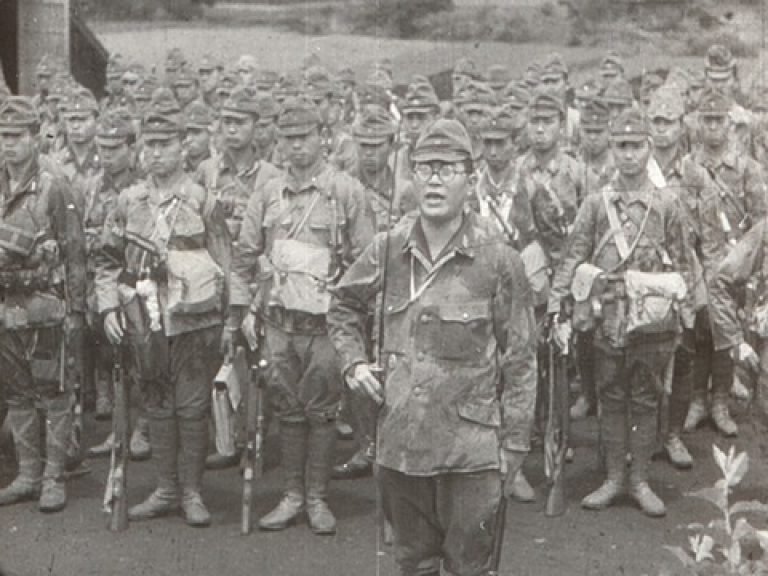
The Showa era marked Tokyo’s most violent transformation. As Japan moved toward total war, the city became both command center and target. Factories, railways, and residential areas merged into a single war machine. When American firebombing began, Tokyo’s wooden neighborhoods burned with terrifying speed. Entire districts vanished in a single night. By 1945, Tokyo was a city of ashes.
Defeat did not end Tokyo’s transformation. It accelerated it. Under occupation, the city was rebuilt not as an imperial capital, but as a democratic one. New institutions replaced old symbols. Urban reconstruction prioritized efficiency and growth over memory. Tokyo’s rapid postwar recovery became a national myth, masking unresolved trauma beneath concrete and neon.
The Cold War turned Tokyo into a showcase of capitalism in Asia. Economic growth reshaped the city faster than planners could control. Expressways cut through historic neighborhoods. Skyscrapers rose where ruins once stood. The bubble economy transformed Tokyo into a global icon of modernity, excess, and ambition.
Credit: “Image courtesy of the U.S. National Archives (NARA). Public Domain.”
Today, Tokyo appears relentlessly modern, yet its past remains embedded in space. Shrines stand beside office towers. Narrow alleys trace medieval boundaries. Districts like Asakusa preserve Edo-era rhythms, while areas such as Ginza embody Meiji modernization and global capitalism. Sites like Imperial Palace mark continuity of authority beneath changing regimes.
Walking through Tokyo is an act of historical reading. Each neighborhood reveals layers of survival. The city does not preserve its past through ruins, but through adaptation. Tokyo’s genius lies not in memory frozen in stone, but in memory absorbed into motion.
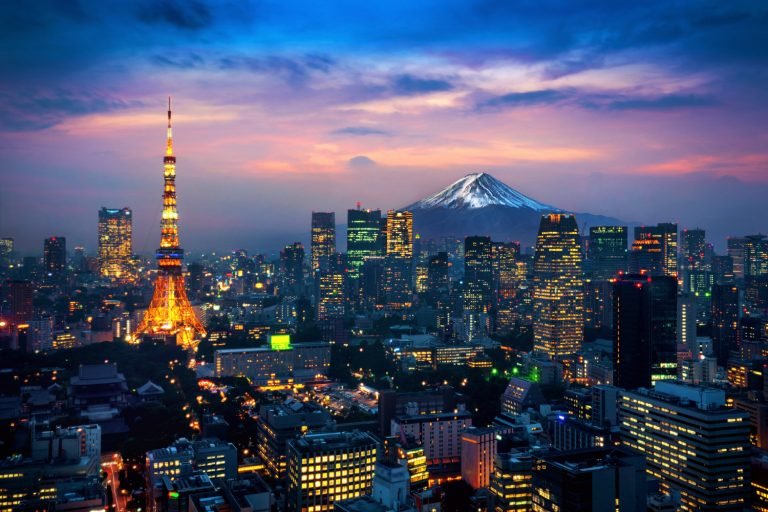
Tokyo’s history matters because it mirrors Japan’s trajectory. Feudal isolation gave way to imperial ambition. Catastrophic defeat produced reinvention. Modern Tokyo stands as proof that destruction does not end history. It transforms it.
To understand Tokyo is to understand Japan’s relationship with power, impermanence, and resilience. The city’s past is not behind it. It is beneath every step.
Comment (0)