

War does not only destroy cities and borders. It enters kitchens, alters taste, and rewrites what people consider normal food. In Asia, World War II reshaped daily diets more profoundly than any previous conflict. Scarcity forced invention, occupation introduced foreign ingredients, and survival redefined what it meant to eat well. Long after the guns fell silent, the legacy of war remained on the plate.
Before World War II, food across Asia was deeply local. Diets followed climate, agriculture, and tradition. Rice anchored meals in East and Southeast Asia. Wheat shaped northern cuisines. Fermentation, preservation, and seasonal rhythms defined eating habits refined over centuries. Food was not abundant, but it was culturally stable. War shattered that stability.
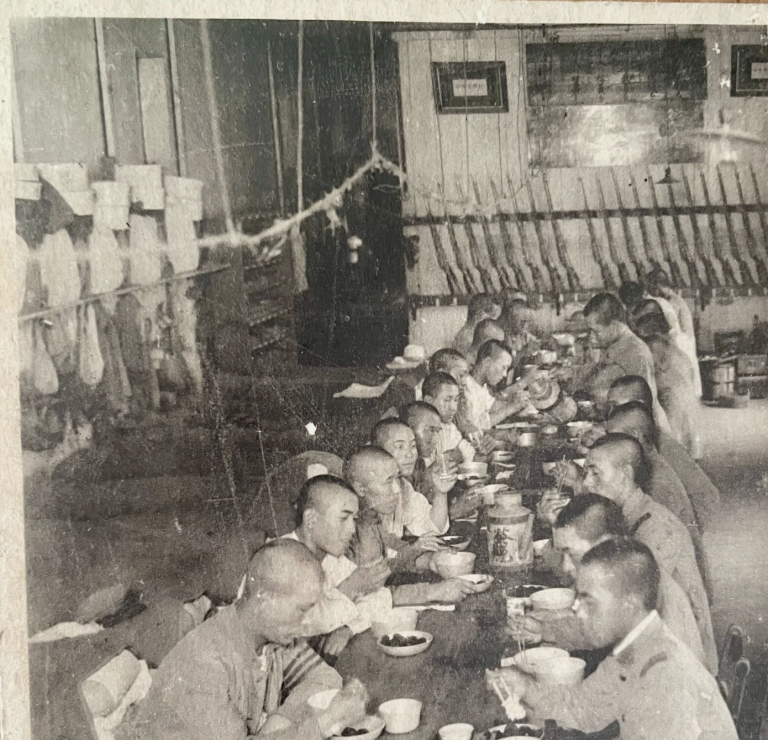
When World War II arrived in Asia, it disrupted food systems at every level. Farms became battlefields. Fishermen were drafted. Transport networks collapsed. Governments redirected grain to armies while civilians faced rationing and hunger. Food ceased to be cultural expression and became a matter of survival.
Credit: “Image courtesy of the U.S. National Archives (NARA). Public Domain.”
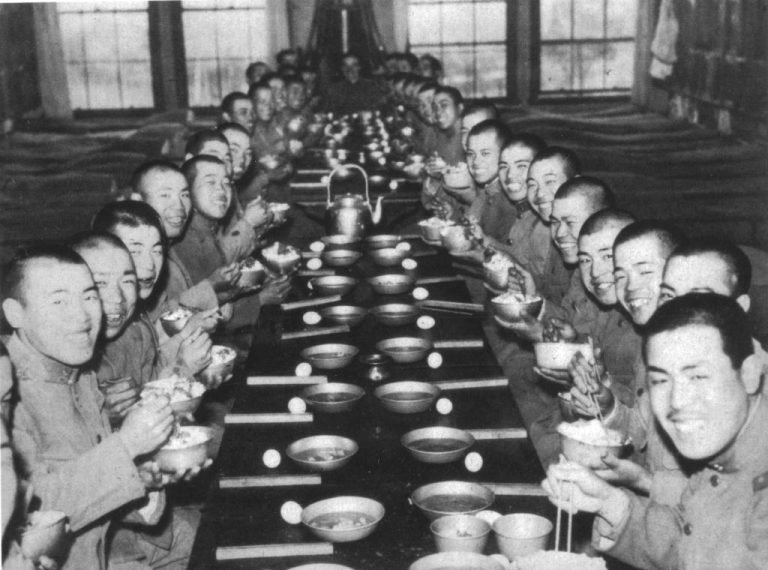
Japan’s wartime mobilization illustrates how quickly food culture can change under pressure. As resources dwindled, the government promoted substitutes and efficiency. White rice, once a symbol of prosperity, was replaced with mixed grains and fillers. Sweet potatoes became a staple not by choice but necessity. Recipes adapted to scarcity, transforming hardship into routine.
Across occupied Asia, food became a tool of control. Colonial powers and occupying armies dictated what could be grown, traded, or consumed. In many regions, local diets were forcibly altered to serve military logistics. Hunger became widespread, and famine followed in some areas. The act of eating was politicized.
Scarcity forced creativity. Wartime kitchens across Asia became sites of improvisation. People stretched ingredients, reused leftovers, and invented new combinations. Some of these adaptations disappeared after the war. Others endured, becoming part of national cuisine. What began as survival food became comfort food.
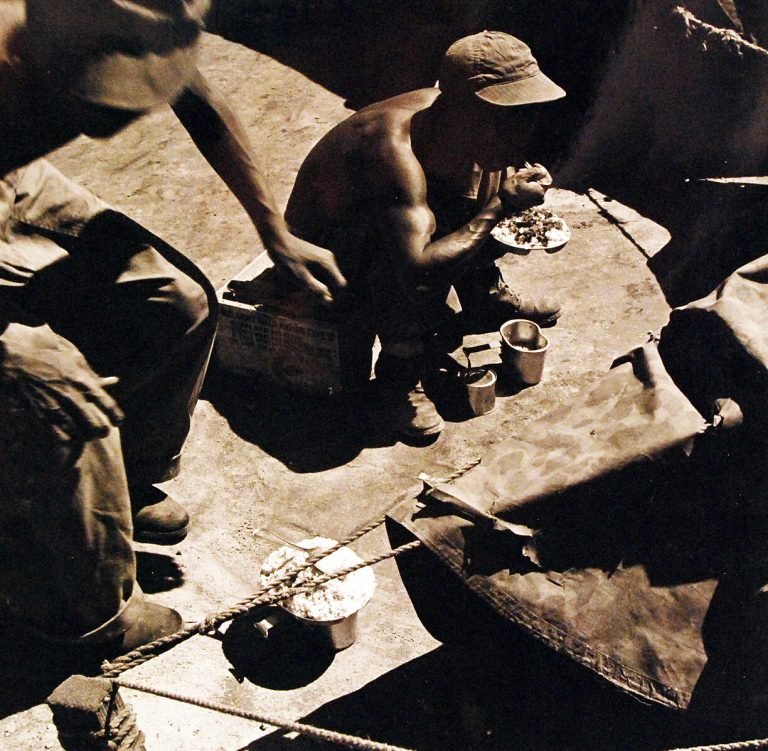
Occupation also introduced new ingredients and habits. Foreign soldiers brought their own rations, tastes, and cooking methods. Canned goods, processed foods, and unfamiliar flavors entered Asian kitchens. These were not always welcomed, but necessity blurred resistance. Over time, foreign foods were localized, transformed into something new.
Credit: “Image courtesy of the U.S. National Archives (NARA). Public Domain.”
In Japan, postwar occupation accelerated dietary change. American food aid introduced wheat, dairy, and sugar on an unprecedented scale. School lunches became vehicles for nutritional policy and cultural shift. Bread and milk entered daily life, reshaping generations. The modern Japanese diet emerged not only from choice, but from geopolitical reality.
Elsewhere in Asia, similar patterns unfolded. In China, wartime disruption and civil conflict reshaped food distribution and production. In Southeast Asia, occupation and liberation altered agricultural priorities. Cities adapted differently from rural areas. Food reflected inequality, access, and memory.
Trauma plays a powerful role in shaping taste. Foods associated with survival often become emotionally charged. Simple dishes evoke resilience and loss simultaneously. In many Asian cultures, comfort food traces directly back to wartime experience. Eating becomes an act of remembrance.
Cities carry these legacies visibly. Walking through markets in Tokyo, Seoul, Hanoi, or Bangkok, one encounters foods born from constraint rather than abundance. Street snacks, preserved dishes, and humble staples often have wartime origins hidden behind nostalgia.
Credit: “Image courtesy of the U.S. National Archives (NARA). Public Domain.”
World War II also changed how Asia thinks about food security. Governments learned that dependence on imports could be fatal. Postwar policies emphasized self-sufficiency, nutrition, and industrial agriculture. These decisions reshaped landscapes and diets permanently.
Modern Asian cuisine cannot be understood without acknowledging war. Fusion dishes, processed foods, and standardized tastes all trace back to wartime necessity and postwar recovery. What we now celebrate as culinary innovation often began as adaptation to crisis.
Food is memory made edible. Every bowl, bite, and recipe carries layers of history. World War II did not only change borders and politics in Asia. It changed how people eat, what they crave, and how they remember survival.
To eat in Asia today is to consume history. The war may be over, but it still sits at the table.
Comment (0)