

Japan’s expansion across East and Southeast Asia in the early twentieth century is often described as reckless aggression driven by militarism and imperial ambition. While this description is not incorrect, it is incomplete. Expansion was not merely the product of ambition or cruelty. It was the outcome of fear, structural insecurity, ideological transformation, and a global order that rewarded violence more than restraint.
Japan did not begin the modern era as an empire. It entered it as a vulnerable island nation watching the world change around it. When Western powers arrived in Asia, they did not arrive as equals. They arrived with gunboats, treaties, and demands. Japan’s leaders observed what happened to China, India, and Southeast Asia and drew a conclusion that would shape the next seventy years: survival required power.
Japan’s modernization was therefore defensive before it was aggressive. The Meiji Restoration transformed Japan rapidly, dismantling feudal structures and importing Western technology, military organization, and industrial systems. This transformation was not driven by curiosity. It was driven by fear. To remain weak was to be colonized.
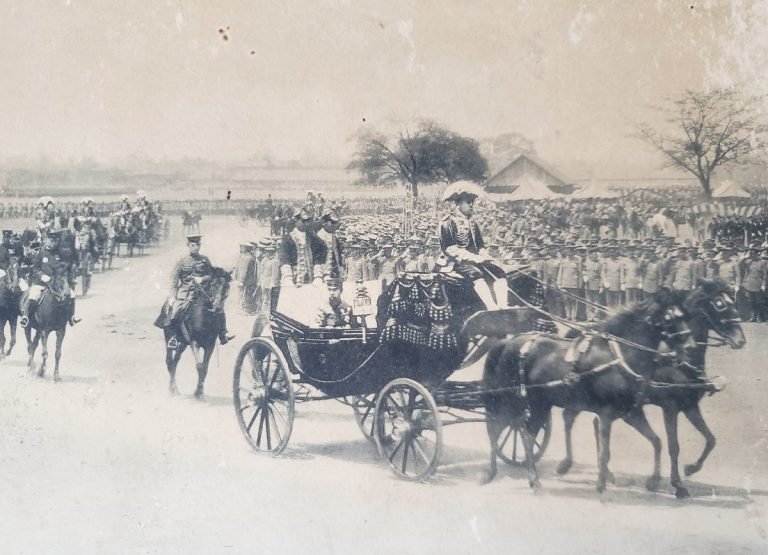
Meiji Tenno (Meiji Emperor)
Empire became a strategy for security. Japan’s leaders believed that only by becoming a great power could the nation avoid subjugation. Yet Japan faced a disadvantage shared by few Western empires. It lacked resources. Coal, oil, iron, and food security were constant concerns. Expansion was framed as necessity rather than conquest.
Geography intensified this anxiety. As an island nation, Japan depended on maritime supply lines. Blockade equaled collapse. Strategic depth was minimal. Leaders concluded that control over neighboring territories was essential to prevent strangulation. Korea, Manchuria, and later China were viewed less as foreign lands and more as buffers.
This mindset hardened over time. Military success against China and Russia reinforced confidence. Victory validated the belief that force worked. Diplomacy seemed slow and unreliable by comparison. The military’s prestige grew, while civilian institutions weakened.
Ideology followed power. National identity fused with military virtue. Concepts of honor, sacrifice, and obedience were elevated as civic values. Violence became morally framed. War was presented not as choice, but as destiny. To retreat was to accept humiliation. To compromise was to invite decay.
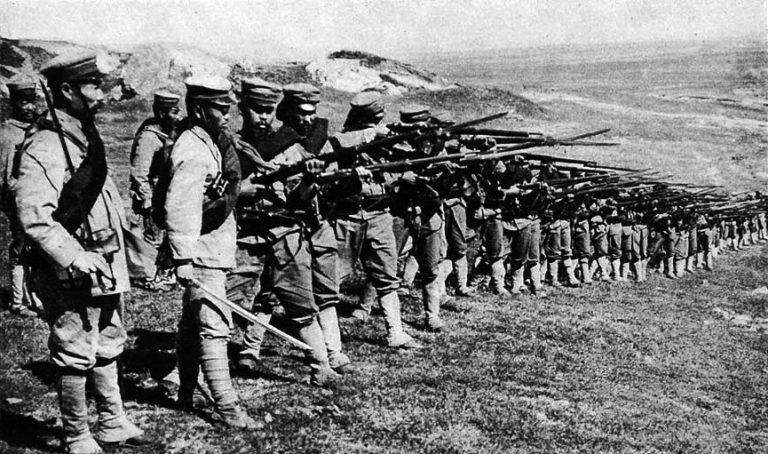
Imperial Japanese Army presence in China before WWII
By the 1930s, Japan’s political structure had shifted decisively. Civilian leadership lost control over military decision-making. Officers acted independently, confident that success would justify action. Expansion accelerated not because of centralized planning, but because restraint disappeared.
Manchuria marked the turning point. The occupation was justified as defensive, economic, and stabilizing. International condemnation followed, but consequences were minimal. This reinforced the belief that global norms were selectively enforced. The lesson Japan learned was dangerous: power mattered more than legality.
Expansion into China deepened the trap. What began as limited engagement escalated into total war. Resources drained faster than they were gained. Violence hardened ideology. Retreat became politically impossible. The logic of expansion fed itself.
-768x490.jpg)
Military parades in prewar
International failure played a critical role. The global order did not offer Japan a dignified alternative. Economic sanctions, moral condemnation, and exclusion from decision-making reinforced siege mentality. Japan interpreted resistance not as correction, but as confirmation of encirclement.
By the time Japan confronted Western powers directly, war was no longer strategic. It was existential. Leaders believed conflict was inevitable. Expansion became preemptive survival.
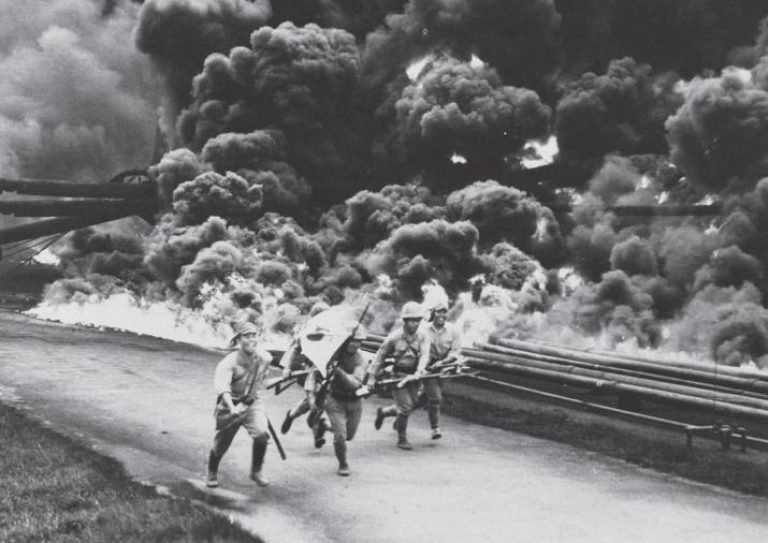
Imperial Japanese Army Attacks across Asia
Understanding this trajectory does not excuse the atrocities committed. It explains how a modern state convinced itself that aggression was necessary. Japan expanded aggressively before WWII not because it sought domination alone, but because it believed restraint would lead to annihilation.
This belief was tragically wrong. Expansion did not secure Japan. It destroyed it.
The lesson is not that fear justifies violence. It is that fear, when combined with power and ideology, can make violence feel unavoidable.
Comment (0)