

To many outside observers, Asian history feels confusing, disjointed, and fragmented. Dynasties appear to rise and fall endlessly. Wars seem to overlap without resolution. Empires collapse only to reemerge in new forms. Modern nations coexist with ancient traditions. For those educated primarily through European historical frameworks, Asia often resists clear explanation.
This sense of fragmentation does not originate from Asia itself. It originates from the way history has been taught, categorized, and narrated globally. Asian history feels fragmented not because it lacks coherence, but because it follows a different logic than the one most outsiders expect.
Fragmentation is a perception, not a condition. Asia’s past is not broken. It is layered.
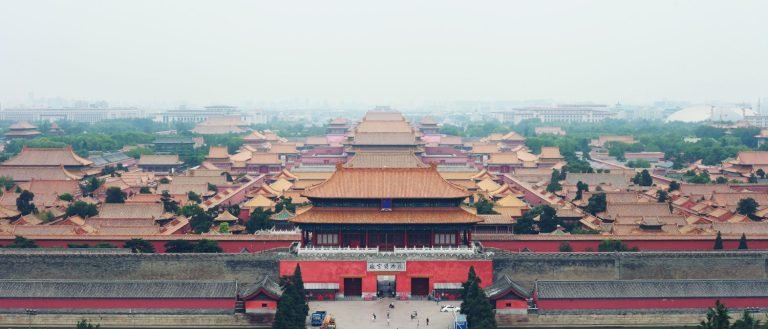
Layered historical eras visible in Beijing
Most people learn history through a European lens. This lens privileges linear progression, clear ruptures, and definitive endings. Ancient becomes medieval. Medieval becomes modern. Empires fall and are replaced. Revolutions mark clean breaks. This structure works well in regions where political and cultural resets occurred through decisive institutional change.
Asia rarely experienced such resets. Civilizations evolved through absorption rather than replacement. Political regimes changed, but cultural systems endured. Philosophies, languages, and social structures survived conquest, collapse, and reform. Time accumulated rather than advanced.
In China, dynasties fell, but civilization continued. Writing systems, administrative logic, and moral philosophy persisted across centuries of upheaval. To an outsider searching for a single “end,” Chinese history appears repetitive. In reality, it is cumulative.
In India, multiple civilizations unfolded simultaneously across the same geography. Empires overlapped. Religions coexisted. Languages multiplied. There was no singular center from which history radiated. Explanation requires plurality rather than synthesis.
Japan followed yet another trajectory. It selectively absorbed external influences while maintaining internal continuity. Periods of isolation alternated with moments of intense transformation. Modernization occurred without abandoning the past. Outsiders expect rupture and instead find coexistence.
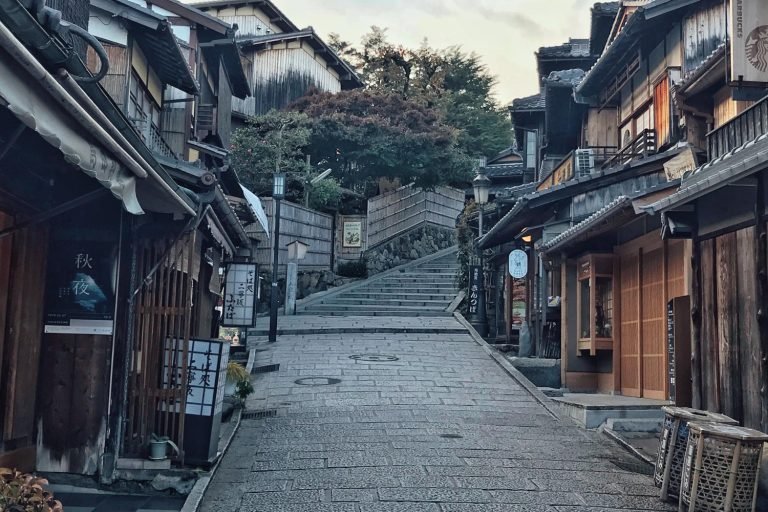
Traditional and modern streets coexisting in Kyoto
These patterns violate expectations shaped by European narratives. Observers look for revolutions that reset society. Asia offers reforms that adapt instead. Observers look for endings. Asia offers continuation.
Colonialism intensified this misunderstanding. European powers did not merely control Asian territories. They reframed Asian history through European categories. Concepts such as nation-state, religion, and progress were imposed retroactively. Local narratives were filtered, simplified, or dismissed.
Colonial education systems taught Asian history as a prelude to European intervention. Ancient civilizations were presented as static. Modern change was credited to colonial influence. Complexity was interpreted as backwardness rather than difference.
This distortion persists. Global textbooks often treat Asia as a collection of case studies rather than as a continuous historical space. Events are isolated. Context is minimized. Asia appears fragmented because it is taught in fragments.
War further disrupted narrative coherence. In Europe, major wars ended with treaties, trials, and reconstruction. In Asia, wars merged into revolutions, civil conflicts, and Cold War divisions. There was no stable moment to reflect or consolidate memory.
World War II illustrates this clearly. In Europe, the war ended and institutions rebuilt. In Asia, the war bled directly into decolonization and ideological conflict. For many societies, 1945 was not an ending but a pivot.
Cities across Asia embody this unresolved time. In Seoul, colonial architecture, Cold War division, and hypermodern development coexist within walking distance. The city did not reset. It layered.
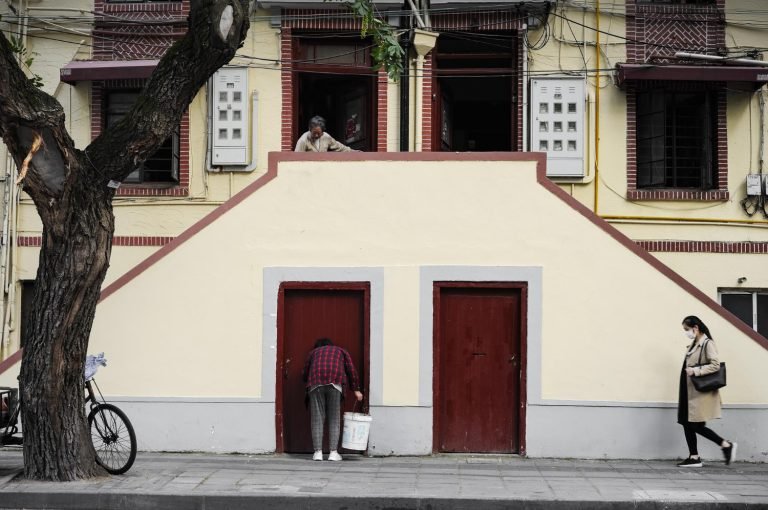
Historical remains of Tokyo firebombing
In Hanoi, French colonial buildings stand beside socialist housing and traditional neighborhoods. War did not erase the past. It rearranged it.
In Beijing, imperial, revolutionary, and modern eras overlap physically and symbolically. History is not separated into zones. It is compressed.
Outsiders often misinterpret this compression as chaos. They expect separation. Asia offers simultaneity.
The problem is not Asia’s complexity. It is the insistence on using tools designed for another historical experience. When Asian history is forced into European frameworks, it appears disordered. When approached on its own terms, patterns emerge.
These patterns prioritize continuity, moral order, and adaptation. They value survival over rupture. They treat time as cyclical, layered, or relational rather than linear.
Understanding Asia requires abandoning the expectation of a single narrative. It requires accepting multiple truths coexisting without resolution. It requires reading space, behavior, and silence as historical texts.
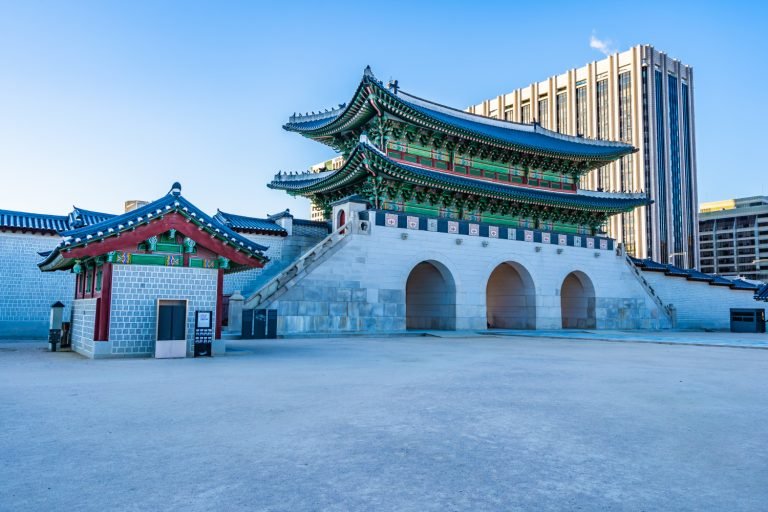
Seoul palaces surrounded by modern skyscrapers
Travel often reveals this more effectively than study. Walking through cities where centuries coexist physically demonstrates that history does not always progress by replacement. Sometimes it accumulates.
Asian history feels fragmented to the outside world because outsiders are looking for breaks instead of bridges. They are listening for conclusions instead of continuities.
Asia does not lack coherence. It lacks translation.
Changing the lens changes everything.
Comment (0)