

Kanchanaburi is often described as one of Thailand’s most peaceful provinces. Rivers move slowly through jungle-covered hills. Limestone cliffs rise above quiet villages. Tourists come seeking waterfalls, floating rafts, and escape from the pace of Bangkok. Few arrive prepared for the weight of history embedded in the landscape. Kanchanaburi feels calm not because little happened here, but because so much suffering was absorbed by nature itself.
During World War II, this region became one of the deadliest forced labor zones in Asia. Tens of thousands of prisoners of war and Asian laborers died constructing a railway intended to serve imperial ambition. Their deaths were not marked by ruins or mass graves visible to the eye. Instead, jungle reclaimed camps, rivers washed away evidence, and vegetation closed over trauma. Nature became both witness and eraser.
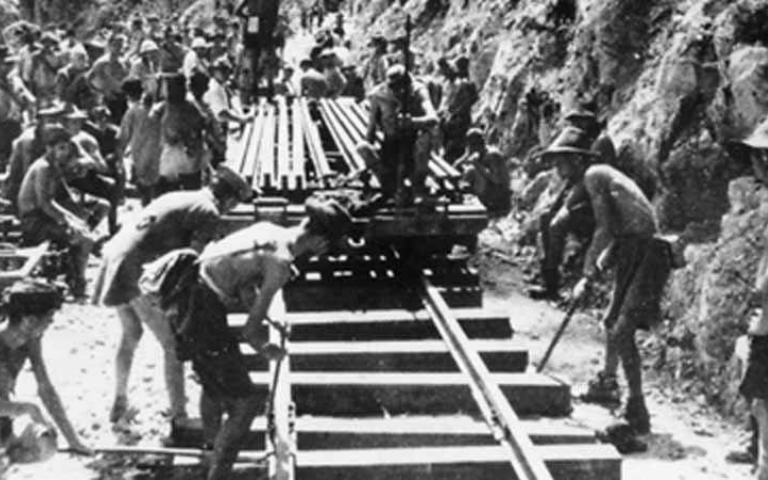
Civilian Workers constructing the Death Railway
Before the war, Kanchanaburi was a peripheral region defined by geography rather than power. Its dense forests and rugged terrain made it difficult to govern and exploit. This remoteness became its curse during the Japanese occupation. What was distant from scrutiny became suitable for extreme extraction.
The Japanese imperial project in Southeast Asia required logistical routes connecting occupied territories. One such route was a railway linking Thailand and Burma. The terrain was unforgiving. Engineers knew the project would be deadly. Speed mattered more than survival.
The construction of the Death Railway relied on forced labor. Prisoners from across the Allied world were transported into the jungle. Alongside them were Asian laborers recruited or coerced under brutal conditions. Disease, malnutrition, and exhaustion were constant. Death was expected.
In Kanchanaburi, camps were temporary and disposable. When workers died, they were buried quickly or left behind. There was no ceremony. The goal was completion, not remembrance.
Unlike urban battlefields, this violence left few visible scars. There were no ruins to preserve, no cities to rebuild. Jungle closed in around abandoned tracks. Rivers continued flowing. Nature absorbed what human systems destroyed.
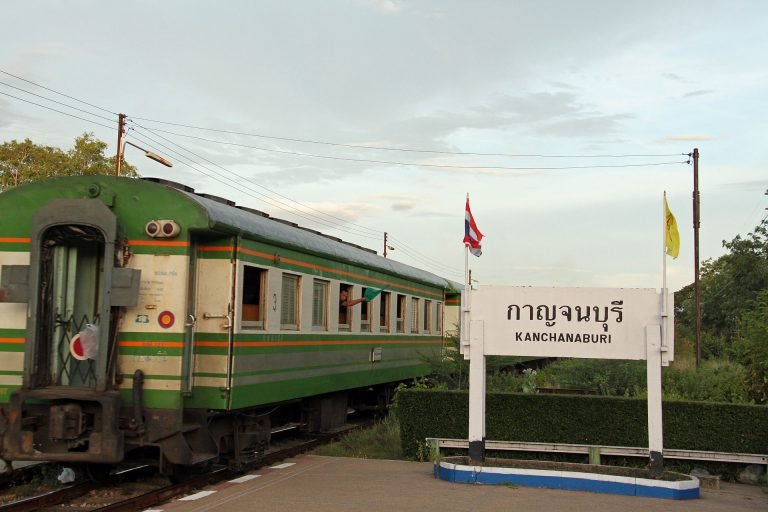
Death Railway tracks through in Kanchanaburi
This is why Kanchanaburi feels different from other World War II sites. In Hiroshima, destruction is concentrated and monumental. In Nanjing, memory is anchored by architecture and testimony. In Kanchanaburi, memory is dispersed.
After the war, attention shifted quickly. Thailand emerged without the same reckoning faced by defeated powers. The railway lost strategic value. Camps disappeared. Survivors returned home carrying stories that found little audience.
Asian laborers were remembered least. Their suffering lacked documentation. Their deaths blended into local hardship. Memory became uneven, privileging some narratives over others.
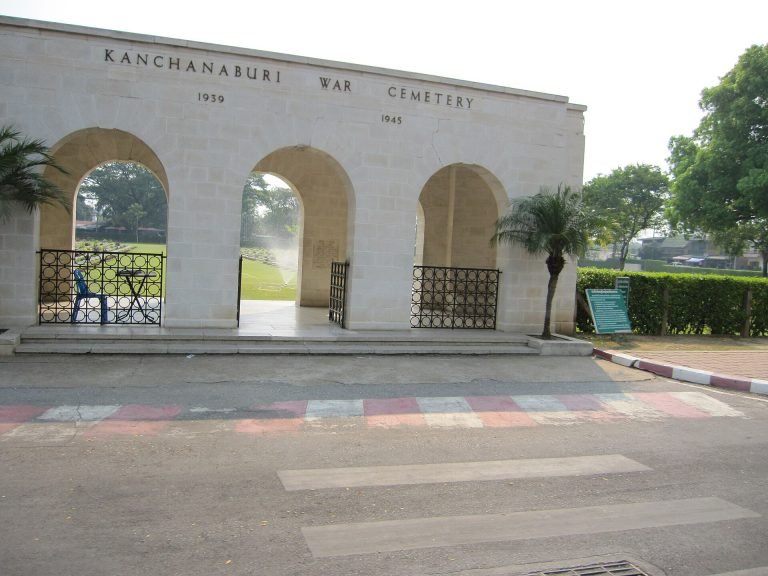
War cemetery in Kanchanaburi honoring prisoners
Tourism eventually reframed Kanchanaburi. The Bridge on the River Kwai became iconic, partly fictionalized, partially sanitized. Visitors took photos. Rivers glimmered. The jungle appeared forgiving.
Yet beneath this tranquility lies unresolved history. Cemeteries exist, carefully maintained, quietly distant from everyday life. The land remembers even if people do not speak.
Nature’s role is complex. It heals by concealing pain, but it also delays confrontation. When suffering is hidden by beauty, remembrance requires intention.
Walking through Kanchanaburi today involves passing through layers of time without markers. A trail may follow an old supply route. A river bend may hide former camps. Silence becomes the dominant language.
This silence does not mean forgetting. It means the memory lives differently. It resides in absence rather than monument. In landscape rather than narrative.
Kanchanaburi matters because it shows how mass death can vanish from view without disappearing from history. It challenges how we recognize trauma. It forces us to ask what we remember when nature erases evidence.
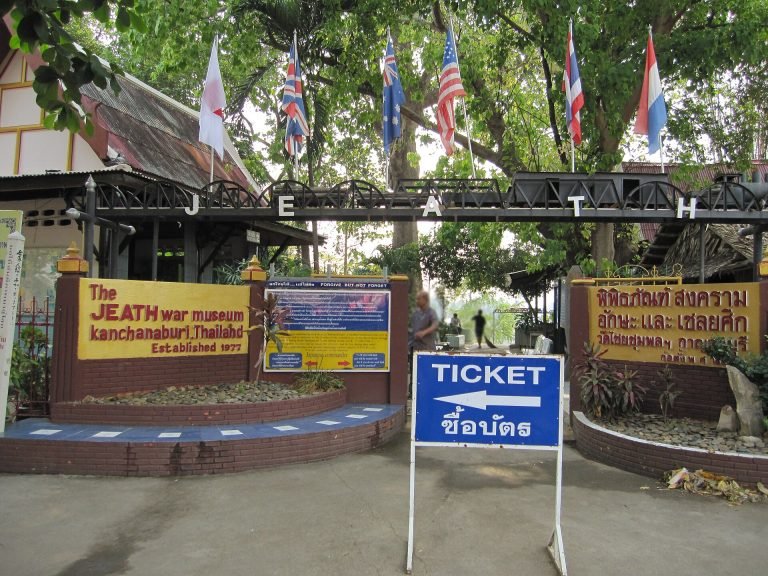
The JEATH war Museum kanchanaburi Thailand
The Death Railway did not end with liberation. Its consequences persist quietly. Families never recovered bodies. Stories remained partial. Accountability dissolved into time.
Kanchanaburi teaches that not all war memory announces itself. Some of it waits beneath leaves, soil, and water.
The region’s calm is not denial. It is the outcome of absorption. Nature carried what humans could not.
Understanding Kanchanaburi requires listening to silence. It requires seeing beauty and asking what lies beneath.
This is not a peaceful place because nothing happened here. It is peaceful because everything was taken.
Comment (0)