

At first glance, many Asian cities appear unmistakably modern. Glass towers rise above expressways. Subways run with precision. Digital screens dominate public space. Yet for many visitors and residents alike, these cities feel old in a way that cannot be explained by architecture alone. The sensation is subtle but persistent. Beneath the surface of modern infrastructure lies a deep continuity of memory, habit, and lived history.
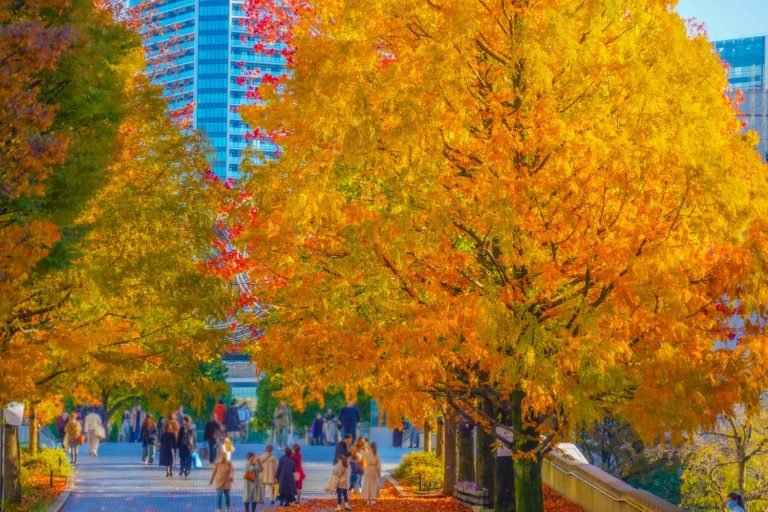
Old Tokyo neighborhood beneath modern skyline
This feeling is not nostalgia. It is not a romantic attachment to the past. It is the presence of accumulated time. Asian cities are not built by replacing what came before. They are built by layering over it.
Modernity in Asia did not arrive through gradual internal evolution. It arrived abruptly through colonialism, war, and accelerated development. As a result, cities modernized faster than their social memory could reset. The past did not disappear. It compressed.
In much of Asia, cities were not blank slates waiting for modern planning. They were already dense centers of political power, ritual life, trade, and memory. When new regimes arrived, they built on top of existing urban forms rather than erasing them entirely.
In East Asia, cities developed around imperial capitals, religious centers, and bureaucratic hubs. In Southeast Asia, port cities blended indigenous settlements with colonial infrastructure. In South Asia, ancient urban cores coexisted with imperial and postcolonial expansion.
Colonial urban planning introduced modern grids, administrative zones, and transport systems. These changes were designed for control, not continuity. Yet they rarely erased the older city entirely. Instead, colonial cities sat beside or on top of existing ones.
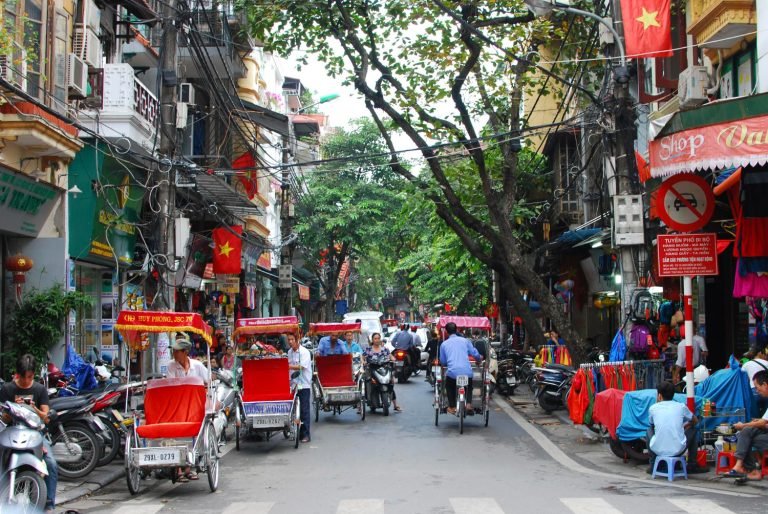
French colonial street layered over historic Hanoi
In Hanoi, French boulevards coexist with ancient lakes and neighborhoods shaped by centuries of local life. In Jakarta, colonial cores remain embedded within sprawling modern districts. In Mumbai, Victorian infrastructure intersects with informal economies rooted in much older social systems.
War intensified this layering. Bombing destroyed physical structures but rarely erased social patterns. Reconstruction prioritized speed and survival over historical cleansing. Cities rebuilt quickly, often preserving street layouts, social networks, and daily rhythms even as buildings changed.
In Tokyo, postwar reconstruction replaced architecture but not habit. Neighborhoods reorganized around convenience, proximity, and social familiarity. Modern Tokyo feels old not because it preserves ancient buildings, but because it preserves ways of living shaped by scarcity and adaptation.
In Seoul, rapid redevelopment transformed skylines within decades. Yet markets, alleyways, and social hierarchies survived beneath the towers. Time stacked vertically rather than flowing forward.
Infrastructure itself carries memory. Roads follow old trade routes. Rail lines trace colonial logistics. Underground shelters built for war coexist with shopping malls. The city remembers even when people do not consciously recall.
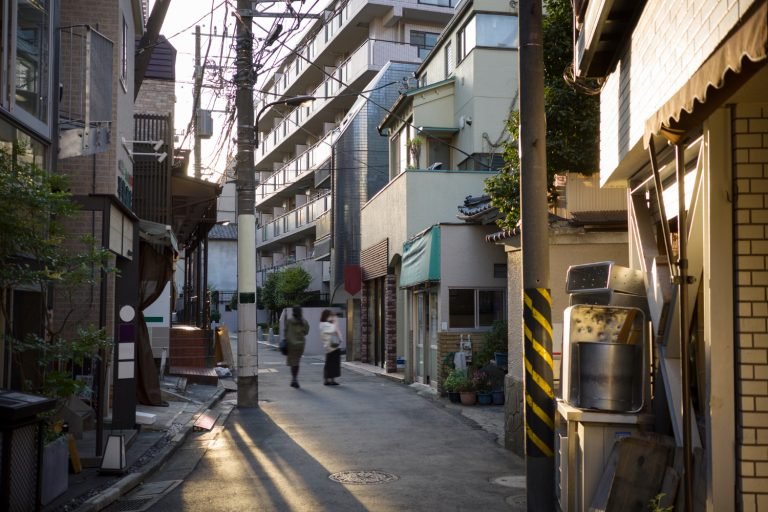
Traditional alleyways framed by skyscrapers in Tokyo
Asian cities also contain multiple temporalities simultaneously. Modern work schedules coexist with ritual calendars. Digital economies coexist with spiritual routines. A commuter may pass a shrine, a war memorial, and a startup office within minutes.
In Taipei, modern governance overlays layers of Qing administration, Japanese colonial planning, and postwar authoritarian development. The city feels old because each layer remains active.
Spiritual time plays a role. Religious practices persist within modern space. Temples, shrines, and ancestral halls remain integrated into urban life. These are not museums. They are functioning nodes of meaning.
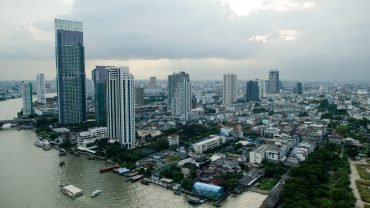
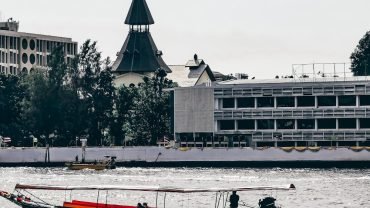
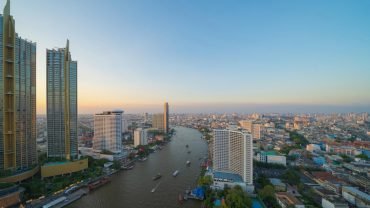
In Bangkok, temples anchor neighborhoods amid rapid commercial growth. In Kyoto, tradition is not frozen but continuously performed alongside modern life.
Speed intensifies the sense of age. Asia modernized faster than most regions in history. When change happens rapidly, memory compresses rather than fades. Generations live through transformations that elsewhere took centuries.
This compression creates a feeling of depth. Cities feel heavy with experience. The present carries visible traces of the past because there was no time to forget.
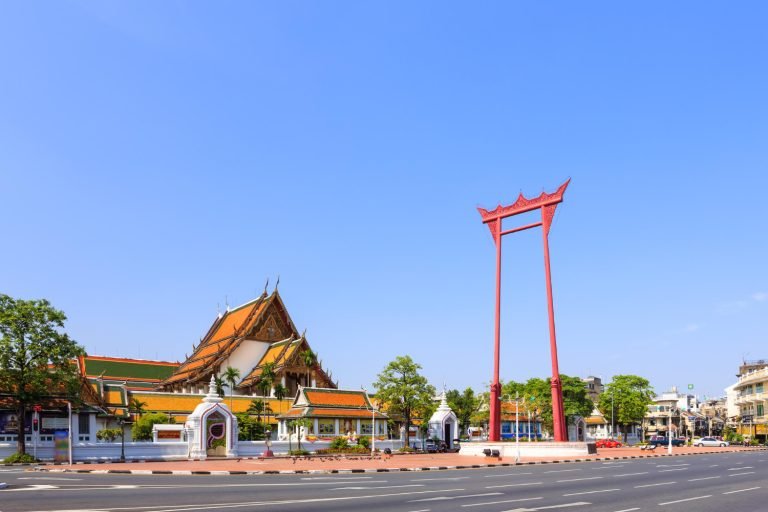
Temple embedded within Bangkok’s modern cityscape
Visitors often sense this immediately. Asian cities do not present history as curated experience. They present it as background condition. The old is not separated from the new. It is embedded within it.
Western cities often modernized by replacing older structures. Asian cities modernized by absorbing them. The result is not contradiction but density.
Asian cities look modern because they adopted global infrastructure. They feel old because they never abandoned their accumulated time.
They are not cities moving away from the past. They are cities carrying it forward.
This is why walking through an Asian city can feel like moving through layers rather than space. Each street contains multiple eras. Each routine carries inherited logic.
Asian cities are not haunted by history. They live with it.
And that is why they feel old, even when everything looks new.
Comment (0)