

Vientiane rarely feels like a capital city at first glance. Its streets move slowly. The Mekong River widens into evening calm. Cafés spill onto sidewalks without urgency. Compared to Bangkok, Hanoi, or Jakarta, Vientiane feels almost understated. Yet this quiet exterior conceals a past shaped by one of the most intense aerial bombing campaigns in modern history.
Vientiane was not the epicenter of large-scale urban battle. It did not experience block-by-block destruction. It did not fall dramatically in televised evacuation scenes. Instead, it became a capital caught inside a geopolitical struggle that unfolded above its skies and around its borders.
To understand Vientiane war history is to understand how a small capital can carry heavy consequences without becoming globally famous for them.
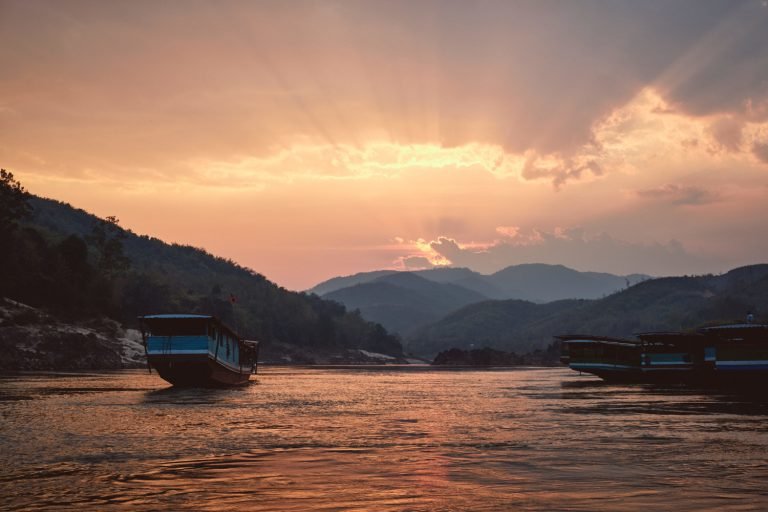
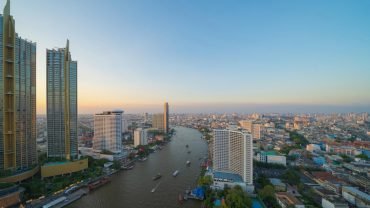
Mekong River sunset in Vientiane
During the Cold War, Laos was positioned between ideological rivals and strategic corridors. While Vietnam’s war dominated headlines, Laos became the hidden battlefield. Bombing campaigns targeted supply routes that passed through mountainous regions of the country. Covert operations multiplied. Proxy forces mobilized.
Across Laos, millions of tons of ordnance were dropped during what later became known as the Secret War. The bombing density per capita made Laos the most heavily bombed country in history.
Vientiane, as the capital, was not merely administrative center. It became a diplomatic and intelligence node.
Foreign embassies, covert agencies, and local authorities intersected within a city that outwardly appeared calm. Negotiations, surveillance, and strategy unfolded behind ordinary façades. The capital’s significance lay not in visible destruction but in invisible coordination.
Vientiane watched the war as much as it endured it.
Bombing often targeted rural corridors, but the capital lived under constant awareness of proximity. Air traffic patterns signaled danger. News traveled through rumor and coded conversation. Civilians adjusted routines without fully understanding the scale of operations occurring beyond the horizon.
The Mekong River, flowing quietly along Vientiane’s western edge, separated Laos from Thailand. That river became more than geographic boundary. It represented ideological tension. Across its banks, different political trajectories unfolded.
Vientiane existed between forces larger than itself.
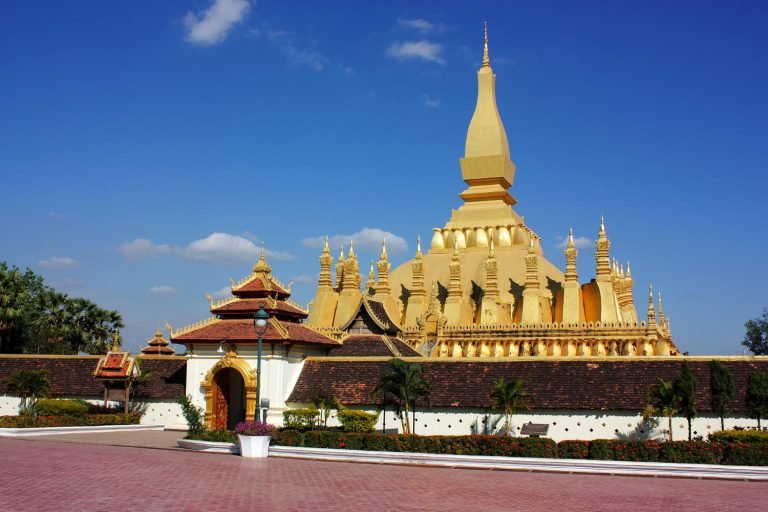
Pha That Luang monument in Laos capital
Unlike capitals rebuilt from ruins, Vientiane carried its war experience in absence. Buildings were not flattened extensively. Streets were not renamed en masse after decisive urban battles. Instead, the war altered political structure, foreign relations, and internal governance.
When the war ended and the Pathet Lao took control in 1975, the transformation was administrative and ideological. The capital shifted into a new political era without dramatic architectural rupture.
This lack of spectacle explains why Vientiane war history often remains overlooked.
Visitors encounter temples such as Pha That Luang and colonial-era villas reflecting French influence. Markets operate steadily. The riverfront promenade invites evening strolls. Nothing immediately signals that the country experienced relentless bombardment.
Yet memory here is not loud.
It is sedimented.
In neighborhoods away from tourist circuits, stories persist quietly. Generations remember hiding during air raids. Families recall relatives lost to unexploded ordnance long after ceasefire. Rural areas surrounding the capital continue demining efforts decades later.
The capital’s calmness should not be mistaken for detachment.
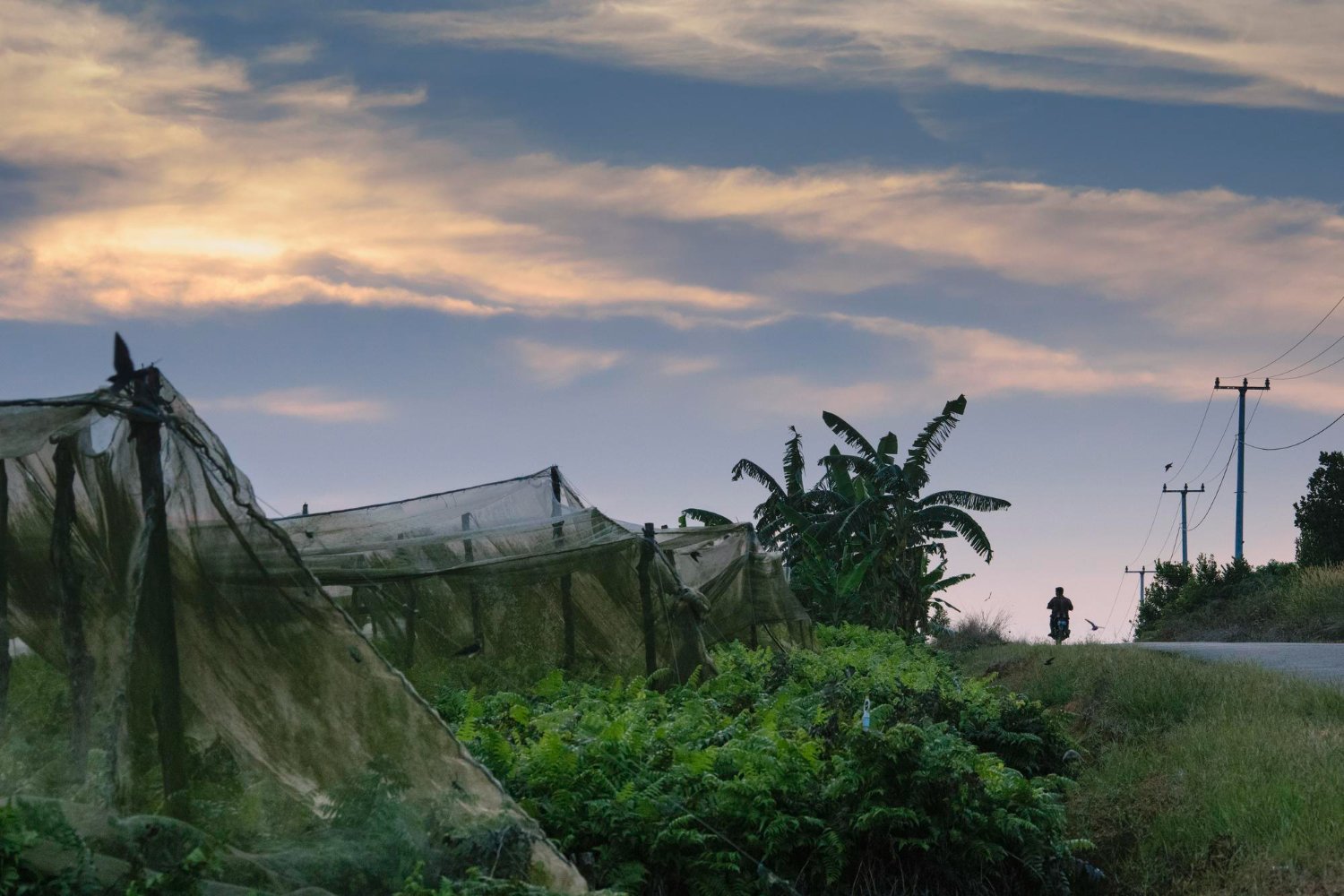
Rural landscape near Vientiane shaped by war history
Across Vientiane, governance after war emphasized stability and gradual reconstruction. Economic development progressed slowly. International visibility remained limited. Unlike cities that capitalized on war tourism, Vientiane cultivated modesty.
Silence became strategy.
The Secret War was classified for years. International recognition lagged behind lived reality. Vientiane’s role as diplomatic center during covert operations complicated public narratives.
War shaped the capital’s political psychology more than its skyline.
Understanding Vientiane war history transforms perception of its understated scale. The absence of towering monuments does not signal absence of impact. It reflects a different relationship with memory.
Where some nations monumentalize trauma, Laos internalized it.
Traveling through Vientiane with awareness reveals subtle markers. Government complexes stand where political transitions consolidated. Colonial-era buildings repurposed under socialist governance reflect continuity through ideology shift. Public squares host ceremonies that emphasize unity rather than division.
The Mekong River remains constant.
Watching sunset over the river invites contemplation. That same river once marked ideological boundary during tense years. Today it symbolizes connection rather than separation.
Vientiane teaches that war does not always produce ruins.
Sometimes it produces restraint.
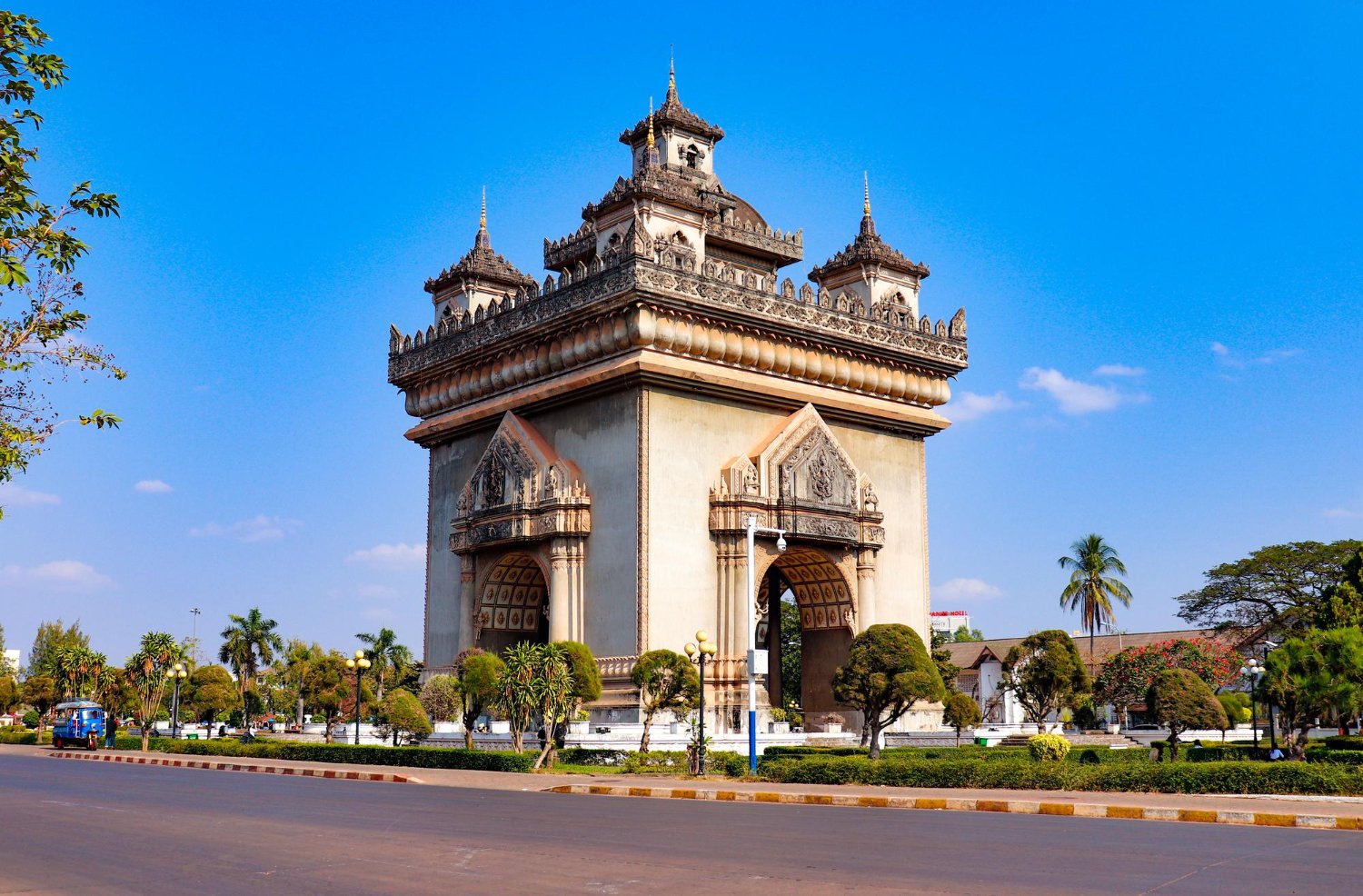
Colonial-era architecture in Vientiane
The city’s modest scale mirrors national trajectory. Laos rebuilt without aggressive expansion. Infrastructure improved cautiously. Tourism developed gradually.
Travelers often describe Vientiane as sleepy.
Yet sleepiness can be protective.
The capital avoided the overexposure that accompanies more dramatic war histories. Its streets carry weight without theatricality.
Walking through Vientiane beyond surface calm means paying attention to what is not emphasized. It means understanding that the heaviest bombardment in history did not create a ruined capital, but it reshaped national memory.
Vientiane embodies Southeast Asia’s quieter war narrative.
Its past is not displayed aggressively. It lingers.
Travel Laos slowly, and read between silence.
Vientiane may seem quiet.
But quiet does not mean untouched.
Travel Laos slowly, read between silence,
and understand how a small capital carried a heavy past.
Comment (0)