

In 1942, Bangkok did not burn. It did not collapse into urban combat. It did not become a battlefield in the way Manila would in 1945. Yet the capital of Thailand entered a period of profound tension, uncertainty, and moral ambiguity.
When Japanese forces moved into Thailand in December 1941, Bangkok became the political and logistical center of a nation attempting to survive between empires. The city was neither fully conquered nor fully independent. Instead, it entered a state historians often describe as cooperation under pressure.
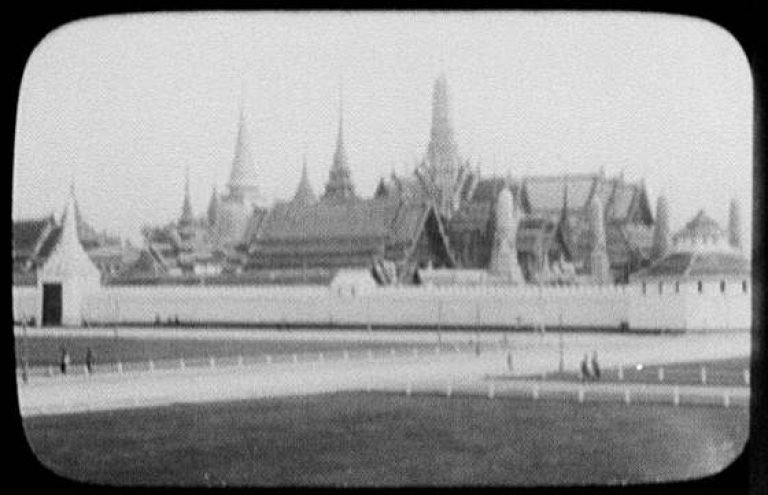
Bangkok in the 1940s historical photograph
Across Bangkok, the presence of Japanese troops quickly became visible. Military convoys passed through central districts. Uniformed officers appeared near railway hubs and administrative buildings. Yet unlike cities in colonized territories, Thai governmental structures remained intact. Ministries continued operating. The monarchy remained symbolically present. Markets opened at dawn. Monks walked barefoot collecting alms.
Bangkok under Japanese occupation was not a city flattened by artillery. It was a city navigating compromise.
To understand daily life in 1942, one must imagine a capital still structured around rivers and canals. The Chao Phraya was the city’s spine. Wooden houses lined khlongs in Bangkok Noi and Bangkok Yai. The commercial district around Bang Rak connected port activity with rail lines. Tha Tian near the Grand Palace remained a bustling trading zone.
Yet beneath this apparent continuity, economic strain intensified. Wartime alignment with Japan brought supply disruptions. International trade routes shifted. Allied naval power restricted shipping. Imports declined. Prices rose.
Inflation crept steadily into households. Rice, normally abundant in Thailand, became less accessible in urban markets due to distribution strain and military prioritization. Sugar, kerosene, and cloth were increasingly rationed.
Bangkok families adapted. Some relied more heavily on canal transport to access rural produce. Others turned to informal markets that emerged in alleyways and along riverbanks. Black market networks expanded quietly.
Life did not stop. It narrowed.
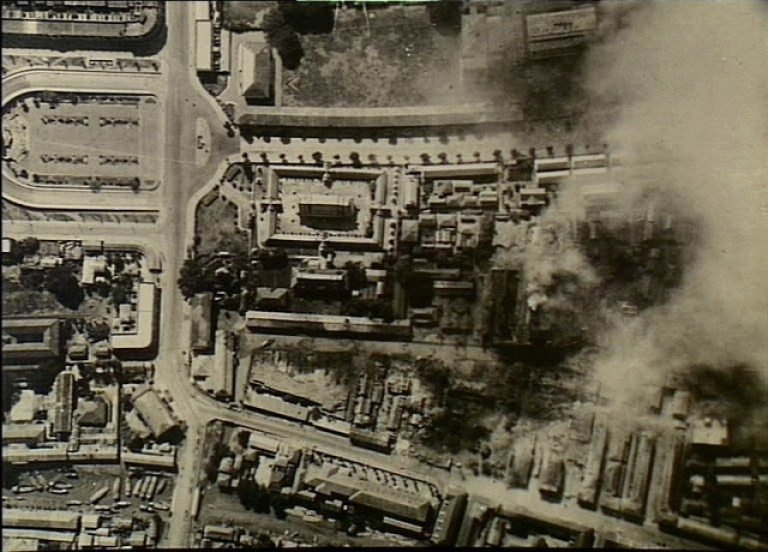
Bangkok during World War II era
Students continued attending schools, though curricula increasingly reflected wartime propaganda and nationalist messaging. Newspapers carried government statements emphasizing alliance and stability. Public rallies celebrated diplomatic decisions framed as strategic necessity.
But in private spaces, uncertainty grew.
Allied air raids would not intensify until later in the war, yet fear of bombing began shaping behavior even in 1942. Blackout drills were introduced. Windows were covered at night. Families discussed rumors of aircraft seen over the Gulf of Thailand.
The atmosphere was not one of open panic. It was one of suspended breath.
Across Thailand, political divisions deepened. While the official government cooperated with Japan, a clandestine network known as the Free Thai Movement formed quietly. Its members included diplomats, students, military officers, and civilians committed to ensuring Thailand would not be permanently aligned with Axis powers.
In Bangkok, Free Thai sympathizers operated carefully. Intelligence passed through discreet channels. Some contacts connected with Allied forces abroad. Others documented Japanese troop movements and infrastructure usage.
Daily life thus unfolded against dual narratives. On the surface, the capital projected cooperation and stability. Beneath, resistance networks prepared for a different future.
Bangkok’s strategic importance lay in its infrastructure. Rail lines linking to Burma were critical for Japanese campaigns. The city’s port handled supplies. Bridges across the Chao Phraya became vital transport arteries.
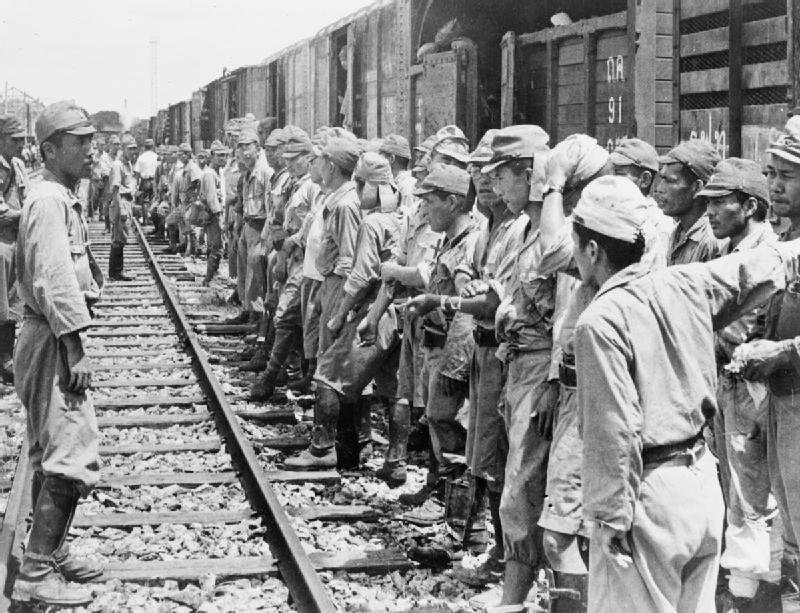
Japanese Troops Leave Bangkok, 1945
Japanese soldiers were visible but not omnipresent in every neighborhood. Unlike heavily militarized colonial cities, Bangkok retained Thai administrative control. Yet military presence was unmistakable in transport corridors and government districts.
Bang Rak district, close to the river and foreign consulates, experienced heightened activity. Warehouses stored goods destined for military fronts. Dockworkers observed shifts in cargo patterns.
Tha Tian and surrounding Rattanakosin areas remained symbolic centers of Thai identity. The Grand Palace stood intact. Temples continued ceremonies. Ritual continuity became a quiet assertion of cultural resilience.
Religious institutions played a stabilizing role. Monks did not engage directly in political discourse, yet temple grounds often served as informal meeting spaces where citizens exchanged news and speculation.
The psychological landscape of 1942 Bangkok cannot be measured by destruction statistics. It was measured by caution.
Families debated what to say publicly. Teachers adjusted language in classrooms. Civil servants navigated shifting loyalties.
The city’s canal system became more than transport. It became alternative network. When rail lines were reserved for military logistics, boats carried goods between neighborhoods. The slow rhythm of paddles through brown water contrasted with the urgency of wartime politics.
Bangkok’s markets reflected tension. Vendors sold dried fish, vegetables, and rice in smaller quantities. Buyers calculated budgets carefully. Children noticed changes in household meals.
Meanwhile, Japanese cultural presence appeared in selective forms. Cinema screenings included Japanese newsreels. Posters promoted wartime partnership. Public events emphasized solidarity.
Yet Bangkok never became culturally absorbed in the way colonized territories sometimes experienced. Thai language, monarchy, and administrative institutions remained central.
This distinction shaped the city’s postwar trajectory.
By mid-war, Allied strategy began targeting infrastructure. Bombing campaigns aimed at rail yards and bridges intensified later, but the anticipation began earlier. The possibility of air raids altered urban behavior.
Some residents constructed rudimentary shelters. Others relocated temporarily to outskirts along quieter canals. Wooden houses were vulnerable to fire. Concrete government buildings offered relative safety.
The soundscape of Bangkok shifted subtly. Conversations hushed when military vehicles passed. Radios became crucial sources of information. Rumors circulated faster than official announcements.
Life in 1942 Bangkok was defined by adaptation rather than spectacle.
Women managed households under rationing constraints. Merchants recalibrated supply chains. University students weighed participation in nationalist rhetoric against private skepticism.
The Free Thai Movement’s presence remained invisible to most citizens, yet its influence shaped long-term outcomes. By establishing connections with Allied forces, it ensured Thailand could negotiate its status after Japan’s defeat.
Bangkok thus existed in layered time. Presently aligned with Japan. Quietly anticipating a different end.
The city’s architecture bore no immediate scars in 1942. Temples shone in afternoon light. Colonial-era buildings in Bang Rak retained elegance. Yet behind facades, economic pressure accumulated.
Transportation patterns reveal much about wartime life. Hua Lamphong railway station functioned as logistical hub. Troop trains departed toward western frontiers. Civilian passengers navigated limited schedules. The station became a space where ordinary citizens observed the machinery of war without fully understanding its trajectory.
At dusk along the Chao Phraya, ferries crossed steadily. The river carried both commerce and anxiety.
Bangkok under Japanese occupation was not cinematic oppression. It was negotiated survival.
The city’s political leadership framed alliance as pragmatic decision to avoid devastation. Critics viewed it as moral compromise. Ordinary residents focused on immediate needs: food, safety, family continuity.
By late war years, Allied bombing would strike bridges and rail yards more directly. Yet 1942 represents the moment when Bangkok adjusted its rhythm to wartime reality.
Understanding this adjustment deepens appreciation of the capital’s resilience.
Bangkok did not become ruins. It became tense.
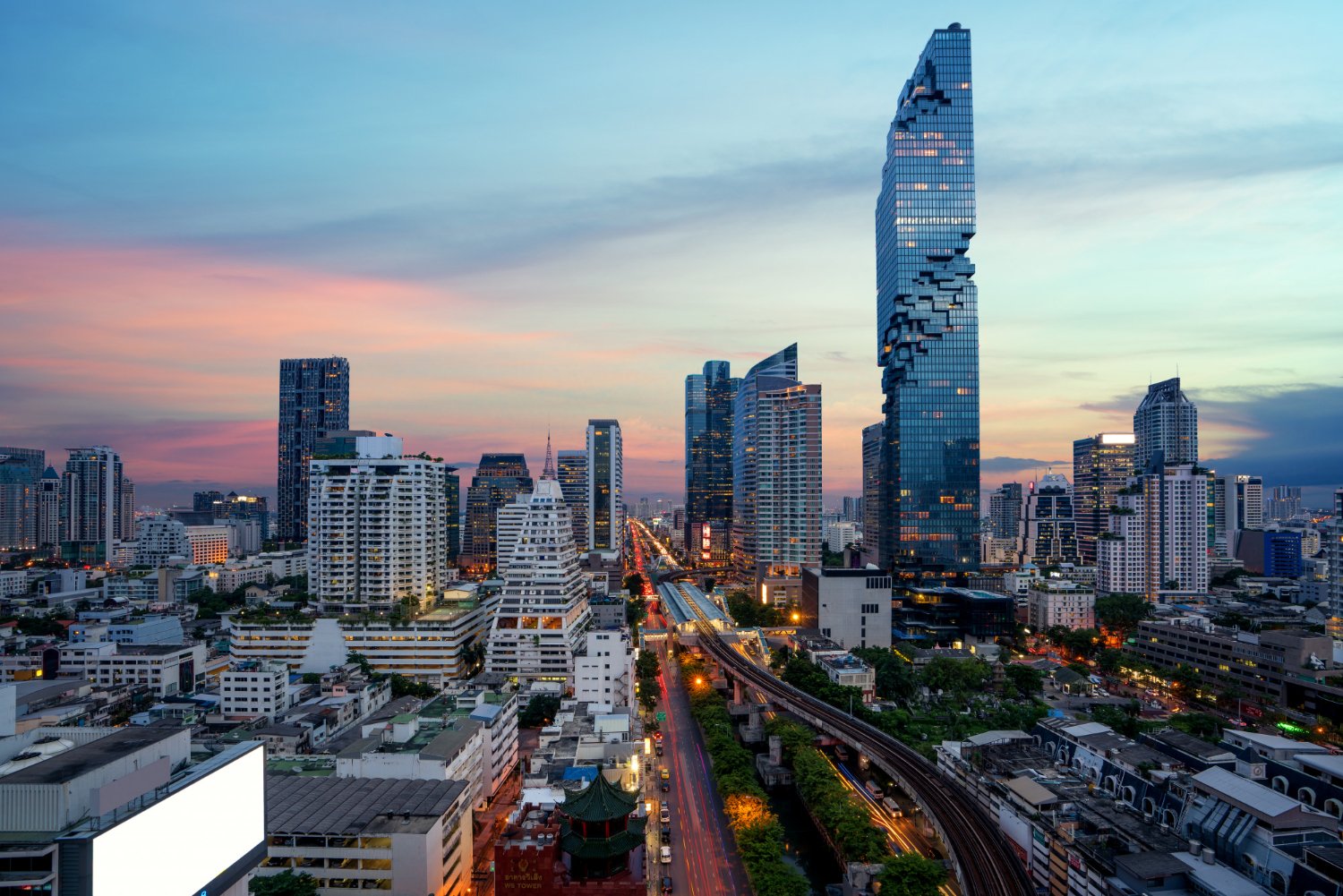
City view in historical Bangkok
Today, traces of 1942 remain embedded quietly in geography. The Free Thai Museum offers insight into resistance networks that operated beneath official cooperation. Bang Rak’s riverside warehouses hint at wartime logistics. Tha Tian’s market lanes once echoed with rumors and cautious conversations.
Walking these districts today reveals a city transformed yet continuous.
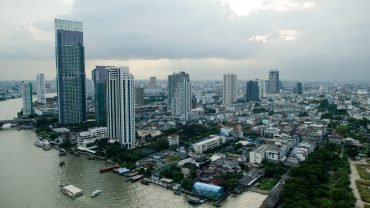
Modern Bangkok overwhelms with traffic, neon, and skyscrapers. Yet beneath elevated train lines lie canals that once carried wartime produce. Beneath boutique hotels stand buildings that witnessed shifting loyalties.
The occupation years did not erase Bangkok. They tested it.
Life in 1942 teaches that war is not always destruction visible from the sky. Sometimes it is inflation at the market stall. Silence at dinner tables. Careful phrasing in classrooms.
Bangkok survived not because it was untouched, but because it navigated complexity.
To travel Bangkok with awareness of its occupation years is to see beyond shopping malls and rooftop bars. It is to recognize that beneath cosmopolitan energy lies a capital that once balanced between empires and preserved its core institutions through compromise and covert resistance.
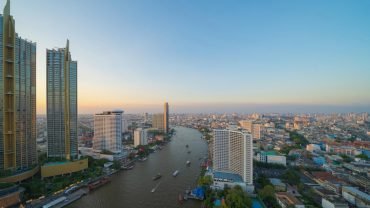
Stand along the Chao Phraya at sunset. Imagine blackout curtains drawn across riverside homes. Imagine the cautious optimism of citizens who believed survival required flexibility.
Bangkok’s story in 1942 is not about ruins. It is about endurance through ambiguity.
And that endurance shaped the capital you see today.
Bangkok in 1942 was a city balancing cooperation and quiet resistance.
Visit the Free Thai Museum, walk Bang Rak’s riverside, and explore Tha Tian’s historic lanes to see how this capital survived occupation without losing its identity.
Comment (0)