

Introduction
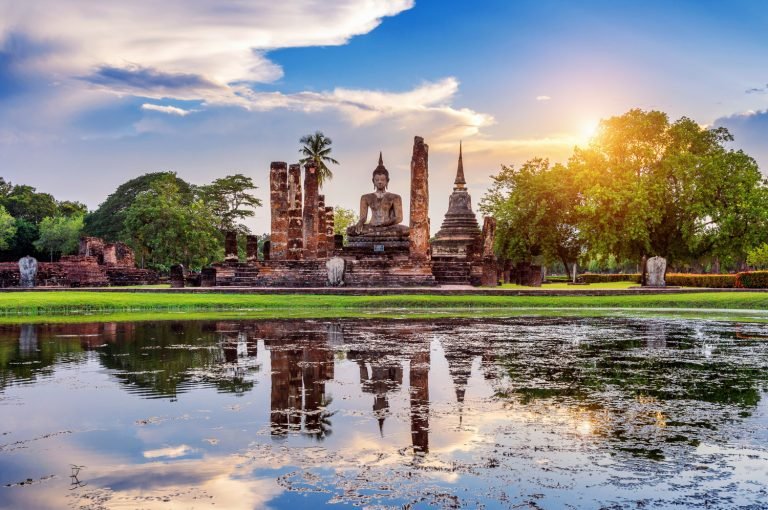
There’s a moment I remember clearly: I was standing alone at dawn inside the old city walls of Sukhothai. The sky was still soft and pale, monks were walking silently across the brick road, and the only sound was the creaking echo of centuries-old trees swaying over ancient ruins.
It was in that quiet morning that I realized something—
Thailand is not just a country. It’s a layered civilization built on the ashes, triumphs, and memories of dozens of kingdoms that rose and fell long before our time.
If we truly want to understand Thailand today—its culture, language, beliefs, food, and identity—we must walk back into these forgotten cities. And this is where my journey began.
Why Ancient Cities in Thailand Matter
Thailand’s ancient cities are not simply archaeological sites.
They are living evidence of Southeast Asia’s shifting power, the wars that shaped the region, and the cultural exchanges that flowed between India, China, Khmer, and the Malay world.
From the mighty capital of Ayutthaya, burned to the ground by war,
to the mountain fortress cities of the Lanna Kingdom,
to the spiritual birthplace of Thai identity in Sukhothai,
each kingdom reveals a different chapter of who we became.
These aren’t just ruins.
They are timelines carved in stone.
The Rise of the Kingdom — Origins
Long before modern Thailand existed, the region was a crossroads for migrating peoples—Mon, Khmer, Tai, Lao, Malay.
Each brought their own languages, gods, political systems, and art.
Out of this melting pot rose several powerful kingdoms:
- Dvaravati (6th–11th century) — Buddhism’s first major footprint.
- Sukhothai (13th century) — The dawn of Thai identity.
- Ayutthaya (1350–1767) — A global empire with foreign embassies.
- Lanna (1292–1775) — The northern mountain kingdom with its own script and culture.
- Thonburi & Rattanakosin — Rebirth after war.
Each kingdom rose for a reason: fertile land, military strength, trade routes, or alliances.
And each kingdom fell for a reason too: war, famine, invasions, political collapse.
Golden Age — Art, Culture & Power
While walking through the temples of Sukhothai, I couldn’t help but imagine how the city must have looked at its peak—wide boulevards, lotus ponds, golden-roofed halls, monks chanting, kings issuing decrees in graceful Thai script.
Every kingdom had its golden age:
Sukhothai’s Golden Age
- The birth of the Thai alphabet
- Flourishing Theravada Buddhism
- Elegant, peaceful Buddhist art
- Water management and city planning
Ayutthaya’s Golden Age
- One of the world’s wealthiest capitals
- Diplomacy with France, Portugal, Japan, China
- Multi-ethnic communities and global trade
- Magnificent palaces and towering temples
- Ayutthaya was once compared to Paris and Venice by European envoys.
Lanna’s Golden Age
- Distinctive northern architecture
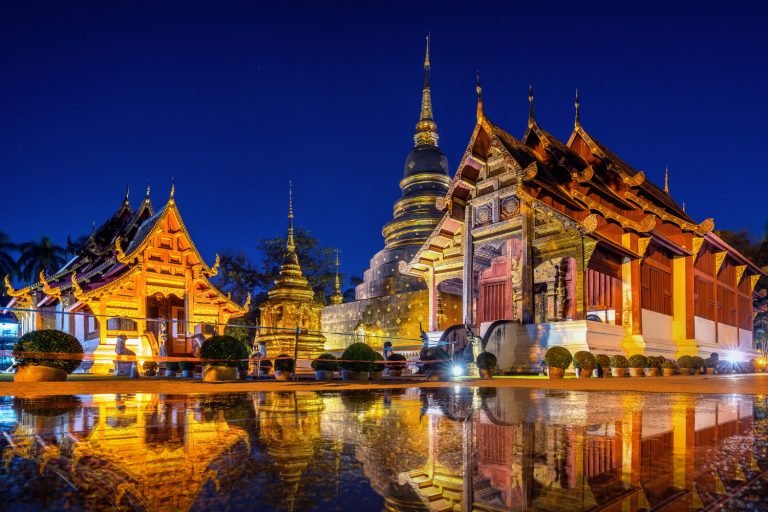
- Gold-filled temples of Chiang Mai & Lampang
- Local wisdom in agriculture, weaving, and city design
- Artistic fusion of Burmese, Shan, and Chinese influence
These ages were not just prosperous eras—they shaped the DNA of Thailand today.
The Fall — War, Destruction & Rebirth
Every kingdom eventually faced its darkest hour.
Ayutthaya burned in 1767.
Sukhothai faded into the jungle.
Lanna was fragmented by internal conflict and foreign pressure.
Standing in the ruins of Ayutthaya, I could almost feel the weight of that night—the smoke rising into the sky, statues beheaded, families fleeing, temples collapsing.
But the remarkable thing is this:
Thailand rebuilt. Again and again.
War destroyed cities, but not identity.
What to See Today — Must-Visit Sites
f you want to walk through Thailand’s history with your own eyes, start here:
Sukhothai Historical Park
- Dawn cycling routes
- Wat Mahathat reflection pools
- Khmer-Buddhist fusion architecture
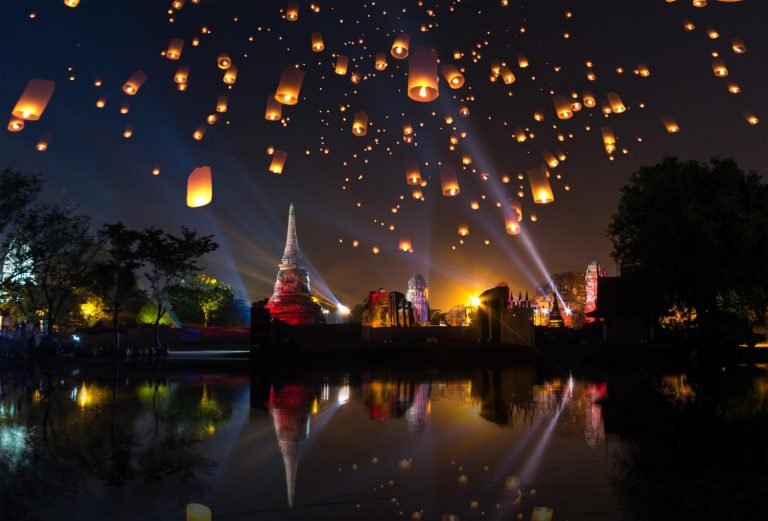
Ayutthaya Historical Park
- Wat Chaiwatthanaram
- Elephant Kraal
- Portuguese Village (war archives)
- Japanese Village (samurai mercenary history)
Chiang Mai & Lanna Ruins
- Wat Phra Singh
- Wiang Kum Kam ancient city
- Lanna-style wooden temples
Phimai & Khmer Temples
- Pre-Angkor architecture
- Ancient highways connected to Angkor Wat
— These places aren’t tourist spots—they’re time machines.
Jayjames’ Reflection
Every time I walk into an ancient city, I’m reminded of something simple but powerful:
Civilizations fall. But culture survives—through stories.
And traveling through Thailand’s ancient kingdoms feels like walking through the memories of millions of people who lived, fought, built, prayed, and dreamed long before us.
Mini Travel Guide
Best Time to Visit
- November–February (cool season)
- March–May (hot, sunny photography)
How to Get There
- Sukhothai: flight or bus
- Ayutthaya: 1 hr from Bangkok
- Chiang Mai: flight or overnight train
Average Budget
- 1,200–2,500 THB per day
Travel Tip
Rent a bicycle or scooter. Ancient cities feel different when explored slowly.
Closing Thoughts
If you want to truly understand Thailand—go beyond beaches.
Start where the kingdoms rose.
Start where the first alphabets were written.
Start where the fires of war ended and cultures were born again.
This is Thailand before Thailand became Thailand.
And it’s waiting for you to rediscover it.
Comment (0)