2.50 hours
Daily Tour
5 people
English
There are cities you visit for beauty, culture, or food. And then there is Hiroshima—a city you visit to understand humanity.
Its streets whisper stories of destruction, survival, and the unbreakable spirit of rebuilding. The 1945 atomic bombing was one of the most defining moments in world history, reshaping geopolitics, ethics, and global security. Yet when you walk through Hiroshima today, what you feel is not despair—but hope.
This walking tour, Hiroshima’s Path to Peace, is more than sightseeing. It is a guided journey into the memories of a city that experienced unimaginable tragedy, learned from it, and transformed itself into a symbol of peace for the world.
Planetale invites you to walk through history with intention—to understand the moments that changed the world and the lives that lived through them.
Before the tour begins, it’s important to understand the context that placed Hiroshima at the center of world history.
By mid-1945, World War II in the Pacific had reached a devastating stalemate. Japan’s major cities were firebombed; resources were depleted; surrender was uncertain. The United States selected Hiroshima as the target for the world’s first wartime atomic bomb because:
It held military and industrial significance,
It had suffered relatively little previous bombing, making impact assessment clearer,
And, chillingly, it was considered “representative”—a place where the destructive power of atomic science could be demonstrated to maximum effect.
On August 6, 1945 at 8:15 AM, the bomb detonated 600 meters above central Hiroshima. In seconds, tens of thousands perished. In months, many more died from burns and radiation. Buildings vanished. Families vanished. Time seemed to freeze.
But history did not end there.
What you walk through today is a living testament to how humanity can rise from its darkest hour.
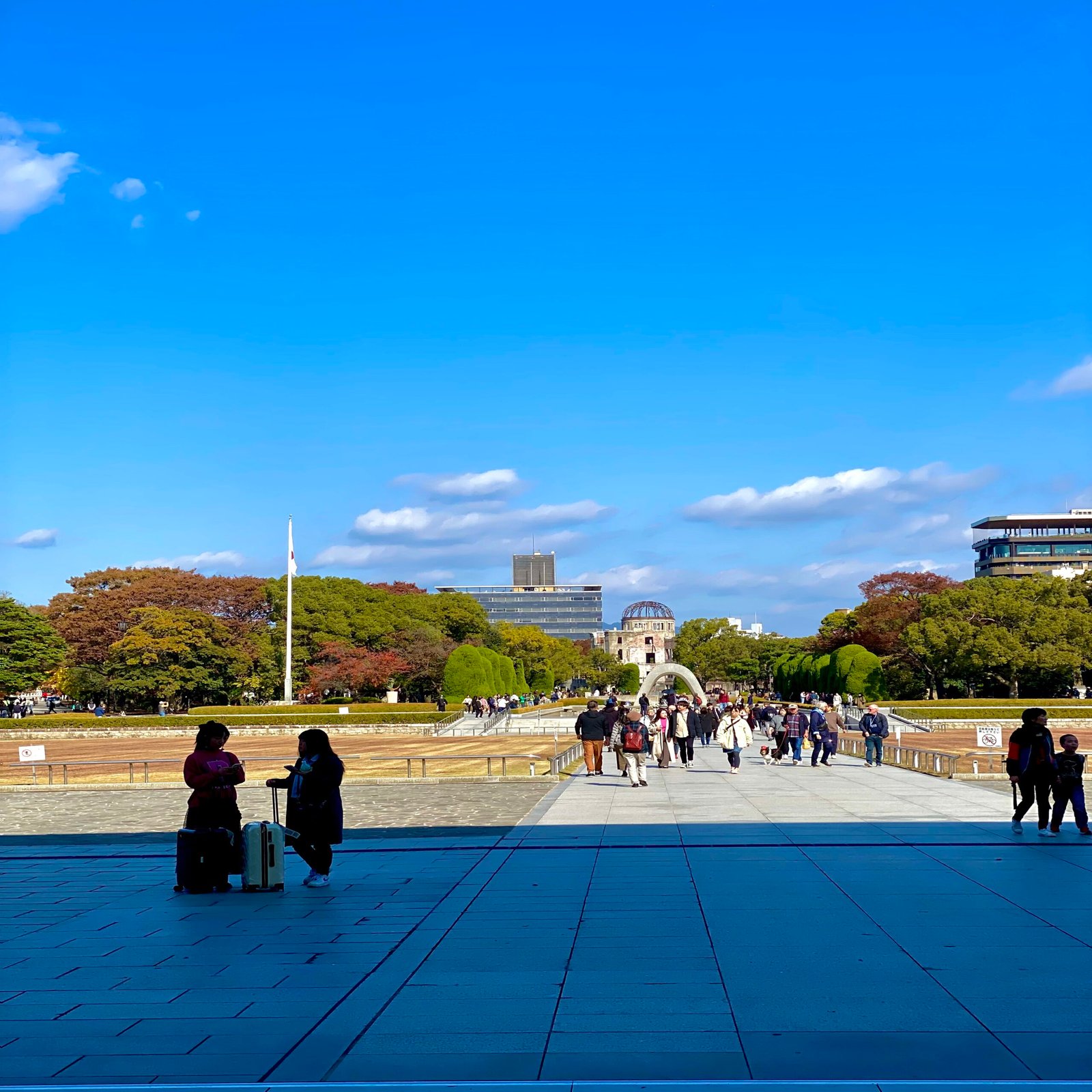
Your journey begins in the heart of the city at Hiroshima Peace Memorial Park, an expansive green space built where the bomb detonated. Designed by architect Kenzo Tange, the park is not only a memorial—it is an invitation to reflect.
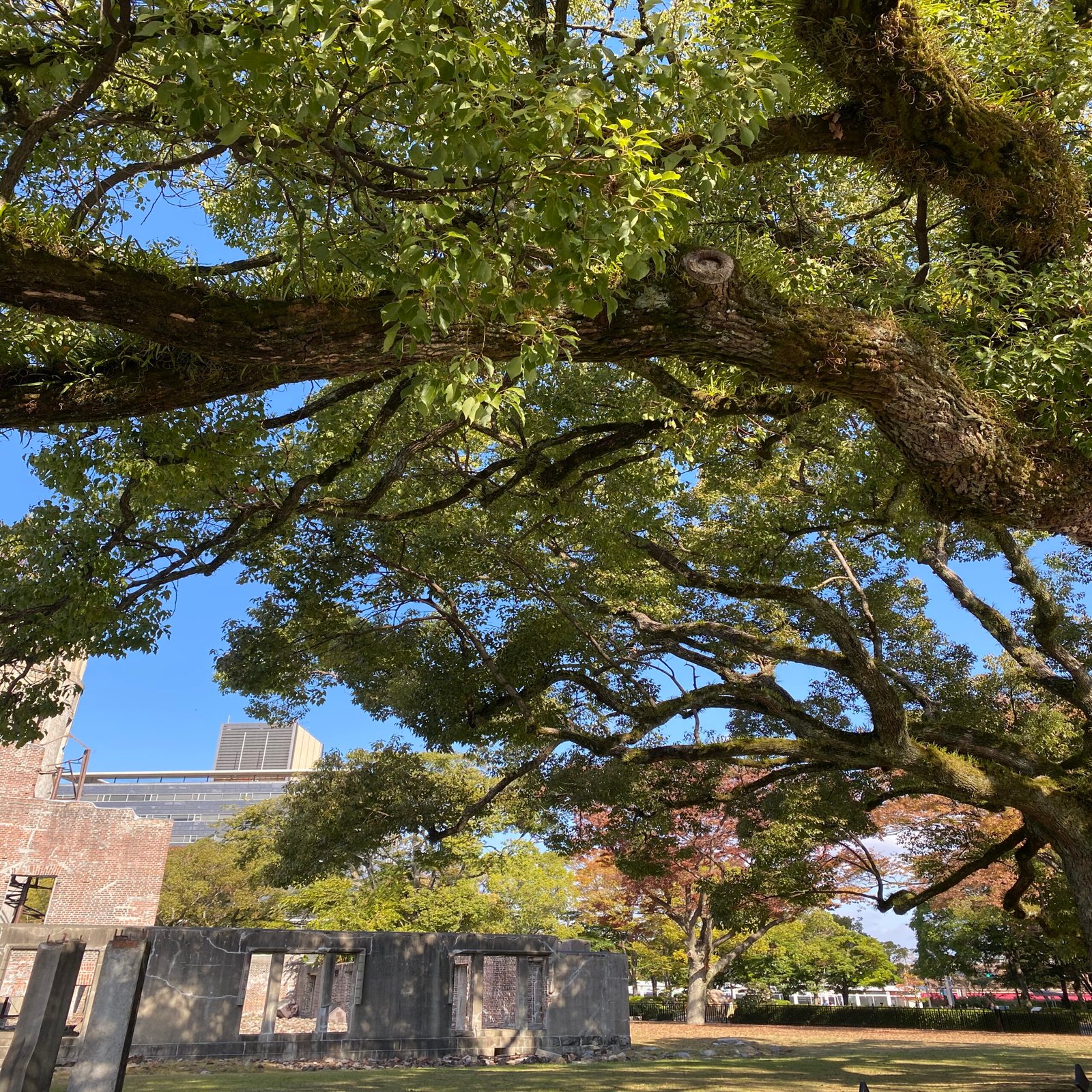
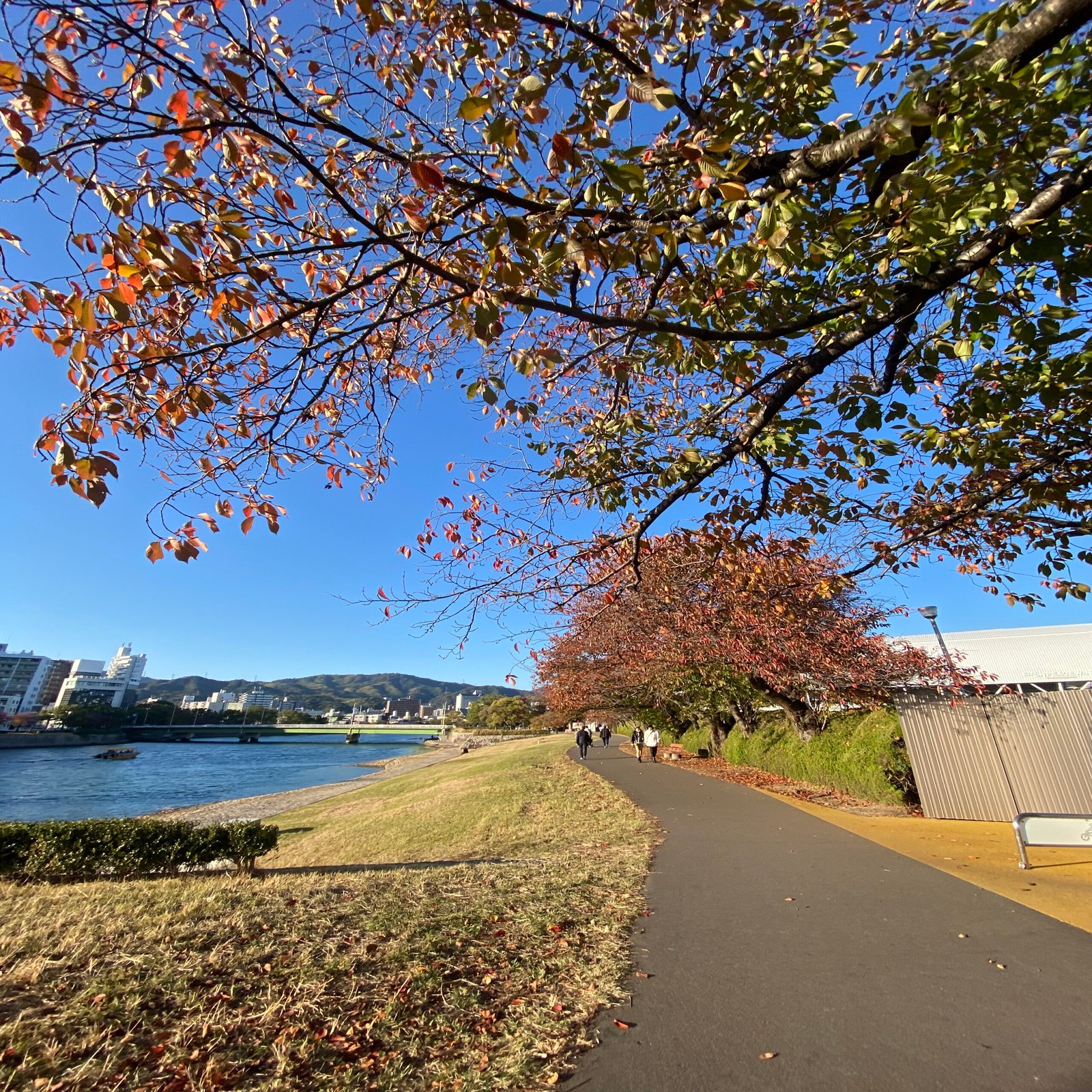
Here, the contrast is striking: lush trees, soft rivers, and the distant sound of children playing. Nature has reclaimed the ground where fire once swept through.
This peacefulness is intentional. The park exists to remind visitors that peace is fragile, precious, and worth protecting.
As your guide explains the city layout before the bombing, you will begin to visualize what once stood where the park now lies: bustling streets, offices, and homes. The silence that follows this realization is often the first emotional moment of the tour.
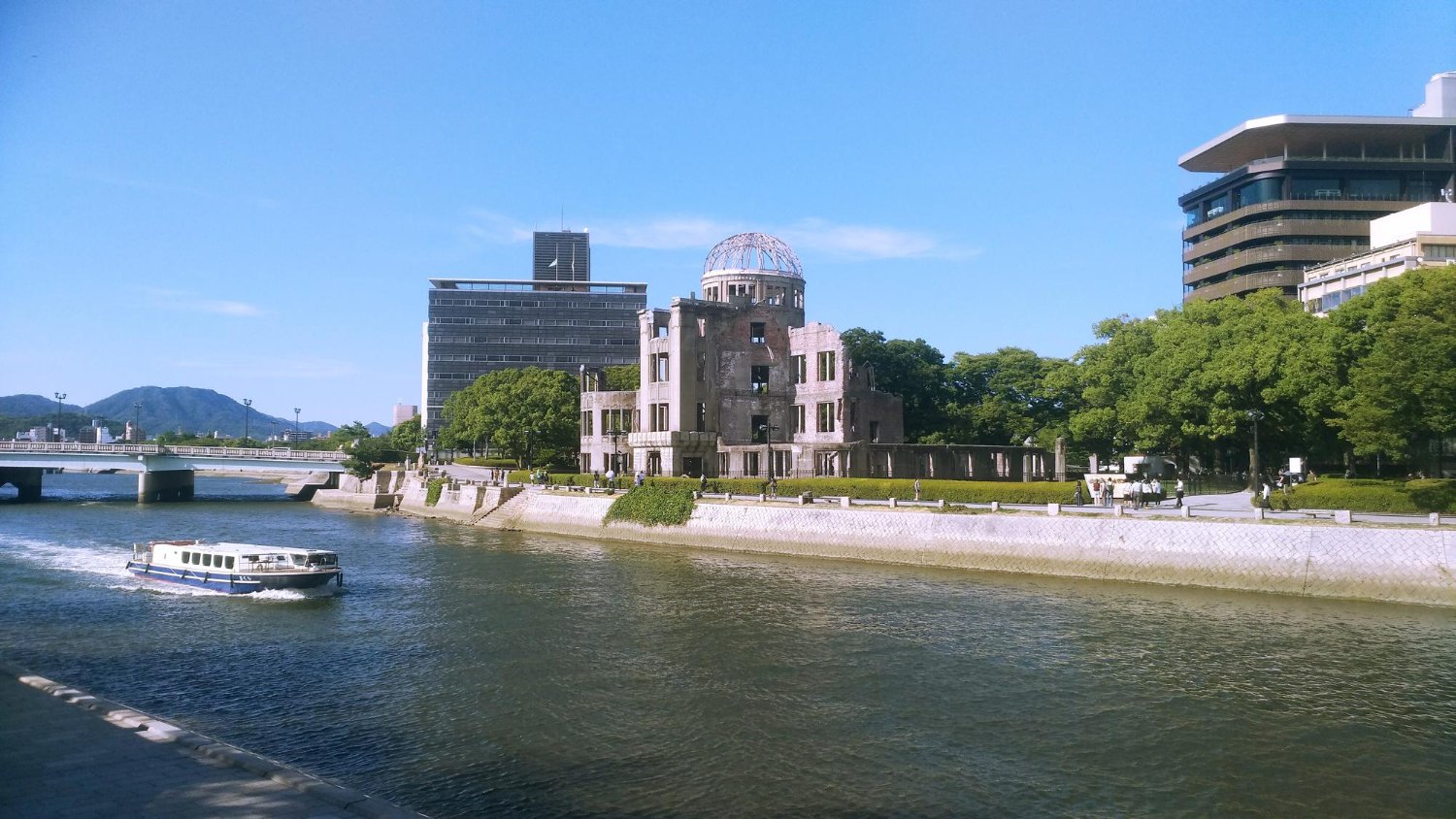
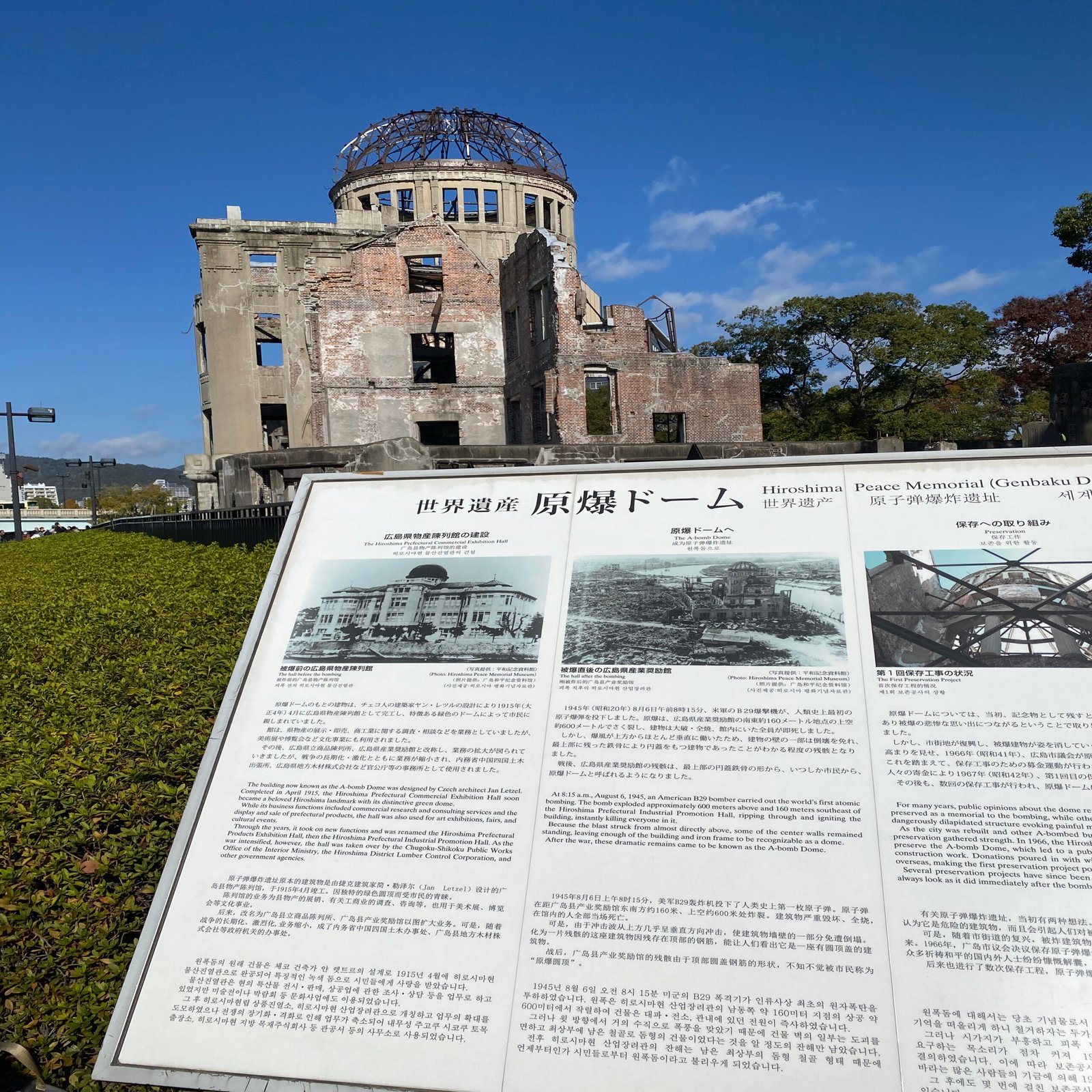
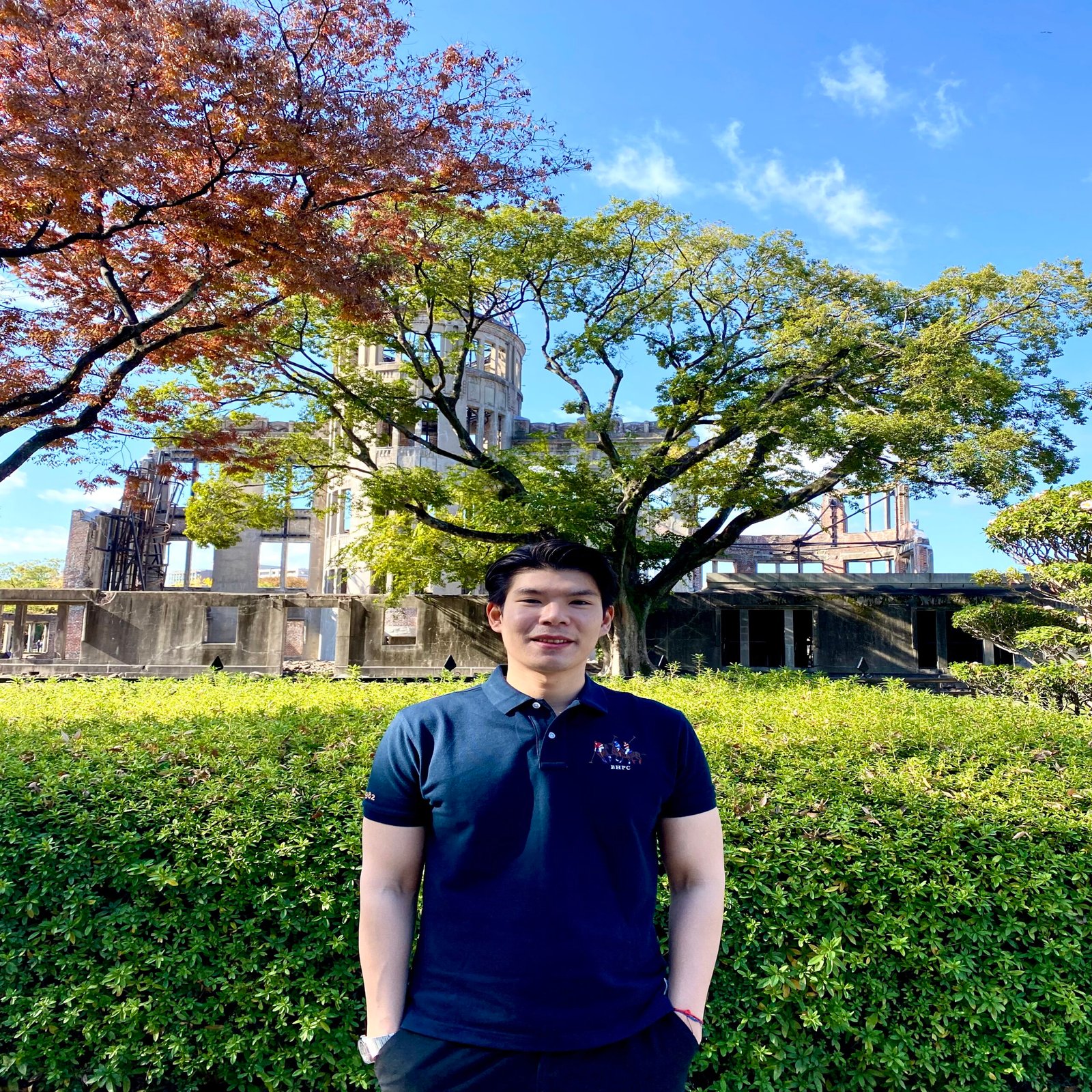
The most iconic symbol of Hiroshima, the A-Bomb Dome, stands just a short walk away. Once the Hiroshima Prefectural Industrial Promotion Hall, the structure was one of the very few buildings that remained partially standing after the blast.
Its skeleton-like form is powerful not because of its ruin, but because of its resilience.
The tour guide often shares:
Who worked in the building
Why the dome survived while the surroundings vaporized
How the people of Hiroshima debated whether it should be preserved
And how it became a UNESCO World Heritage Site in 1996
Standing before the Dome, you feel the weight of both past and future. The building is not simply a ruin—it is a message left unchanged so that future generations cannot forget.
Next, you arrive at the Memorial Cenotaph, an arched monument shaped like a sheltering roof. Below it rests a stone chest containing the names of all known victims of the atomic bombing.
The inscription reads:
“Let all the souls here rest in peace; for we shall not repeat the evil.”
This line is not directed at any country—it is a message to all humanity.
The architectural design is deliberate. When you stand in front of the Cenotaph, you can see the A-Bomb Dome perfectly framed through its arches. The message is clear: memory, loss, and peace are interconnected.
A short walk leads you to the Flame of Peace. Lit in 1964, it will not be extinguished until the last nuclear weapon on Earth is dismantled.
It burns quietly, but its meaning is immense.
Your guide will explain Japan’s role in post-war peace movements, the testimonies of hibakusha (atomic bomb survivors), and how Hiroshima became a global center for anti-nuclear diplomacy.
Many visitors say this is the moment they pause the longest.
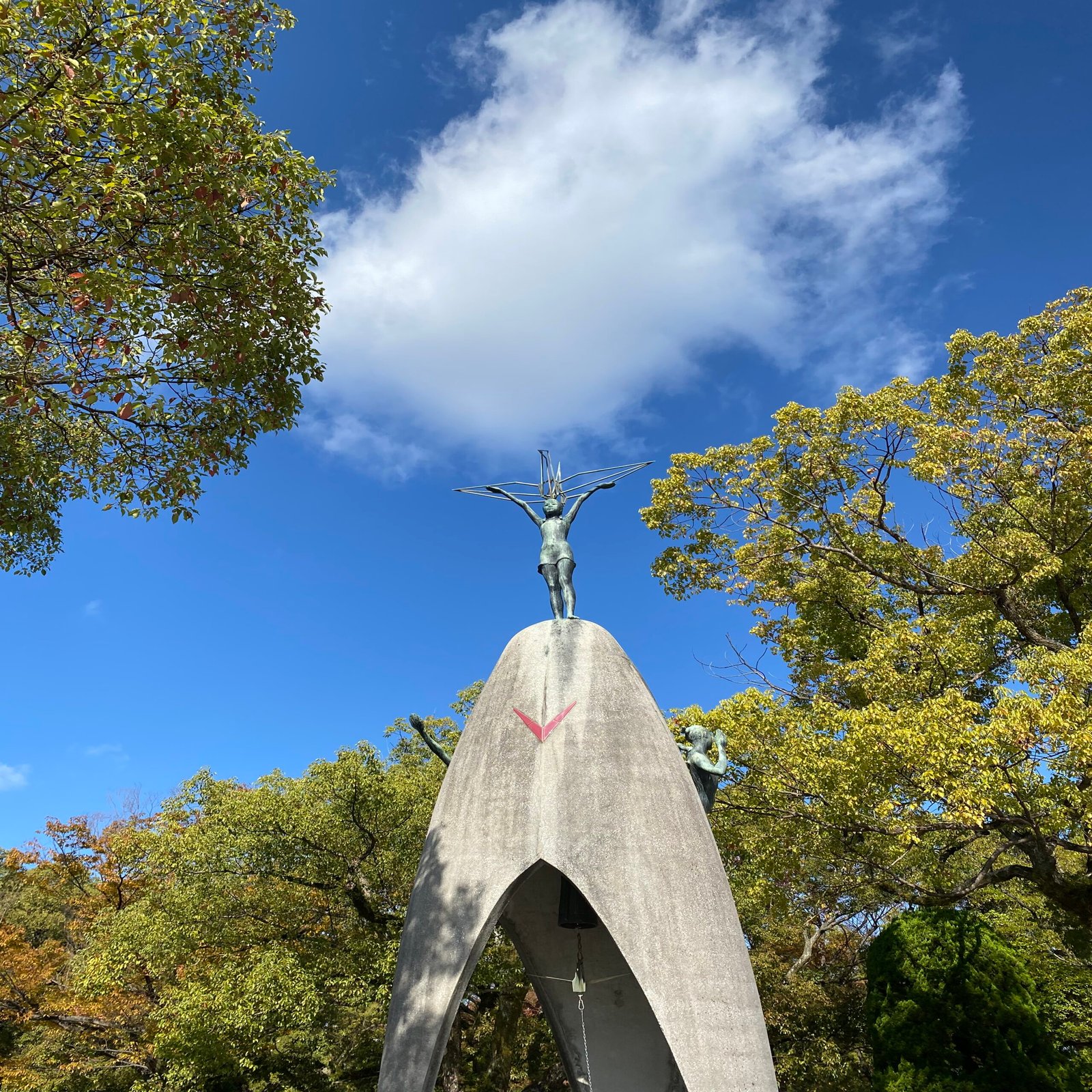
Inspired by Sadako Sasaki, a young girl who developed leukemia from radiation exposure, this monument is dedicated to all the children who died from the bombing.
Sadako believed in an old Japanese legend: if she folded 1,000 paper cranes, her wish would come true. She folded hundreds before passing away, and her story became a symbol of innocence and perseverance.
Today, thousands of colorful paper cranes from around the world are displayed here—sent by children, schools, diplomats, and travelers.
It is arguably the most emotional stop of the tour.
Depending on the tour schedule, you may listen to recordings or stories from hibakusha. Their testimonies are central to Hiroshima’s historical narrative.
You may hear about:
The moment the bomb exploded and a flash of light swallowed the sky
Searching for family among rubble and flames
Struggling with radiation sickness
The social discrimination survivors endured
Their lifelong mission to promote peace
The hibakusha remind us that history is not made of numbers—it is made of lives.
After the tragedy, Hiroshima faced a question no city had ever faced before: How do you rebuild after total destruction?
Your guide will describe:
The 1949 Hiroshima Peace Memorial City Construction Law
The political movement to make Hiroshima a city of peace
The planting of “survivor trees” that still grow today
How the city transformed into a global center for education and diplomacy
The walk concludes with a sense of renewal—not sorrow.
Hiroshima does not ask for pity. It asks for remembrance and understanding.
Planetale is built on the belief that traveling is not just about visiting places, but about understanding the world through its stories. This tour embodies that mission perfectly.
You will leave the walk with:
A deeper understanding of WWII’s impact on Asia and the world
A clearer picture of how ordinary civilians experienced history
A renewed appreciation for peace, resilience, and reconciliation
Hiroshima teaches us that history is not distant—it is alive, and we have a responsibility to learn from it.
Duration: Around 2 hours 30 minutes
Difficulty: Easy walking, suitable for all ages
Language: English
Group Size: Small group for an intimate learning experience
Best For:
History enthusiasts
Travelers visiting Japan for the first time
Students and educators
Anyone seeking meaningful cultural experiences
Where your expert guide introduces the historical context behind the 1945 atomic bombing. Continue to the Atomic Bomb Dome and learn about its significance as a UNESCO World Heritage Site. Visit the Cenotaph for the A-Bomb Victims, the Flame of Peace, and the Children’s Peace Monument, where you will hear the moving story of Sadako Sasaki. The tour concludes with reflections on Hiroshima’s remarkable post-war reconstruction and its role as a global symbol of peace.
Comfortable walking shoes, weather-appropriate clothing, a bottle of water, and a camera. During summer, sunscreen and a hat are recommended.
Yes. The walking route is mostly flat and designed to be accessible for all ages. The pace is relaxed, with multiple stops for storytelling and rest.
The tour lasts approximately 2.5 hours.
No transportation is required, as this is a walking tour. The meeting point is located in central Hiroshima with easy access by tram or train.
Yes, your guide will share documented testimonies from hibakusha (atomic bomb survivors), presented respectfully and sensitively.
Yes, the tour operates rain or shine. In case of heavy weather alerts, rescheduling or refund options may apply.







Leave a review