

In the early 1940s, Bangkok was not yet the megacity of highways, malls, and elevated trains that define it today. It was a river capital shaped by canals, wooden houses on stilts, royal compounds, markets along the Chao Phraya, and government buildings clustered around Rattanakosin Island. The skyline was low. The city moved by boat as much as by tram. Yet beneath its tropical calm, Bangkok stood at the crossroads of empires.
When the Second World War expanded into Southeast Asia after December 1941, Thailand found itself in a position few countries envied. Imperial Japan was advancing rapidly across the region. British Malaya, Burma, and the Philippines were immediate targets. Thailand lay directly in the path of that expansion.
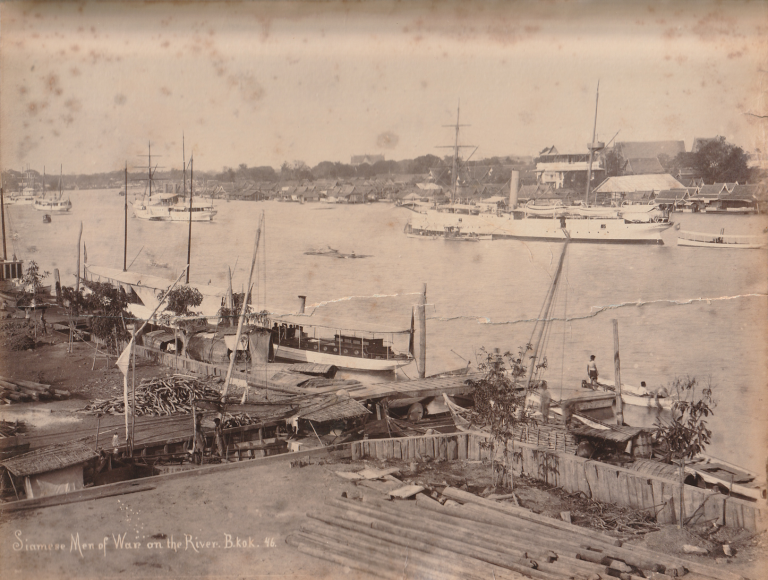
Bangkok in the 1940s historical photograph
Across Bangkok, government officials faced an impossible calculation. Resist and risk invasion. Cooperate and risk complicity. Thailand’s decision would shape not only wartime survival but also how the capital would look after the war ended.
Japanese forces landed on Thai soil in December 1941. Skirmishes occurred in several provinces. Within hours, ceasefire negotiations began. Thailand agreed to allow Japanese troops transit rights through its territory toward British-controlled Burma and Malaya. Shortly afterward, a formal alliance was declared.
Bangkok did not fall in flames like Manila. It did not endure a siege like Singapore. Instead, it became a logistical artery.
Japanese troops marched through the capital. Military convoys crossed bridges. Railways became strategic lifelines. Ports handled supplies. Government ministries operated under wartime pressure while attempting to maintain sovereignty.
This phase of Thailand’s wartime experience is central to understanding Bangkok WWII history. The city was neither fully occupied in the same way as colonized territories nor fully independent from Japanese influence. It functioned in ambiguity.
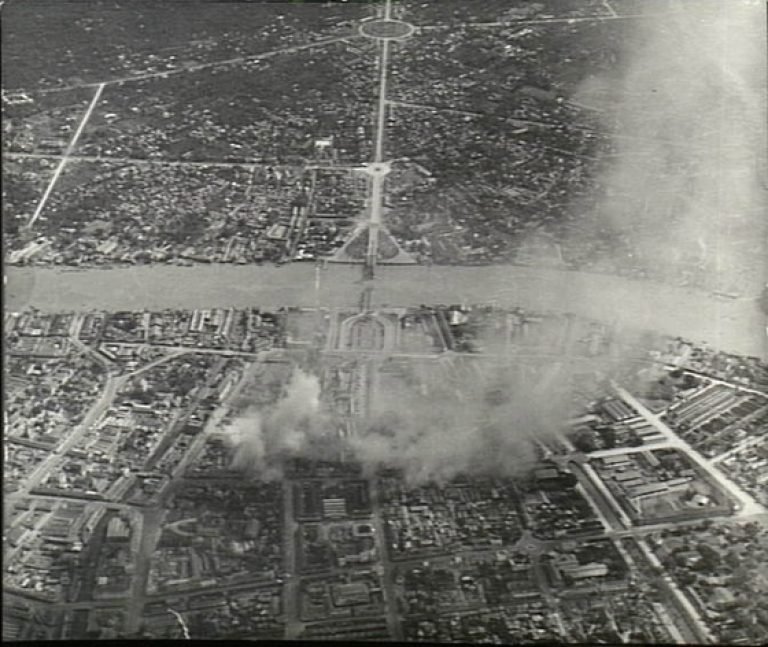
Bangkok during World War II era
Across Thailand, the alliance created deep internal divisions. Some leaders viewed cooperation as necessary for survival. Others began organizing what would later be known as the Free Thai Movement, a resistance network coordinating with Allied forces.
Bangkok thus became a city of dual realities. Officially aligned with Japan. Quietly connected to Allied intelligence through underground channels.
Meanwhile, infrastructure intensified in importance. The railway system linking Thailand to Burma became critical to Japanese military campaigns. The construction of the Burma Railway, later known as the Death Railway, depended on Thailand’s transport networks. Although the most brutal sections lay outside Bangkok, the capital served as administrative and logistical support hub.
Goods moved through rail yards. Troop trains departed from central stations. Bureaucratic decisions made in Bangkok affected thousands of forced laborers elsewhere.
As the war shifted and Japan began losing ground, Allied strategy evolved. Bangkok’s infrastructure became a legitimate target.
From 1944 onward, Allied air raids struck selected objectives in the capital. The goal was not annihilation of the city but disruption of railways, bridges, power plants, and military storage facilities. Bombing intensified as the war approached its end.
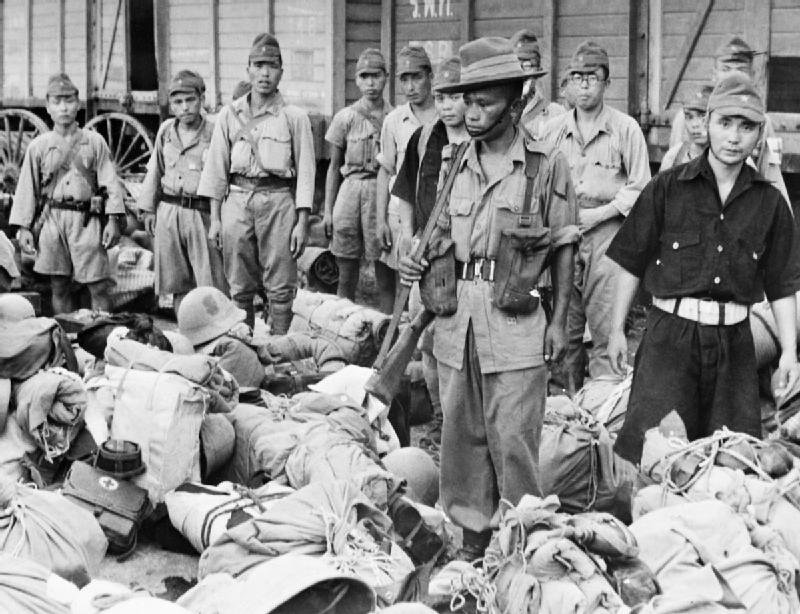
Japanese Troops Leave Bangkok, 1945
Residents of Bangkok learned the sound of sirens. Blackouts became routine. Families dug shelters. Markets reopened after raids. Wooden houses were vulnerable to fire. Concrete government buildings absorbed shockwaves.
The Allied bombing of Bangkok did not reduce the city to rubble, but it left scars. Rail yards were damaged. The Rama VI Bridge suffered strikes. Industrial zones along the river were targeted. Civilian casualties occurred, though on a smaller scale than in cities that became full battlegrounds.
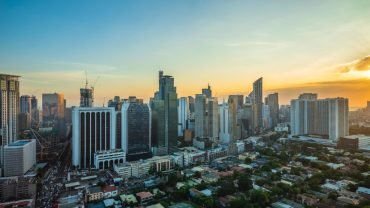
Bangkok’s survival was not accidental. It was strategic positioning combined with geographic circumstance. Unlike Manila, which became a contested urban battlefield between Japanese defenders and returning American forces, Bangkok was not the site of major ground combat during liberation.
There was no weeks-long artillery duel across the city center. No systematic street-to-street fighting. The Japanese withdrawal from Thailand occurred in the broader context of surrender following atomic bombings and Soviet entry into the war against Japan.
Thus Bangkok avoided the catastrophic destruction that befell many Asian capitals.
But survival did not mean normalcy.
Inflation soared. Rice shortages created anxiety. Transportation disruptions affected daily life. Political uncertainty intensified. The Free Thai Movement coordinated intelligence from within Bangkok, helping position Thailand diplomatically for the postwar settlement.
When Japan surrendered in August 1945, Bangkok did not need to be rebuilt from ashes. Yet it needed to redefine itself.
Thailand’s diplomatic maneuvering allowed it to avoid being treated as a fully defeated Axis power. This outcome profoundly shaped Bangkok’s postwar trajectory. Unlike occupied territories requiring Allied administration, Thailand retained institutional continuity.
The city did not experience the vacuum that plagued capitals emptied by ideological extremism. It did not undergo massive reconstruction campaigns to replace flattened districts.
Instead, Bangkok transitioned into the Cold War era as a strategic partner of the United States. American influence expanded. Infrastructure modernized. Roads widened. Military cooperation intensified.
Bangkok’s wartime survival enabled rapid postwar growth.
Today’s visitors rarely associate Bangkok with World War II. Skyscrapers and elevated rail lines obscure wartime geography. Yet traces remain embedded in landscape and memory.
Rail lines that once carried military cargo still operate in modified form. The central station at Hua Lamphong, long the symbolic heart of Thai rail transport, witnessed wartime troop movements and supply coordination. River crossings along the Chao Phraya once held strategic importance beyond tourism photography.
Bangkok’s canals, particularly in areas such as Bangkok Noi and Bangkok Yai, reveal how the city functioned before highways dominated. During the war, these waterways allowed alternative transport when rail lines were disrupted. Wooden homes along khlongs sheltered families listening for distant explosions.
Understanding Bangkok WWII history requires imagining the city smaller, quieter, and more vulnerable. The skyline of temples and palace spires stood against a sky occasionally crossed by aircraft. Markets reopened under rationing. Monks continued rituals despite air raid warnings.
Unlike Manila, where entire colonial districts vanished, Bangkok’s historic core survived. The Grand Palace remained intact. Wat Phra Kaew did not collapse under bombardment. Rattanakosin Island preserved continuity between prewar and postwar eras.
This continuity explains why Bangkok’s historical narrative feels different from other Southeast Asian capitals. Its trauma was strategic and psychological rather than annihilating.
The city absorbed war rather than disintegrating from it.
Modern Bangkok sometimes feels chaotic and unplanned. Yet its rapid expansion in the decades after World War II depended on the fact that core administrative and cultural structures were not erased.
Bangkok survived the bombs.
And in surviving, it positioned itself to become one of Asia’s most dynamic capitals in the second half of the twentieth century.
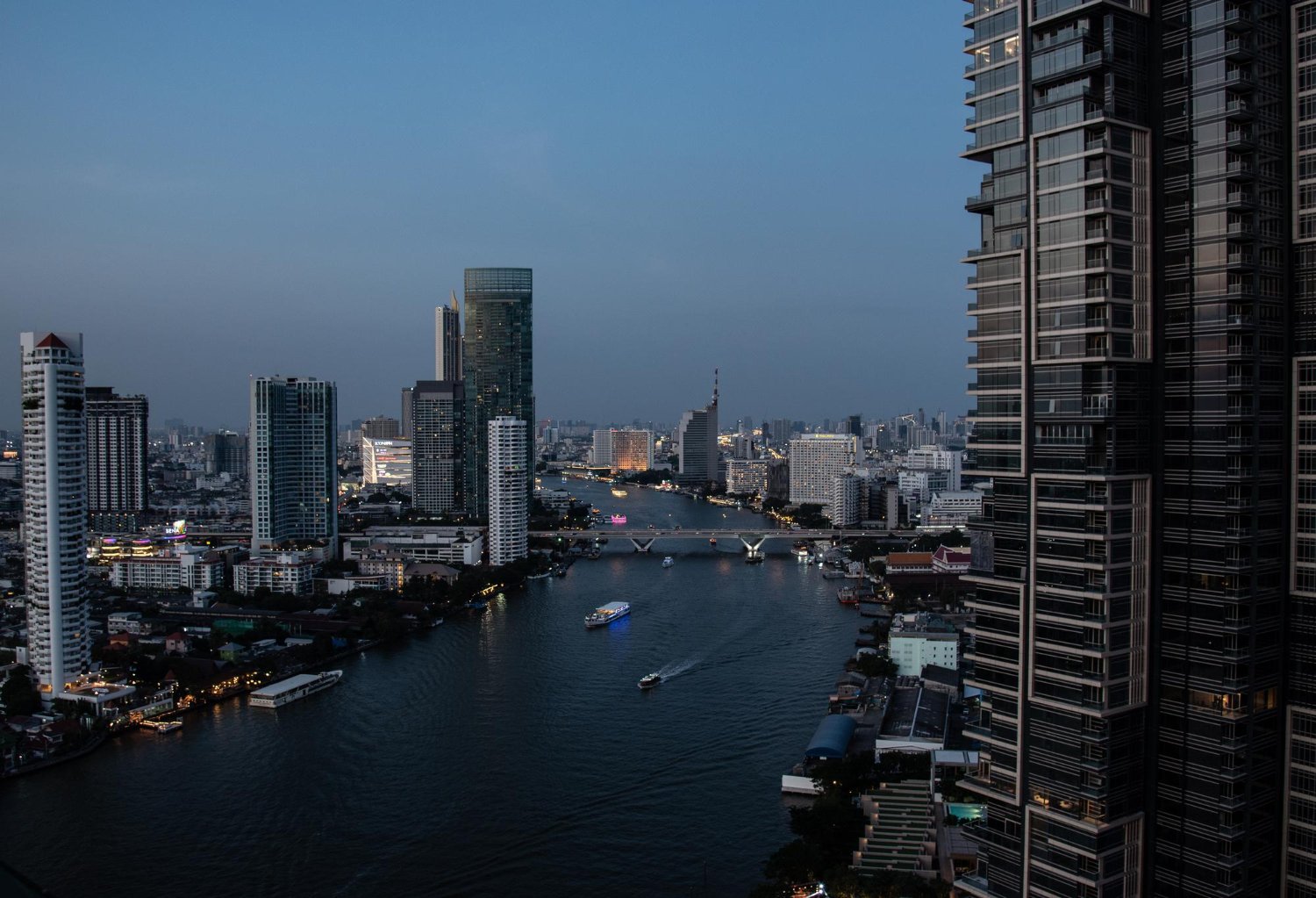
Chao Phraya river view in historical Bangkok
Traveling Bangkok today with wartime awareness changes perception. Hua Lamphong is not only a photogenic railway station; it is a reminder of a capital that functioned as military artery. The bridges across the Chao Phraya are not only sunset backdrops; they were once strategic targets. The quiet canals of Bangkok Noi once offered refuge during air raid sirens.
The war in Bangkok was not cinematic destruction. It was tension, calculation, compromise, and selective bombing.
This distinction matters.
While other cities rebuilt from rubble, Bangkok rebuilt from pressure. It carried forward institutions intact enough to evolve.
To walk Bangkok without knowing this history is to miss a hidden layer beneath its neon lights and street food stalls.
The capital that survived the bombs did not emerge unchanged. It emerged aware of geopolitical fragility and the value of strategic positioning.
Bangkok’s wartime story is not about heroic last stands or total devastation. It is about navigation between empires, survival through diplomacy, and endurance under selective bombardment.
That endurance shaped the modern city.
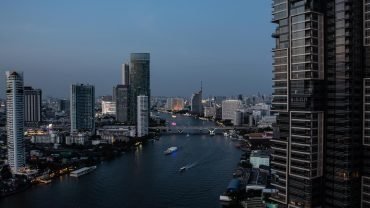
When you stand beside the Chao Phraya at dusk, watching ferries cross the river and skyscrapers reflect gold in the water, you stand in a capital that once listened for aircraft engines overhead.
Bangkok survived.
And because it survived, it grew.
Bangkok was not destroyed like Manila. It survived by strategy, compromise, and resilience.
Walk Bangkok beyond malls and traffic. Explore Bangkok Noi canals, Hua Lamphong station, and the bridges of the Chao Phraya with the knowledge that this capital once stood between empires and endured the bombs.
Comment (0)