

Cambodia is often introduced to travelers through beauty. The temples of Angkor Wat rise from jungle like stone poetry. The Tonlé Sap reflects sky and village life in quiet rhythm. Markets feel vibrant, immediate, alive. Yet modern Cambodia cannot be understood only through its ancient grandeur. Beneath the serenity lies one of the most devastating chapters of twentieth-century history.
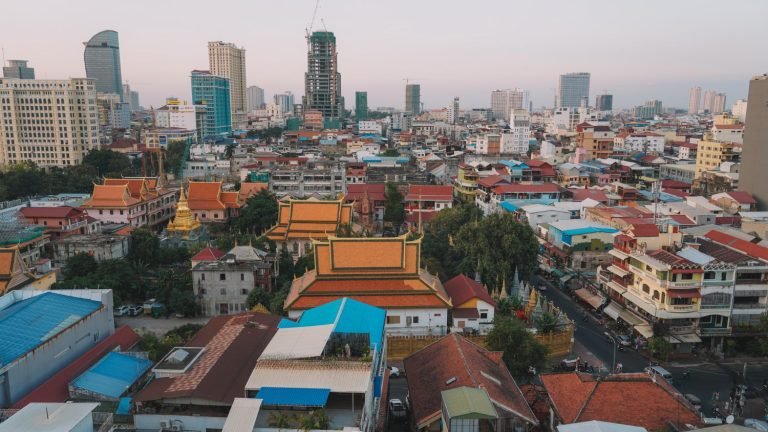
Cambodia city life beyond Angkor temples
Cambodia did not move through a single war. It endured overlapping conflicts that culminated in national catastrophe. To understand Cambodia’s present, one must understand how war dismantled not only infrastructure but social fabric, memory, and trust.
Before the turmoil of the late twentieth century, Cambodia was shaped by monarchy, colonial influence, and fragile neutrality. Under French Indochina, Cambodia was administratively linked to Vietnam and Laos, yet culturally distinct. Independence in the mid-twentieth century did not bring insulation from regional conflict. Instead, it placed Cambodia in a precarious position between ideological and geopolitical forces.
The Vietnam War spilled across borders. Bombing campaigns reached Cambodian territory. Political instability intensified. Factions formed. Civilians navigated uncertainty.
Civil war fragmented the country further. Cities and rural areas experienced different forms of vulnerability. Trust dissolved. Power shifted quickly. Ordinary life became fragile.
Then came the Khmer Rouge.
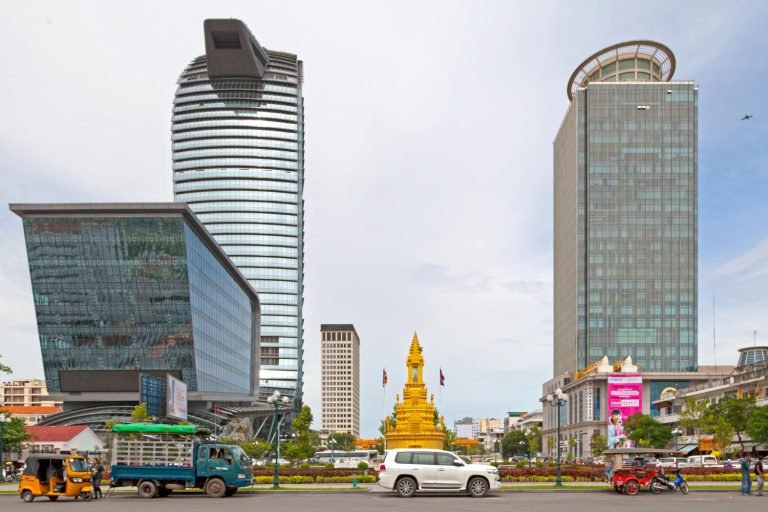
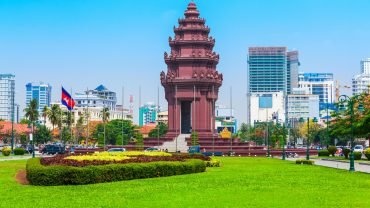
Phnom Penh urban landscape shaped by postwar reconstruction
Between 1975 and 1979, Cambodia experienced one of the most radical and destructive social experiments in modern history. The regime sought to erase class, urban identity, and perceived intellectualism. Cities were emptied. Families were separated. Institutions dismantled. Agriculture was collectivized through coercion. The goal was transformation. The result was devastation.
Millions died from execution, starvation, overwork, and disease. Cambodia’s educated population was disproportionately targeted. The social architecture of the country collapsed.
War in Cambodia did not only destroy buildings. It destroyed continuity.
When the regime fell, the country faced a different challenge: how to rebuild when memory itself was fractured. Survivors carried trauma privately. Public discussion emerged slowly. International attention focused intensely for a period, then faded.
The quiet after catastrophe became Cambodia’s defining condition.
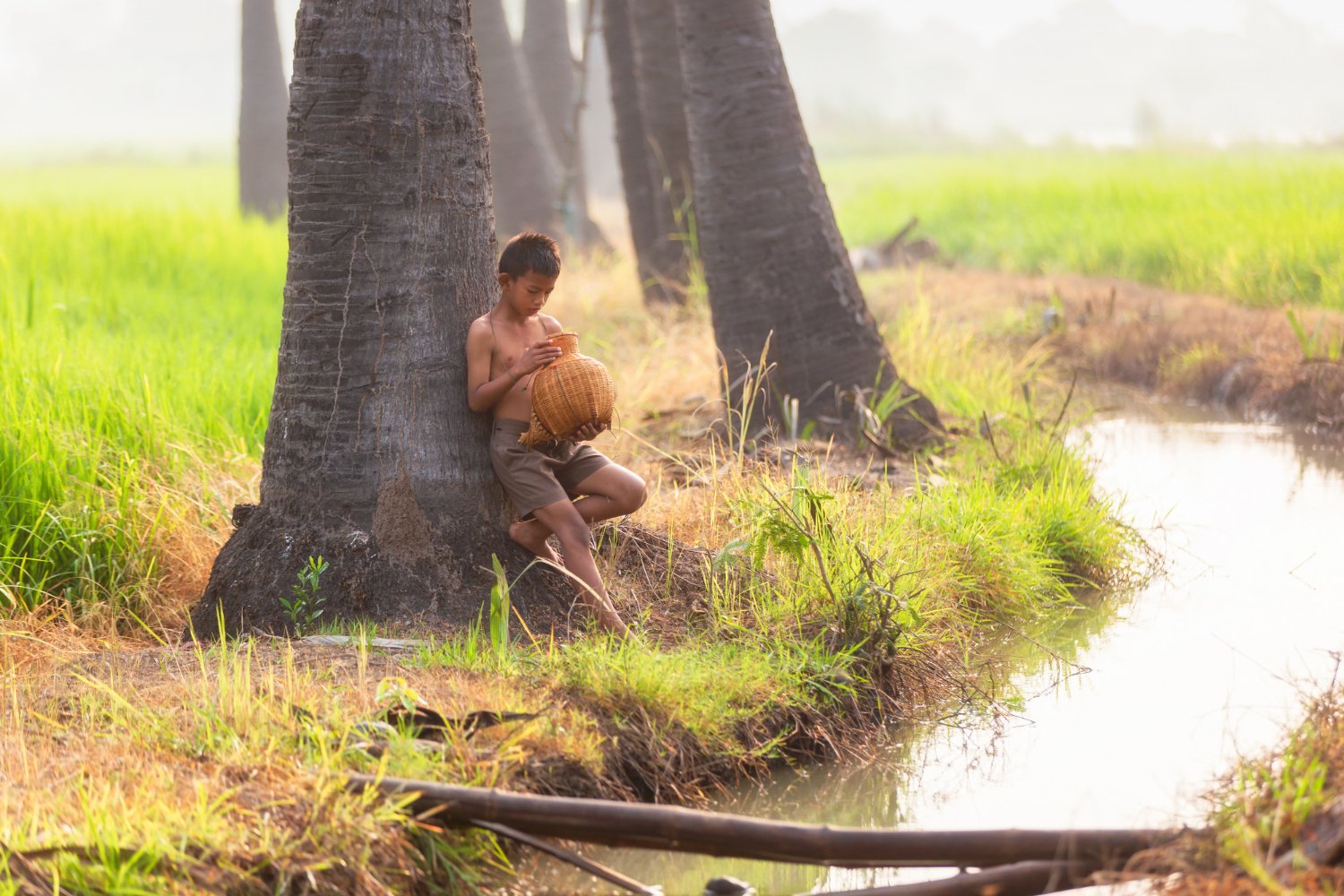
Rural Cambodia reflecting history of conflict and survival
Across Cambodia, landscapes absorbed this history. Former prisons became memorial sites. Fields once cultivated became killing grounds. Villages rebuilt on land that remembered.
In Phnom Penh, modern development stands beside spaces where terror once operated openly. In Battambang, rural life resumed over areas that endured displacement and violence. In Siem Reap, tourism flourishes near communities shaped by loss.
What distinguishes Cambodia’s war history is not only its severity but its silence.
Reconstruction required forward motion. International aid supported infrastructure and governance. Younger generations grew up in relative stability compared to their parents. Economic growth became priority.
Yet silence does not erase memory. It reshapes how it is carried.
Cambodia’s landscapes reflect resilience rather than spectacle. Sites of suffering are often modest. Memorials coexist with daily life. The country does not freeze itself in tragedy.
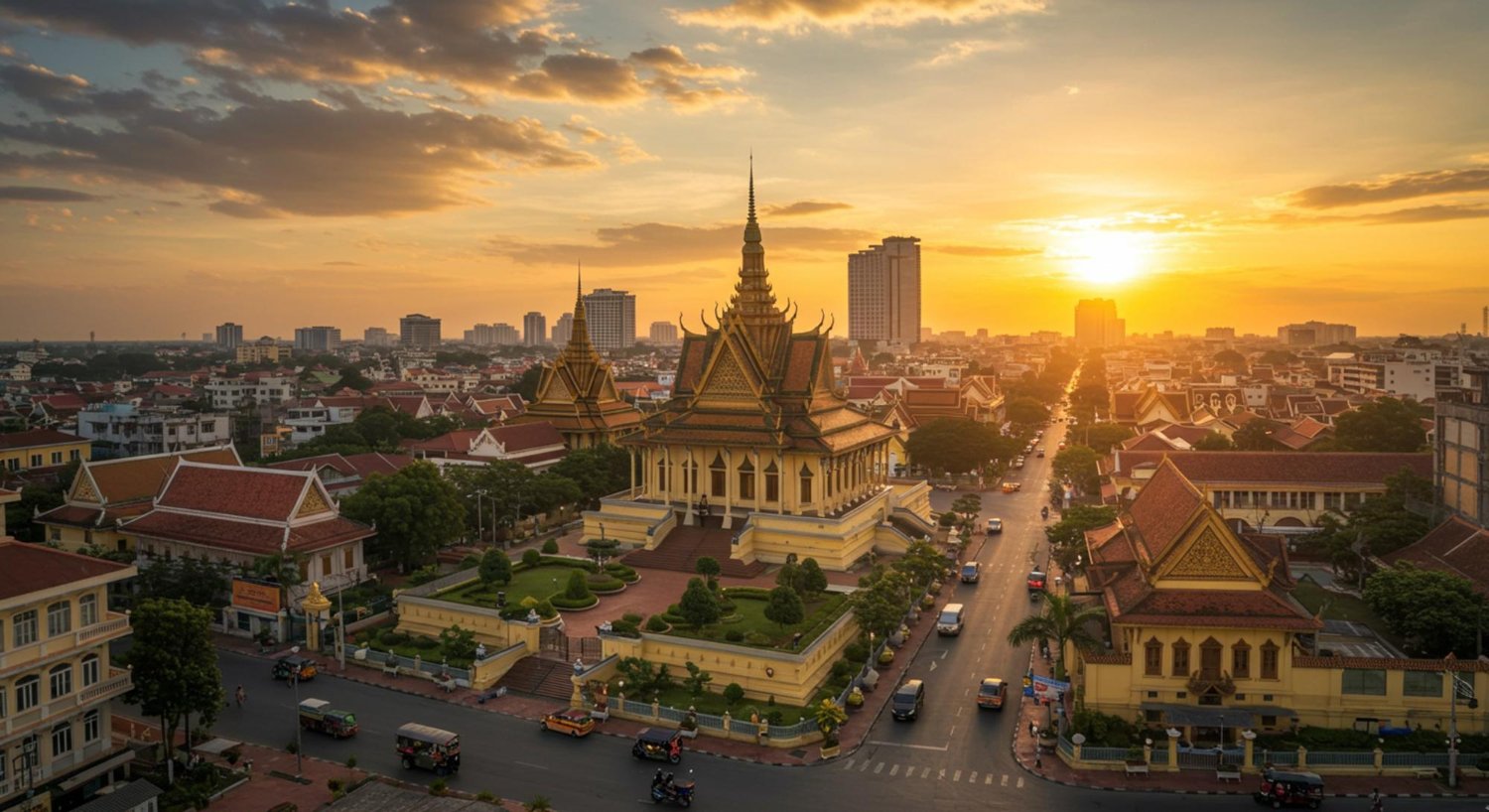
Phnom Penh city life beyond Angkor temples
Travelers approaching Cambodia with only the lens of trauma risk misunderstanding it. The story is not solely about suffering. It is about survival and continuity.
Understanding Cambodia war history transforms travel experience. Visiting Phnom Penh becomes more than urban exploration. It becomes engagement with reconstruction. Traveling through rural provinces reveals quiet resilience. Even Angkor’s grandeur gains additional dimension when understood alongside modern survival.
Cambodia’s ancient temples symbolize endurance across centuries. Its modern history demonstrates endurance across catastrophe.
The quiet after war is not emptiness. It is space where rebuilding occurs.
Cambodia teaches that nations can be nearly erased and still reassemble. It also teaches that recovery does not look dramatic. It looks like markets reopening, children returning to school, and cities expanding cautiously.
Traveling Cambodia beyond Angkor temples means recognizing that beauty here coexists with memory. The country is not defined solely by its darkest years, but those years shaped how it moves forward.
War ended, but reconstruction continues.
Cambodia is not only a site of tragedy. It is a landscape of survival.
Cambodia is more than Angkor’s ancient stones.
It is a country that survived modern catastrophe and rebuilt quietly.
Visit Cambodia beyond Angkor temples,
and walk through a landscape where survival shaped the present.
Comment (0)