

In 1945, Asia did not awaken into freedom. It emerged into uncertainty. The end of World War II shattered the old imperial order that had governed much of the continent for generations, but independence did not arrive as a single moment or shared experience. Instead, Asia’s transformation from colonies to nations unfolded unevenly, through revolution, negotiation, civil war, and international pressure. The collapse of empire was sudden. The construction of sovereignty was not.
Before 1945, much of Asia existed under foreign rule. European empires controlled territory, trade, and political authority across the continent. Britain governed India, Burma, Malaya, and Hong Kong. France ruled Indochina. The Netherlands controlled the Indonesian archipelago. The United States administered the Philippines. Colonial borders reflected administrative convenience rather than historical or cultural coherence. Indigenous political systems were marginalized or co-opted. The idea of nationhood existed, but power did not.
Colonial rule reshaped Asian societies deeply. Infrastructure, education, and bureaucracy were introduced, but primarily to serve imperial interests. Economic systems prioritized extraction. Political participation was limited. Over time, resistance movements formed, drawing on nationalism, religion, socialism, and anti-imperial thought. These movements were often fragmented and suppressed, yet they laid the ideological groundwork for independence long before the war.
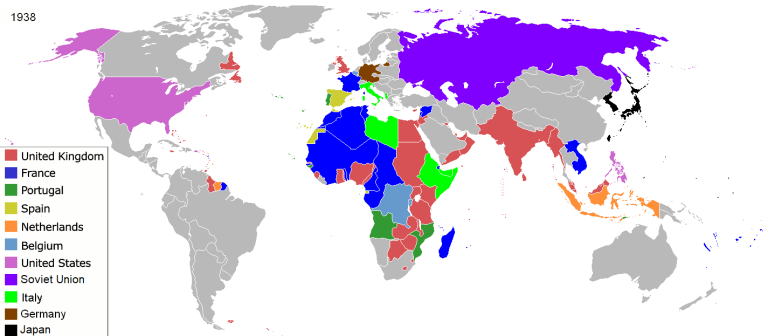
Map showing decolonization of Asia Before World War II (1938)
World War II acted as a catalyst that colonial systems could not survive. When Japanese forces swept through Southeast Asia in 1941 and 1942, European empires collapsed with astonishing speed. Colonial administrations surrendered or fled. For many Asians, this moment shattered the myth of Western invincibility. Empire was revealed not as permanent order, but as contingent power.
Japan did not liberate Asia in any moral sense. Its occupation was brutal, extractive, and violent. Yet its impact on colonial legitimacy was irreversible. The war exposed that European dominance rested on military superiority rather than inherent authority. Even after Japan’s defeat, colonial powers could not fully restore prewar control. The psychological foundation of empire had been destroyed.
Independence movements surged in the war’s aftermath. In some regions, independence arrived through negotiation. In others, it required prolonged struggle. The paths Asia took toward sovereignty reflected local conditions, colonial policies, and global geopolitics. There was no single model of decolonization.
India’s independence marked one of the most significant transitions. After decades of political mobilization, mass protest, and negotiation, British rule ended in 1947. Independence, however, came with partition. The subcontinent was divided along religious lines, producing mass displacement and violence. Freedom was achieved, but at extraordinary human cost. The legacy of that division continues to shape South Asia.

Crowds celebrating Indian independence in 1947
In Southeast Asia, decolonization was often violent. In Indonesia, nationalist leaders declared independence shortly after Japan’s surrender. The Dutch attempted to reassert control, leading to years of armed conflict before sovereignty was recognized. Similar patterns unfolded elsewhere. In Vietnam, resistance against French rule escalated into a protracted war that merged anti-colonial struggle with Cold War ideology. Independence became inseparable from revolution.
China’s experience diverged from colonial liberation but remained central to Asia’s transformation. Long weakened by foreign intervention and internal division, China emerged from World War II into renewed civil war. The establishment of a new political regime in 1949 reshaped East Asia’s balance of power. China’s revolution was not merely national. It redefined ideological alignment across the region.
Borders drawn during decolonization were often rushed and imperfect. Colonial boundaries became international borders, freezing divisions that had never existed before. Ethnic, linguistic, and cultural realities were frequently ignored. Many new nations inherited internal fractures that later erupted into conflict. Independence did not resolve all tensions. It institutionalized some of them.
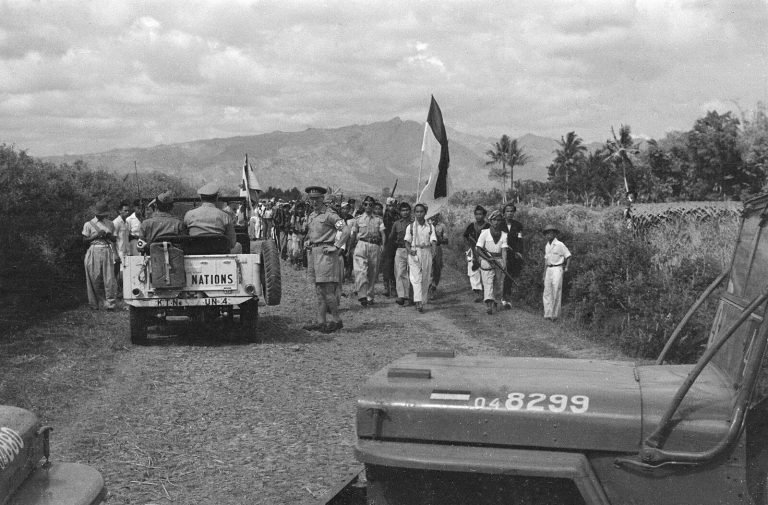
Indonesian fighters during the independence revolution
The Cold War complicated Asia’s transition further. Newly independent states found themselves navigating pressure from competing superpowers. Ideology influenced aid, alliances, and internal politics. In some cases, Cold War alignment stabilized regimes. In others, it intensified internal conflict. Asia became the primary arena where decolonization and global rivalry intersected.
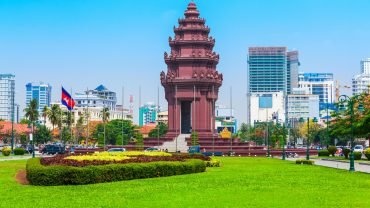
Traveling through Asia today reveals the layers of this transformation. Colonial architecture stands beside national monuments. Capitals such as Delhi, Jakarta, Hanoi, and Manila embody the contradictions of postcolonial identity. Streets named after colonial administrators coexist with memorials honoring independence fighters. The past is neither erased nor fully reconciled.
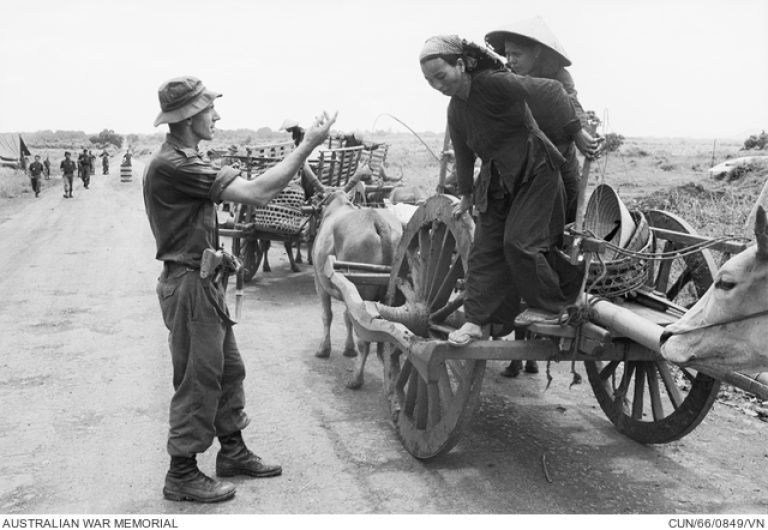
Vietnamese forces during anti-colonial war
Decolonization reshaped Asia’s relationship with the world. New nations asserted sovereignty, joined international institutions, and redefined global power dynamics. Yet independence also brought new challenges. Economic dependency, political instability, and unresolved borders continued to influence development. The end of empire did not guarantee equality or peace.
Why does Asia’s decolonization still matter today? Because it explains contemporary geopolitics, internal conflicts, and identity debates. Territorial disputes, national narratives, and diplomatic tensions trace back to decisions made in the chaotic aftermath of World War II. The modern Asian state is a product of crisis as much as aspiration.
Asia’s journey from colonies to nations was not a clean break from the past. It was a process of negotiation between inherited structures and new ideals. Understanding this process reveals why Asia’s political landscape remains dynamic, contested, and deeply historical.
Independence was not the end of history in Asia. It was the beginning of a new and unfinished chapter.

Comment (0)