

When people think of Japan, they often imagine samurai, emperors, cherry blossoms, and neon-lit cities shaped by discipline and innovation. Yet long before the rise of Kyoto, Edo, or Tokyo, and long before the Japanese state extended its reach to the northern islands, another civilization flourished across the forests, rivers, and coastlines of what is now known as Hokkaido. The Ainu people, Japan’s indigenous population, developed a complex culture deeply connected to nature, spirituality, and communal life. Their story challenges the common narrative of Japanese history and reveals a side of Japan that is rarely explored, especially in mainstream travel and historical discourse.
Before Japan was a unified nation, the northern islands existed beyond the political and cultural boundaries of the early Japanese state. The Ainu were not a peripheral group living on the margins of Japanese civilization; they were a distinct people with their own language, belief systems, and social structures. Their world extended across Hokkaido, Sakhalin, and the Kuril Islands, forming a cultural zone that connected Northeast Asia through trade and shared spiritual practices. Archaeological evidence suggests that Ainu culture emerged from a fusion of ancient Jōmon traditions and influences from Okhotsk and other northern cultures, resulting in a society uniquely adapted to cold climates and rich natural ecosystems.
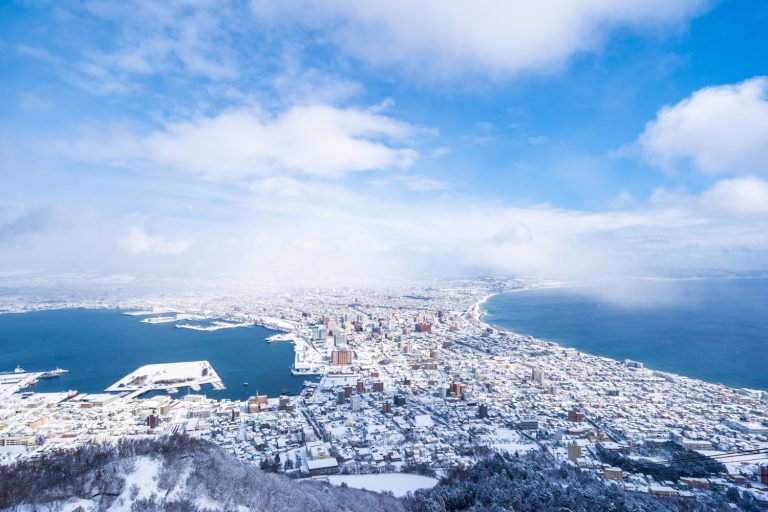
Ainu society revolved around a profound respect for the natural world. Rivers, forests, animals, and mountains were not resources to be exploited but living entities inhabited by spiritual forces known as kamuy. Every aspect of daily life involved ritual acknowledgment of these spirits. Hunting, fishing, and farming were conducted with ceremonies that expressed gratitude rather than dominance. Bears, in particular, held a sacred place in Ainu cosmology. The bear was seen as a powerful kamuy that temporarily took animal form, visiting the human world before returning to the spiritual realm. Rituals surrounding the bear were not acts of violence but symbolic exchanges, emphasizing balance between human survival and spiritual respect.
Language played a crucial role in preserving Ainu worldview. The Ainu language, unrelated to Japanese, encoded a relationship with nature that shaped perception itself. Oral storytelling passed down epic tales known as yukar, long narrative poems recited from memory that preserved history, ethics, and cosmology. These stories were not entertainment alone; they were repositories of identity. Through them, the Ainu explained their origins, their relationship with neighboring peoples, and their understanding of the universe. The absence of a written tradition did not signify cultural inferiority but reflected a worldview in which memory and spoken word held sacred power.
For centuries, the Ainu maintained trade relationships with surrounding regions. They exchanged animal pelts, fish, and handcrafted goods for metal tools, rice, and textiles from Japanese traders to the south. These exchanges were conducted as partnerships rather than subjugation, at least initially. Early Japanese states recognized the Ainu as a separate people, referring to them as Ezo and acknowledging their autonomy. Hokkaido, then known as Ezochi, existed outside direct Japanese governance for much of early history.
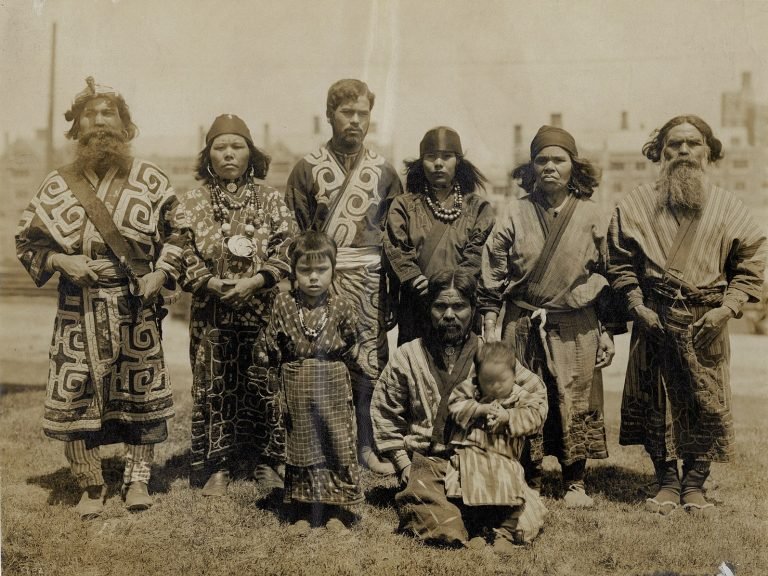
Credit: “Image via United States Copyright Office Public Domain.”
This balance began to shift dramatically during the early modern period. As Japan consolidated power under the Tokugawa shogunate, interest in the northern territories intensified. Control of trade routes, natural resources, and strategic borders became increasingly important. Japanese settlements expanded northward, and with them came political authority that disrupted traditional Ainu autonomy. What had once been trade partnerships gradually transformed into systems of dependency, as Ainu communities were pushed into economic arrangements that favored Japanese merchants.
The most profound transformation occurred during the Meiji Restoration in the late nineteenth century. As Japan raced to modernize and assert itself as a global power, Hokkaido became a central project of state expansion. The Japanese government officially incorporated Hokkaido into the nation, framing the process as development rather than colonization. Ainu lands were reclassified as state property, traditional hunting and fishing practices were restricted, and policies of assimilation were enforced. The Ainu were encouraged, and often forced, to abandon their language, clothing, rituals, and spiritual practices in favor of Japanese customs.
This period marked a deep rupture in Ainu history. Children were educated in Japanese schools where their language was discouraged or punished. Ainu identity was reframed as backward or primitive within official narratives, erasing centuries of cultural sophistication. By the early twentieth century, many Ainu communities had lost access to ancestral lands and spiritual sites. Their presence in national history books diminished, replaced by a narrative of Hokkaido as an empty frontier developed through Japanese ingenuity.
The silence surrounding the Ainu persisted for generations. While Japan moved forward as a modern industrial nation, the indigenous story remained largely absent from public consciousness. Museums and textbooks focused on imperial expansion, technological achievement, and cultural homogeneity. The idea that Japan was ethnically and culturally uniform became a dominant narrative, leaving little room for indigenous voices.
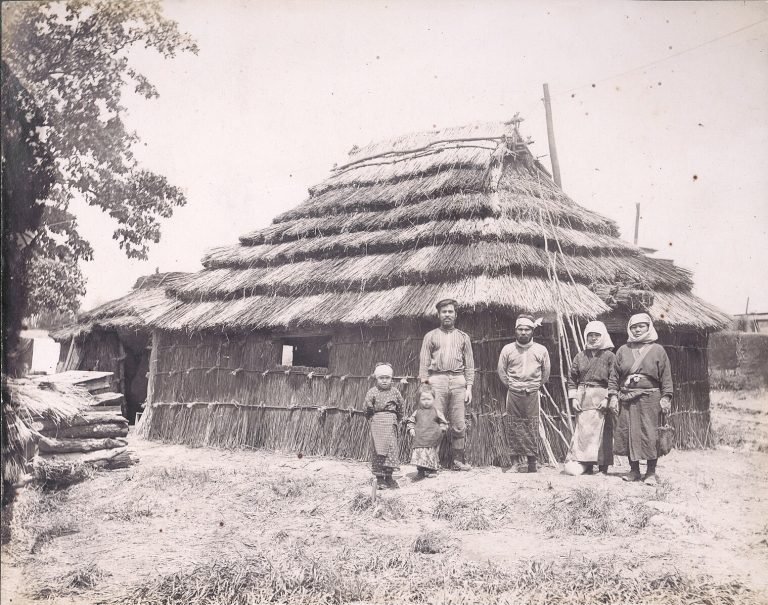
Credit: “Image via United States Copyright Office Public Domain.”
Yet culture, even when suppressed, does not disappear. In the late twentieth century, Ainu activists, scholars, and community leaders began reclaiming their heritage. Oral histories were recorded. Rituals were revived. Language preservation efforts emerged, seeking to document and teach a language once pushed to the brink of extinction. These movements coincided with broader global recognition of indigenous rights, prompting Japan to reassess its relationship with the Ainu.
In 2008, the Japanese government officially recognized the Ainu as an indigenous people of Japan, marking a significant symbolic shift. While recognition alone could not undo historical harm, it opened the door to cultural revival and education. The establishment of the Upopoy National Ainu Museum and Park in Shiraoi represented a major milestone. Designed as a living cultural space rather than a static museum, Upopoy offers immersive experiences where visitors can learn about Ainu history, music, dance, crafts, and worldview through direct engagement.
Traveling through Hokkaido today reveals layers of this indigenous heritage for those who know where to look. In eastern Hokkaido, near Lake Akan, Ainu Kotan villages maintain traditions of wood carving, textile weaving, and ceremonial performance. The lake itself holds spiritual significance, its calm waters reflecting the Ainu belief that nature listens and responds to human presence. Walking through these villages provides insight into a culture that values continuity over spectacle.
Shiraoi, home to Upopoy, sits along the coast where sea and forest converge. This landscape mirrors the Ainu worldview of interconnected ecosystems. Visitors can witness traditional performances, participate in workshops, and explore reconstructed Ainu homes that demonstrate how architecture responded intelligently to climate and spiritual belief. Unlike theme-park representations, these spaces emphasize authenticity and education, encouraging visitors to understand rather than consume culture.
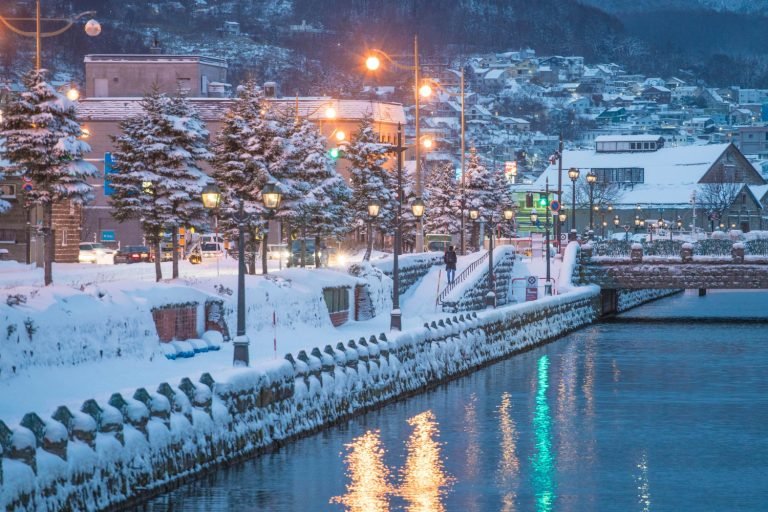
Understanding the Ainu story transforms how one sees Japan itself. It challenges the idea of a singular Japanese identity and reveals a more complex, layered national history. It also reframes Hokkaido not as a frontier conquered by progress, but as a homeland with its own ancient civilization. For travelers seeking depth, this perspective turns a trip to Hokkaido into a journey through time, memory, and cultural resilience.
The Ainu story matters today because it forces reflection on how modern nations are built. It raises questions about who gets to define history, whose voices are amplified, and how cultural survival is negotiated in the face of state power. In acknowledging the Ainu, Japan takes a step toward embracing a more inclusive understanding of itself, one that recognizes diversity not as a weakness but as a foundation.
To walk the paths of Ainu Hokkaido is to encounter a Japan beyond stereotypes. It is a Japan shaped by forests older than temples, by rivers that carry stories rather than borders, and by a people whose resilience speaks quietly but powerfully across centuries. Their story reminds us that history is not only written by empires, but preserved by those who endure.
.jpg)
Comment (0)