

Jakarta did not begin as Jakarta. It began as Batavia, a colonial capital designed to project Dutch authority across the Indonesian archipelago. Its canals echoed European planning. Its administrative buildings symbolized control. Its port connected spices, labor, and commerce to global trade networks. Batavia was never meant to be an Indonesian capital. It was meant to be an imperial one.
The city’s transformation began not with independence speeches, but with occupation.
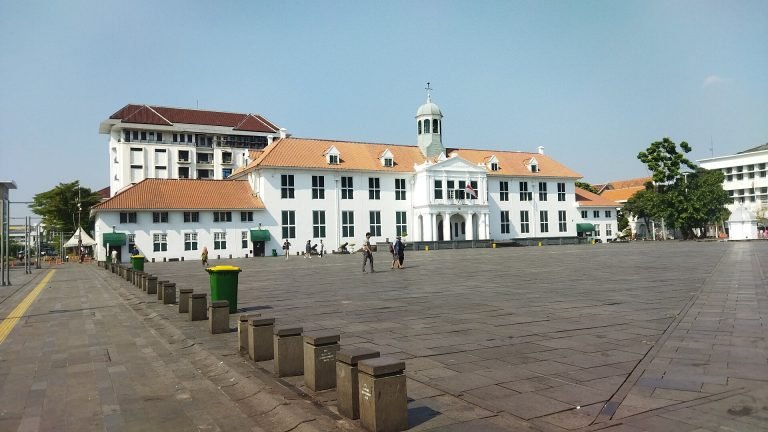
Colonial buildings in Jakarta Kota Tua
When Japanese forces advanced through Southeast Asia in early 1942, Dutch colonial defenses collapsed rapidly. The Netherlands itself had already fallen to Germany in Europe, weakening its global grip. Batavia became strategically vulnerable and symbolically important. Japanese troops entered the city, and Dutch authority ended almost overnight.
The fall of Batavia was not only a military shift. It was a psychological rupture.
Across Jakarta, colonial certainty dissolved. Administrative buildings that once housed Dutch officials were repurposed. European privilege vanished. Power changed language, uniform, and intention.
The Japanese occupation of Indonesia lasted from 1942 to 1945, but its impact extended far beyond those years. Japanese authorities dismantled Dutch colonial structures while simultaneously exploiting local resources for their own war effort. Forced labor programs expanded. Infrastructure was redirected. Civilian life narrowed under surveillance and scarcity.
Yet occupation unintentionally accelerated nationalism.
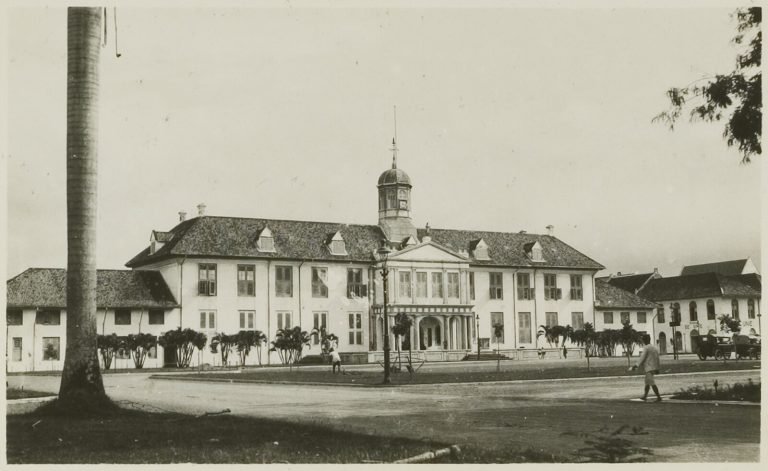
Batavia old town reflecting Dutch colonial past
Before the war, Indonesian independence movements faced repression from Dutch colonial governance. Under Japanese rule, local leaders were mobilized for administrative roles. Indigenous participation in governance increased, though tightly controlled. Political education programs were introduced, partly to secure loyalty, partly to mobilize labor.
War created openings colonialism had suppressed.
The Japanese did not intend to grant independence. They intended to secure compliance. But the collapse of Dutch authority exposed its fragility. Indonesians saw that empire was not permanent.
When Japan surrendered in August 1945 after atomic bombings in Hiroshima and Nagasaki, a power vacuum emerged. Within days, Indonesian leaders declared independence. Batavia’s colonial name was replaced. The city became Jakarta.
The renaming symbolized more than political change. It represented reclamation.
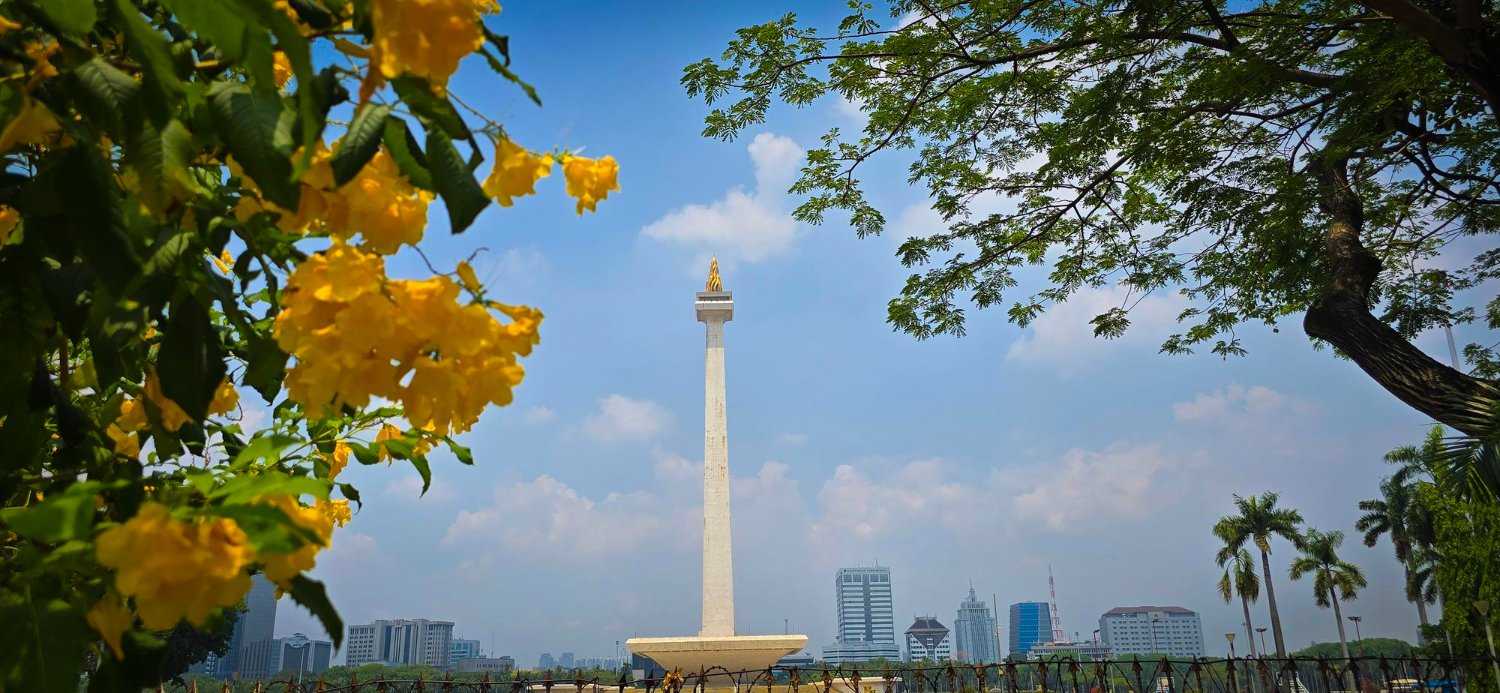
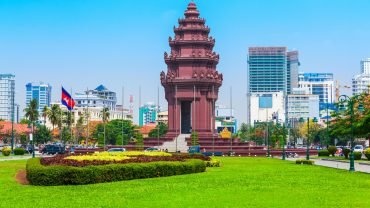
National Monument in Jakarta symbolizing independence
Across Indonesia, revolution followed declaration. Dutch forces attempted to reassert control. Fighting erupted in multiple regions. Jakarta became both symbolic and strategic in the struggle for recognition.
The city did not transform overnight into a stable capital. It became contested terrain again.
Revolutionary groups operated within neighborhoods once defined by colonial segregation. Administrative buildings shifted control multiple times. Streets designed for imperial order witnessed nationalist mobilization.
Jakarta’s birth as a capital was inseparable from war.
Unlike cities rebuilt from ruins, Jakarta inherited its architecture from empire. Colonial facades remained. Government ministries occupied former Dutch offices. The urban grid persisted.
The physical continuity masked political upheaval.
Post-independence Jakarta faced the challenge of redefining space. How does a city built to govern colonies become a city that represents a nation? How does architecture of hierarchy adapt to democracy?
Development projects sought to project modern identity. Monuments rose. New districts expanded. Yet the colonial core remained.
Jakarta Japanese occupation history cannot be separated from its independence narrative. The occupation dismantled Dutch supremacy, empowered nationalist leadership, and created the conditions for revolution. Without Japanese intervention, independence might have followed a slower trajectory.
War compressed time.
Jakarta emerged from occupation not as restored Batavia, but as a capital born from collapse.
Walking through Kota Tua, the old town, reveals these layers. Dutch warehouses line cobblestone squares. Museums occupy colonial buildings. Yet the names have changed. Interpretations have shifted.
Jakarta’s independence-era streets carry stories embedded in architecture rather than memorial plaques.
The National Monument rises as assertion of sovereignty. Government complexes symbolize centralized authority. Yet the colonial canal system remains visible in parts of the city.
This layering defines Jakarta.
It is neither purely colonial nor purely revolutionary. It is transitional.
Travelers often perceive Jakarta as chaotic and sprawling. Traffic, density, and scale dominate impressions. But beneath modern congestion lies a structured past shaped by occupation and revolt.
Understanding Jakarta Japanese occupation history reframes the city.
The port was once strategic asset for empire, then logistical tool for occupation, then lifeline for revolution. The administrative quarter once enforced foreign rule, then hosted nationalist planning.
Jakarta teaches that capital cities can emerge from interruption rather than continuity.
It was not designed for independence. It adapted to it.
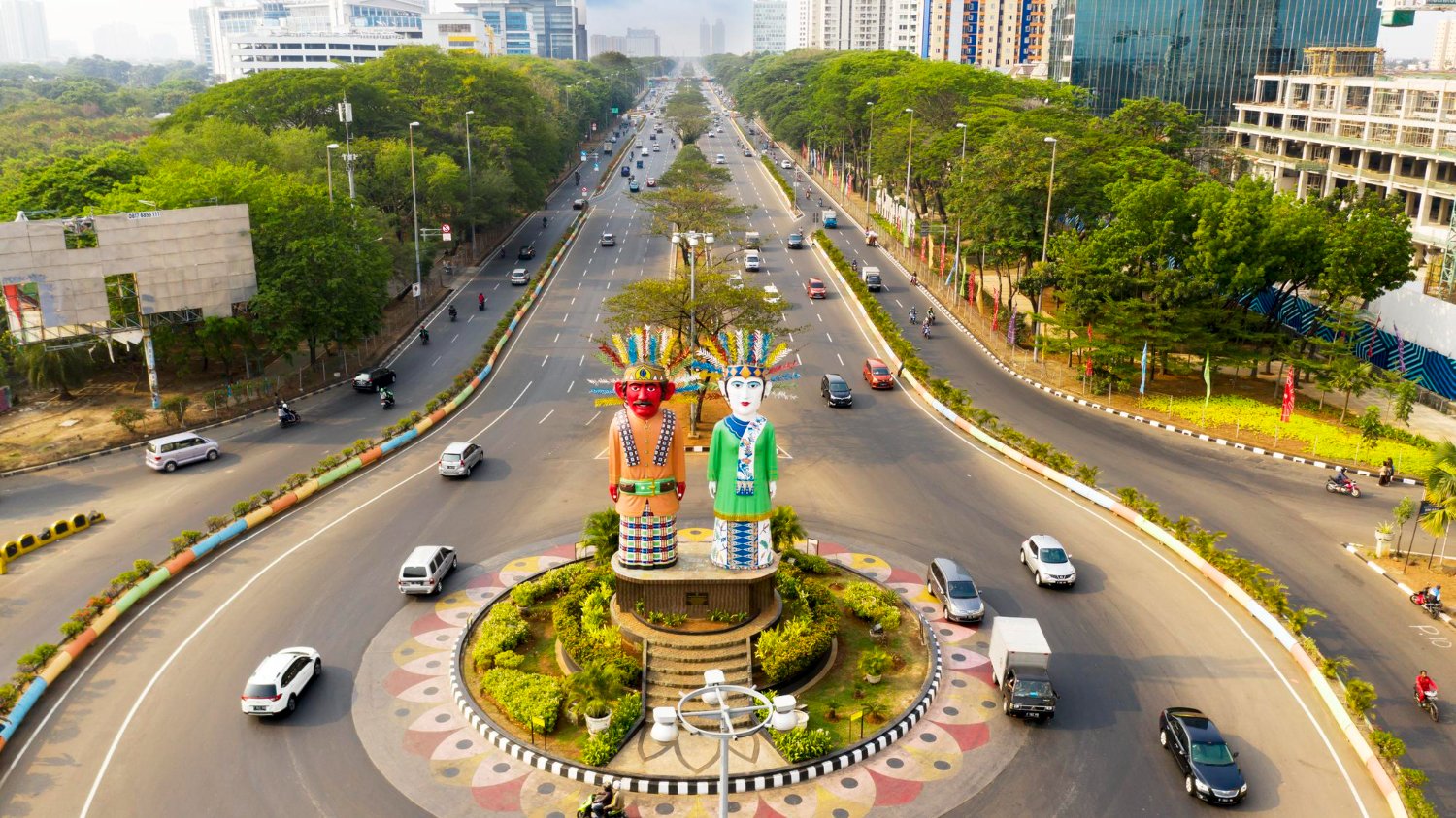
Independence-era architecture in central Jakarta
Traveling Jakarta through independence history requires attention to streets rather than spectacle. Museums provide context, but buildings provide continuity. Names changed, functions evolved, but foundations persist.
The city’s transformation from Batavia to Jakarta reflects Asia’s broader twentieth-century shift from empire to nation-state.
War did not only devastate.
It rearranged authority.
Jakarta stands today as one of Southeast Asia’s largest capitals, its skyline expanding, its population surging. Yet its identity remains anchored in a moment when occupation inadvertently triggered freedom.
The Japanese occupation of Jakarta was brief in years but immense in consequence. It collapsed colonial myth and accelerated nationalist momentum.
Jakarta was not rebuilt from ashes.
It was renamed from empire.
Jakarta is not only a megacity of traffic and towers.
It is a capital born from occupation and revolution.
Walk Jakarta’s independence-era streets,
and trace how a colonial port became a nation’s center.
Comment (0)