

For much of the world, Kanchanaburi is reduced to a single image. A wooden bridge spanning a calm river. A railway cutting through jungle-covered hills. A story summarized as suffering, endurance, and death. The Death Railway has become one of the most recognizable symbols of World War II in Southeast Asia, yet this symbol, powerful as it is, obscures a deeper and more complicated reality. Kanchanaburi is not defined solely by the railway. It is a layered landscape where war, colonial ambition, civilian survival, and postwar memory coexist quietly.
To understand Kanchanaburi only through the Death Railway is to miss how deeply war reshaped the land and the people who lived on it.
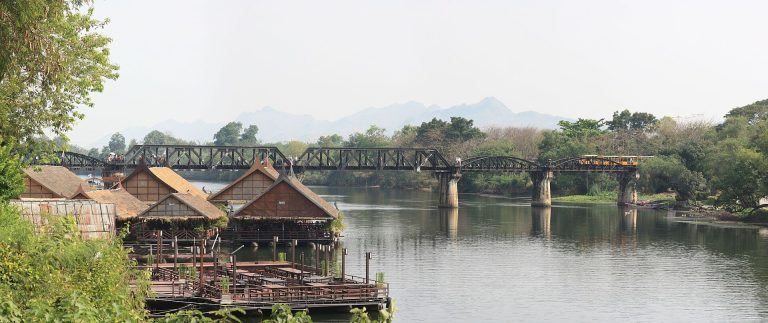
Death Railway cutting through Kanchanaburi landscape
Before World War II, Kanchanaburi was a frontier region rather than a center of power. Its geography of rivers, forests, and mountains placed it at the edge of Siam’s administrative reach. Communities here lived with relative autonomy, shaped by agriculture, trade routes, and seasonal rhythms. The land was demanding but familiar. Survival depended on knowledge of terrain rather than allegiance to distant capitals.
This peripheral position would later make Kanchanaburi strategically valuable.
When Japan expanded its war across Southeast Asia, logistics became critical. Supplying forces in Burma required a route that could bypass vulnerable sea lanes. The solution was a railway linking Thailand and Burma, cutting directly through difficult terrain. The project was conceived as an engineering solution, but it quickly became a human catastrophe.
The Death Railway was built under conditions that treated human life as expendable.
Prisoners of war from Allied nations were transported into Kanchanaburi alongside tens of thousands of Asian civilian laborers. These civilians, often referred to collectively as romusha, were recruited, coerced, or forcibly conscripted from across the region. Their experiences would later be marginalized in global memory, yet they formed the majority of the workforce.
Work on the railway proceeded at brutal speed. Disease, malnutrition, violence, and exhaustion were constant. Death was not an accident. It was an accepted outcome.
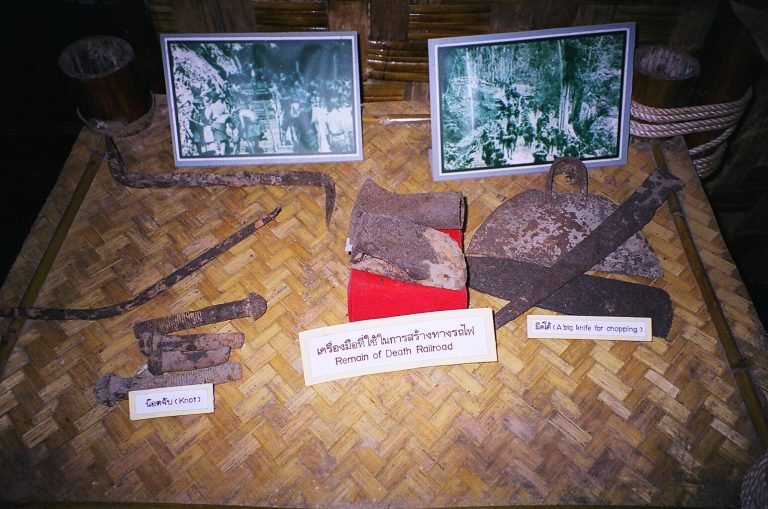
Hellfire Pass memorial site shaped by forced labor
For those forced to work here, death became a daily condition rather than an extraordinary event. Bodies were buried near worksites or simply left behind. The jungle absorbed loss quietly. The land did not mark where people fell. It continued to grow.
This is one reason the Death Railway can be misleading as a historical symbol. The tracks suggest linearity and progress. The reality was fragmentation, repetition, and stagnation. Days blurred together. Survival depended on chance as much as strength.
After the war, attention focused on the railway itself. Bridges, tracks, and surviving structures became focal points for remembrance. This emphasis made sense. Physical remnants were visible and accessible. Yet focusing on infrastructure risks narrowing the story.
The railway does not show the villages disrupted by forced labor. It does not show the civilians who fed prisoners secretly at great risk. It does not show the local population caught between occupying forces and survival.
Kanchanaburi’s war history cannot be contained within a single narrative.
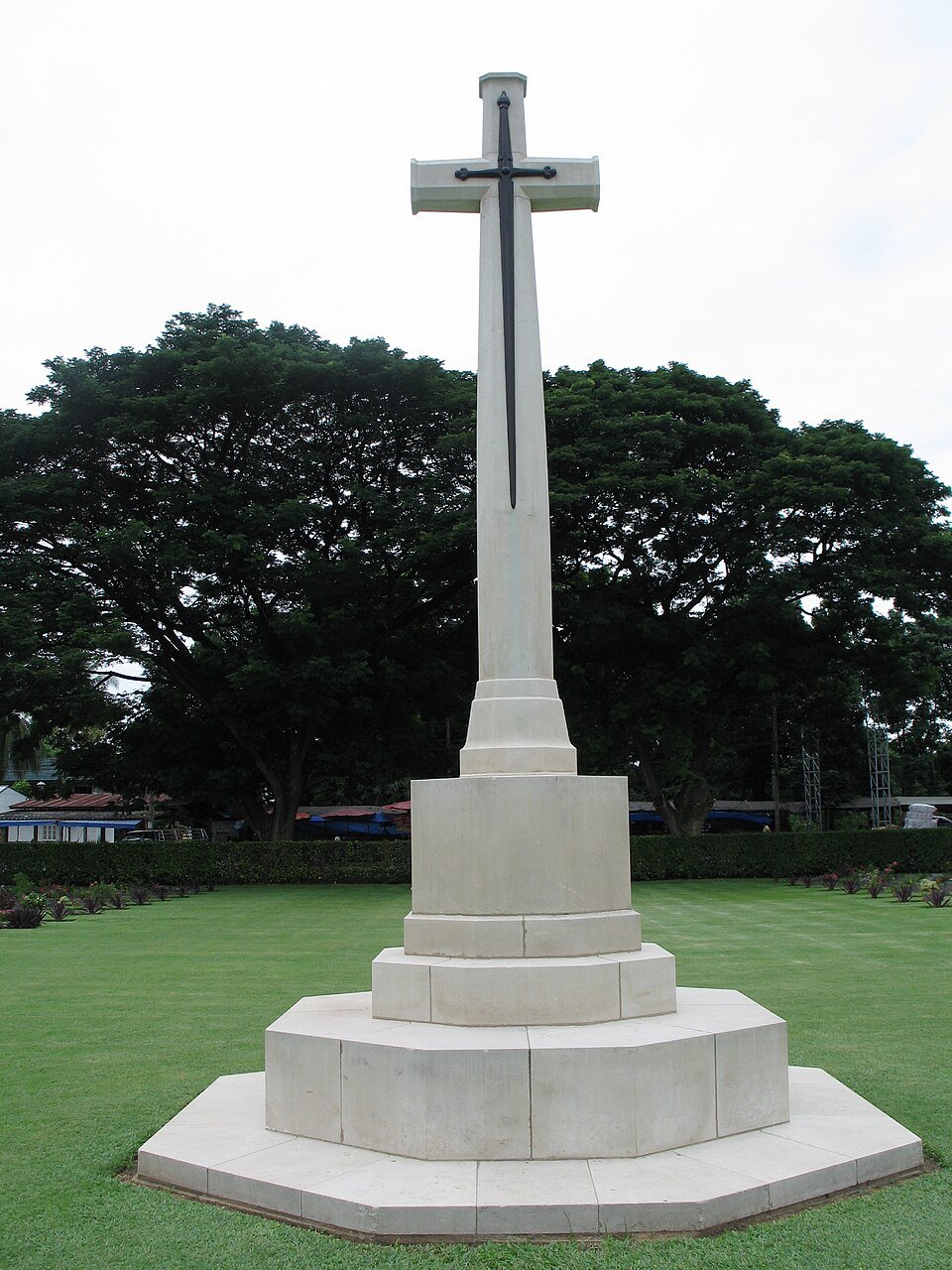
War cemetery in Kanchanaburi honoring Allied prisoners
Different groups experienced the war differently. Allied prisoners remembered captivity and endurance. Asian laborers experienced exploitation without recognition. Local civilians navigated coercion, scarcity, and fear. After the war, these memories did not converge into a shared account. They remained parallel.
This fragmentation shapes how Kanchanaburi remembers.
Places such as Hellfire Pass convey the intensity of labor and suffering, yet even here, the landscape does much of the storytelling. The cut through rock is dramatic, but the silence surrounding it is equally important. The land does not explain itself. Visitors must imagine what happened here.
This reliance on imagination is part of Kanchanaburi’s character. Memory exists without spectacle. There are museums and cemeteries, but the war is not staged aggressively. It is embedded.
The cemeteries tell one version of the story. Neatly aligned graves record names, ages, and regiments. They offer dignity and recognition. Yet they represent only a fraction of the dead. Most Asian laborers were never formally memorialized.
This imbalance is not unique to Kanchanaburi. It reflects broader patterns of whose suffering is recorded and whose is absorbed into landscape.
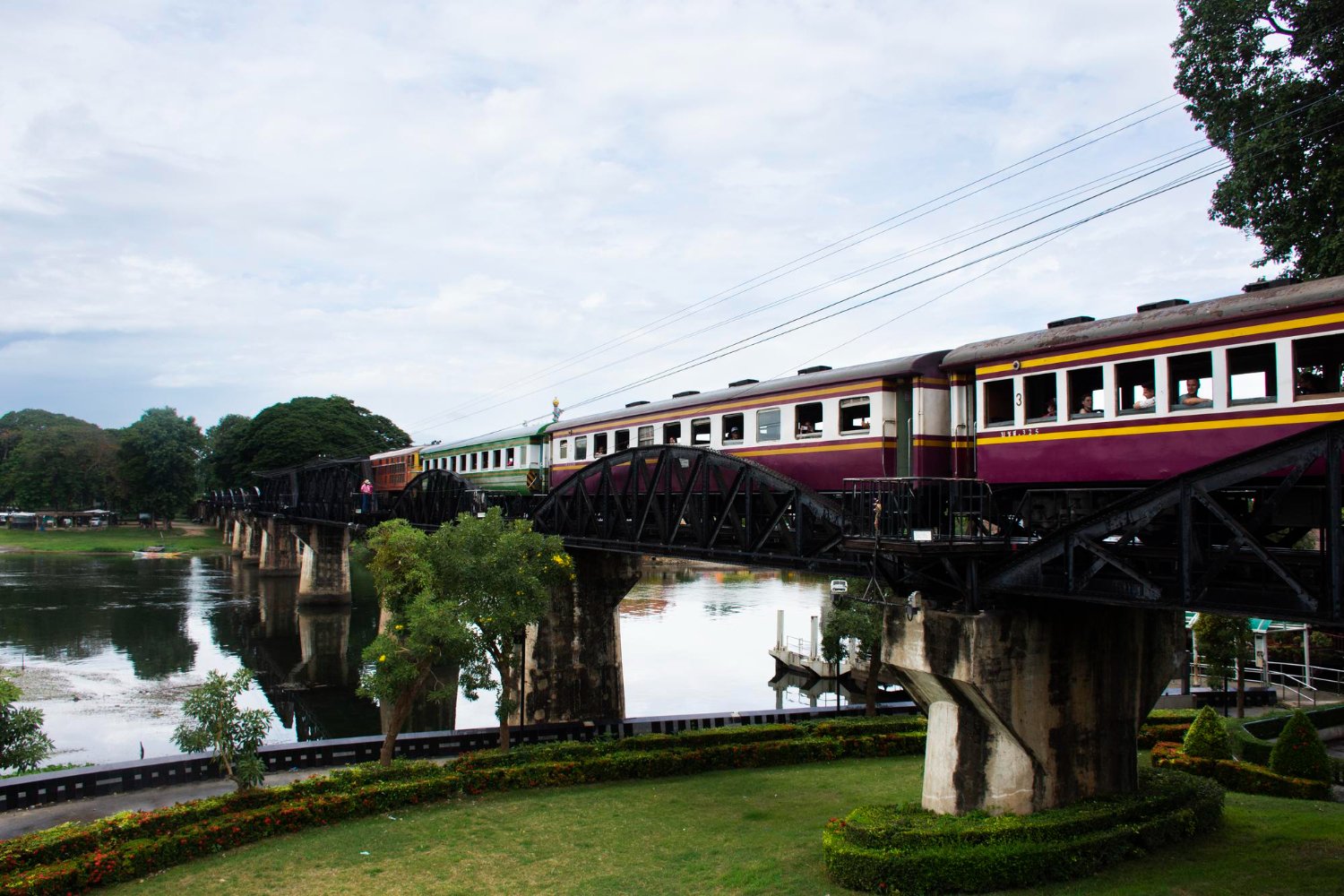
Bridge over the River Kwai as wartime infrastructure
Walking through Kanchanaburi today, it is easy to encounter a sense of calm. The river flows gently. Markets operate normally. Tour boats pass beneath the bridge. This normality can feel unsettling when contrasted with the region’s history.
Yet this calm is not denial. It is adaptation.
Kanchanaburi did not rebuild itself around memory alone. It rebuilt itself to live. The war ended, but the people remained. Fields were replanted. Families resumed routines. The land continued to sustain life even as it carried unmarked graves.
This is why Kanchanaburi feels different from cities devastated by air raids. Destruction here was dispersed rather than total. Violence unfolded across terrain rather than concentrating in a single moment. The result is a landscape where memory is spread thinly, requiring attention to perceive.
Travelers who move only between the bridge and a museum encounter history as a curated episode. Those who move slowly through the region encounter something else entirely. They see how war altered relationships between people and land.
Paths once used to transport materials are now hiking routes. River crossings that served military logistics are now tourist crossings. The same geography supports different purposes across time.
This continuity complicates closure.
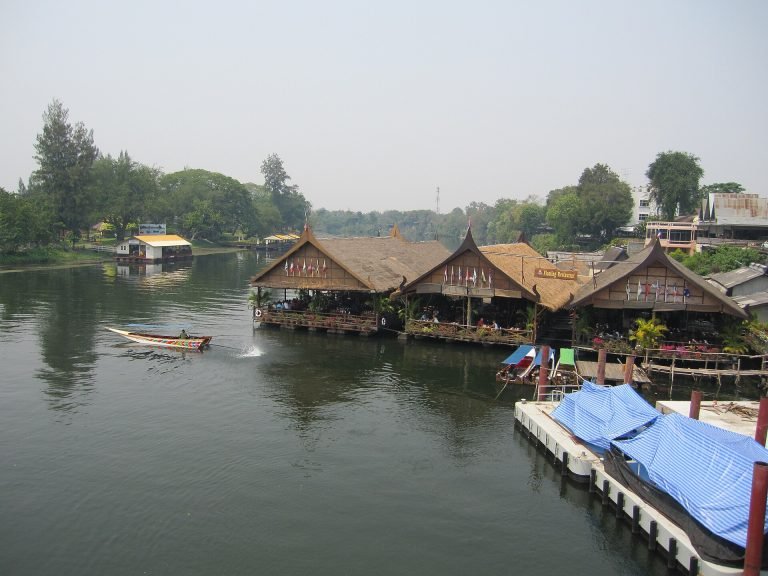
Natural landscape of Kanchanaburi absorbing war history
Kanchanaburi lives with war rather than commemorating it constantly. Its identity is not built on trauma alone. It is built on survival in a landscape that absorbed extraordinary violence without visible scars.
To travel Kanchanaburi with historical awareness is to recognize what is not immediately visible. It is to understand that the Death Railway is an entry point, not a conclusion.
Explore beyond the tracks. Visit smaller memorials. Walk through local communities. Notice how ordinary life unfolds in places shaped by extraordinary suffering.
History here is not confined to a single site. It is distributed across the region.
Kanchanaburi teaches that war does not always leave ruins. Sometimes it leaves landscapes that look unchanged but are permanently altered.
The Death Railway was built to move armies. Today, it moves memory.
But memory alone cannot capture everything that happened here.
To understand Kanchanaburi, one must see it not as a monument, but as a living landscape layered with unresolved history.
Kanchanaburi is more than the Death Railway.
It is a landscape shaped by war, silence, and survival.
Explore Kanchanaburi slowly,
and let the land reveal the layers history left behind.

Comment (0)