

Laos rarely appears in global conversations about war. It is not typically listed alongside major battlefields or famous campaigns. It is introduced instead through waterfalls, temples, slow rivers, and mountain towns. Yet beneath this calm exterior lies one of the most intense aerial bombardments in modern history. Laos became the most heavily bombed country per capita in the world, not because it declared war loudly, but because it was pulled into one quietly.
The conflict that devastated Laos was often referred to as the Secret War. It unfolded parallel to the Vietnam War but remained largely hidden from public awareness at the time. While attention focused on Vietnam, vast areas of Laos were subjected to sustained bombing campaigns intended to disrupt supply routes and political movements.
Laos did not choose to become a battlefield. Geography chose for it.
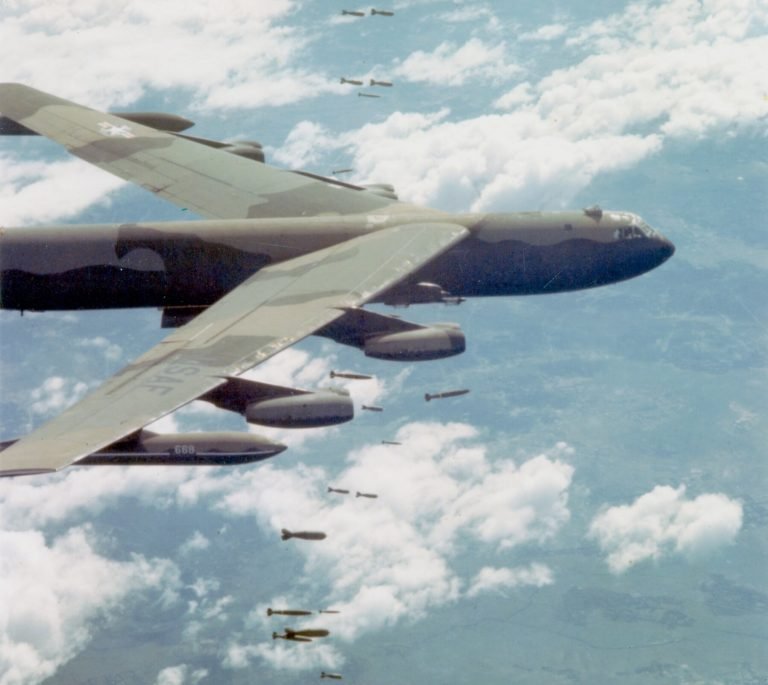
Dropping bombs over Laos and Vietnam
Situated between Vietnam, Thailand, Cambodia, and China, Laos became strategically vital during Cold War escalation in Southeast Asia. Mountain ranges and dense forests concealed supply corridors that connected North and South Vietnam. Foreign powers saw these routes as targets. Bombing became strategy.
Across Laos, aircraft dropped millions of tons of ordnance over nearly a decade. The objective was disruption. The consequence was transformation.
Entire provinces were saturated with explosives. Villages were destroyed. Farmland became hazardous. Forests absorbed shockwaves. Rivers carried debris and fear. Civilians adapted not to a front line that moved, but to a sky that threatened constantly.
Unlike traditional wars defined by visible armies, this conflict manifested from above. Bombing did not require occupation. It required coordinates.
For civilians, daily life became an exercise in prediction and improvisation. Families constructed shelters, memorized patterns of aircraft sound, and learned to rebuild quickly. Farming cycles adjusted to bombing schedules. Children grew up with the knowledge that unexploded ordnance might remain beneath their fields.
The war ended formally decades ago, but its presence did not.
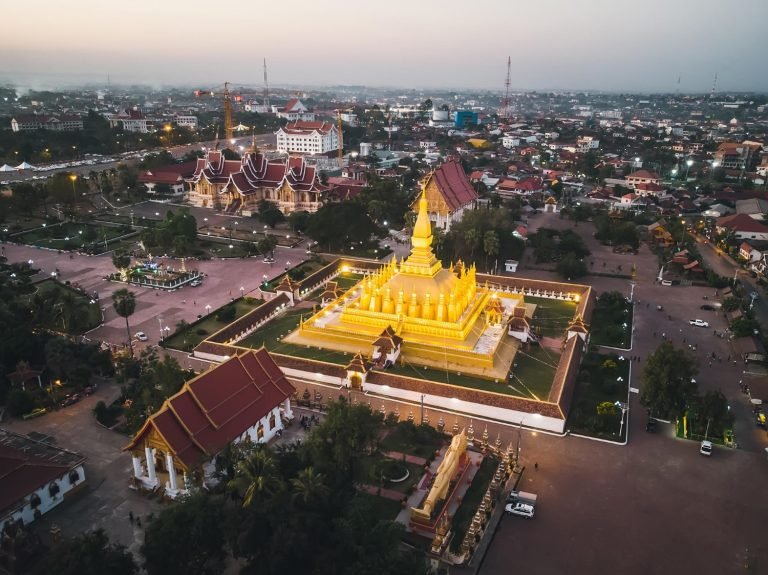
Vientiane city reflecting Cold War era context
Unexploded bombs still lie buried across large areas of Laos. Fields, forests, and hills contain remnants that can detonate unexpectedly. Land that appears peaceful may conceal history beneath the soil.
This reality shapes memory differently.
Laos does not memorialize the Secret War loudly. There are museums, but silence dominates. The country rebuilt through resilience rather than global recognition. The scale of bombing was not widely acknowledged internationally until years later.
Why did Laos remain marginal in global narratives? Partly because the war was classified. Partly because it was geographically peripheral to headline battles. And partly because Laos lacked political leverage to demand remembrance on the global stage.
Yet absence from headlines does not diminish impact.
In Vientiane, modern government buildings stand in a city once influenced by covert operations. In Luang Prabang, serene temples overlook landscapes that endured bombardment. In rural provinces, rice paddies and hills conceal unexploded fragments of history.
Travelers arriving in Laos often experience slowness. The Mekong River flows steadily. Mountain air feels calm. Markets unfold without urgency. This tranquility is real. It is also layered.
The land did not forget.
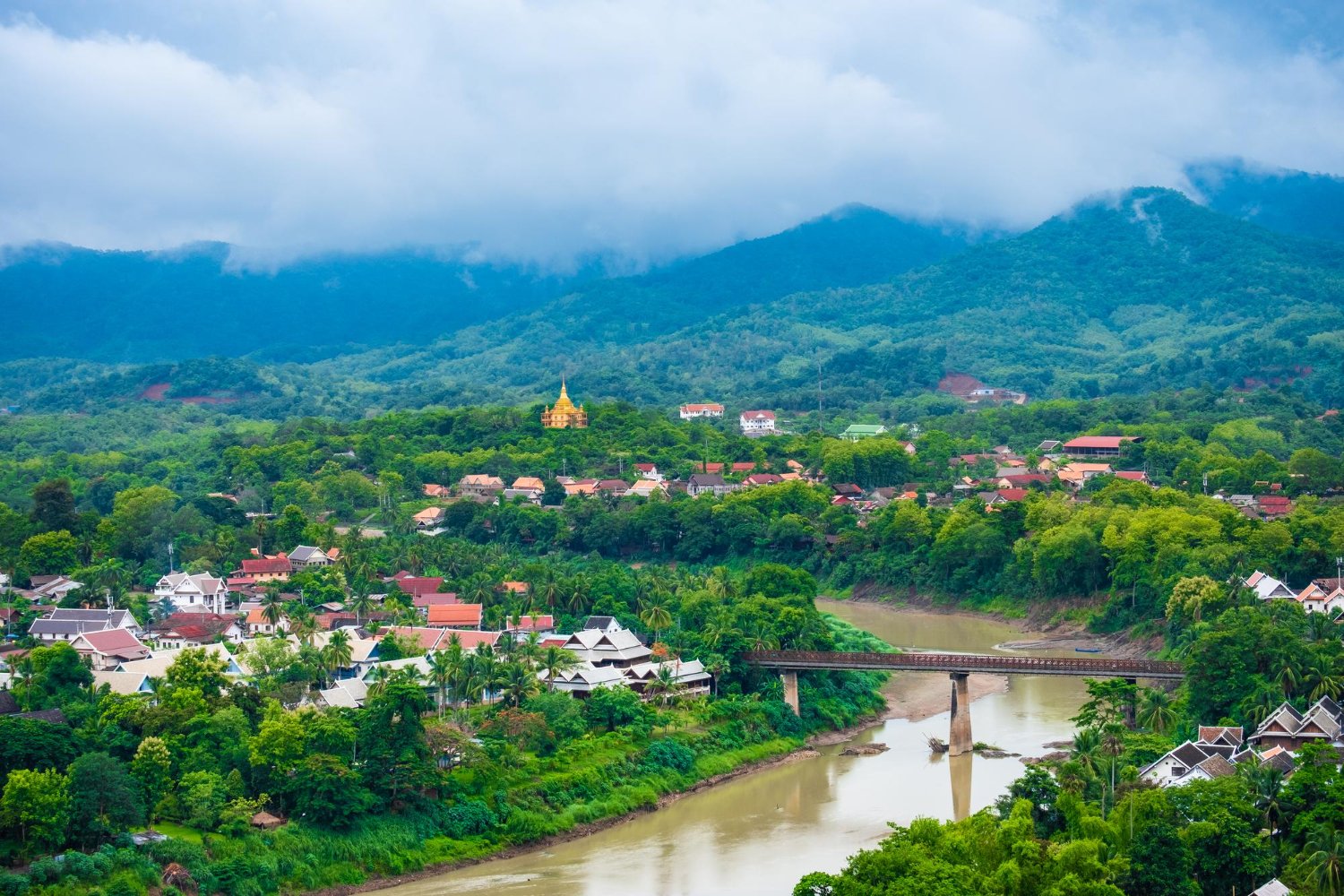
Luang Prabang mountains carrying layered history
Understanding Laos’ secret war history changes how one moves through the country. A hiking trail may follow terrain once mapped for military disruption. A rural village may have relocated multiple times due to bombing. Agricultural fields may still require clearance before cultivation.
Traveling Laos with awareness does not mean seeking sites of destruction. It means recognizing endurance.
Laos rebuilt quietly. Infrastructure improved gradually. Tourism developed cautiously. Unlike countries where war memory is commodified, Laos rarely markets its trauma. Its identity remains tied to culture, spirituality, and landscape.
This restraint deserves respect.
War altered Laos’ relationship with vulnerability. Being drawn into global conflict without direct agency left a legacy of caution. Communities learned to survive through cooperation and silence. Generational memory transmits caution even when stories are not detailed.
The Secret War illustrates how global conflicts reshape smaller nations disproportionately. Laos became collateral in strategic calculations made elsewhere. Its land absorbed consequences beyond its control.
Yet Laos today is not defined solely by suffering.
It is defined by recovery without spectacle.
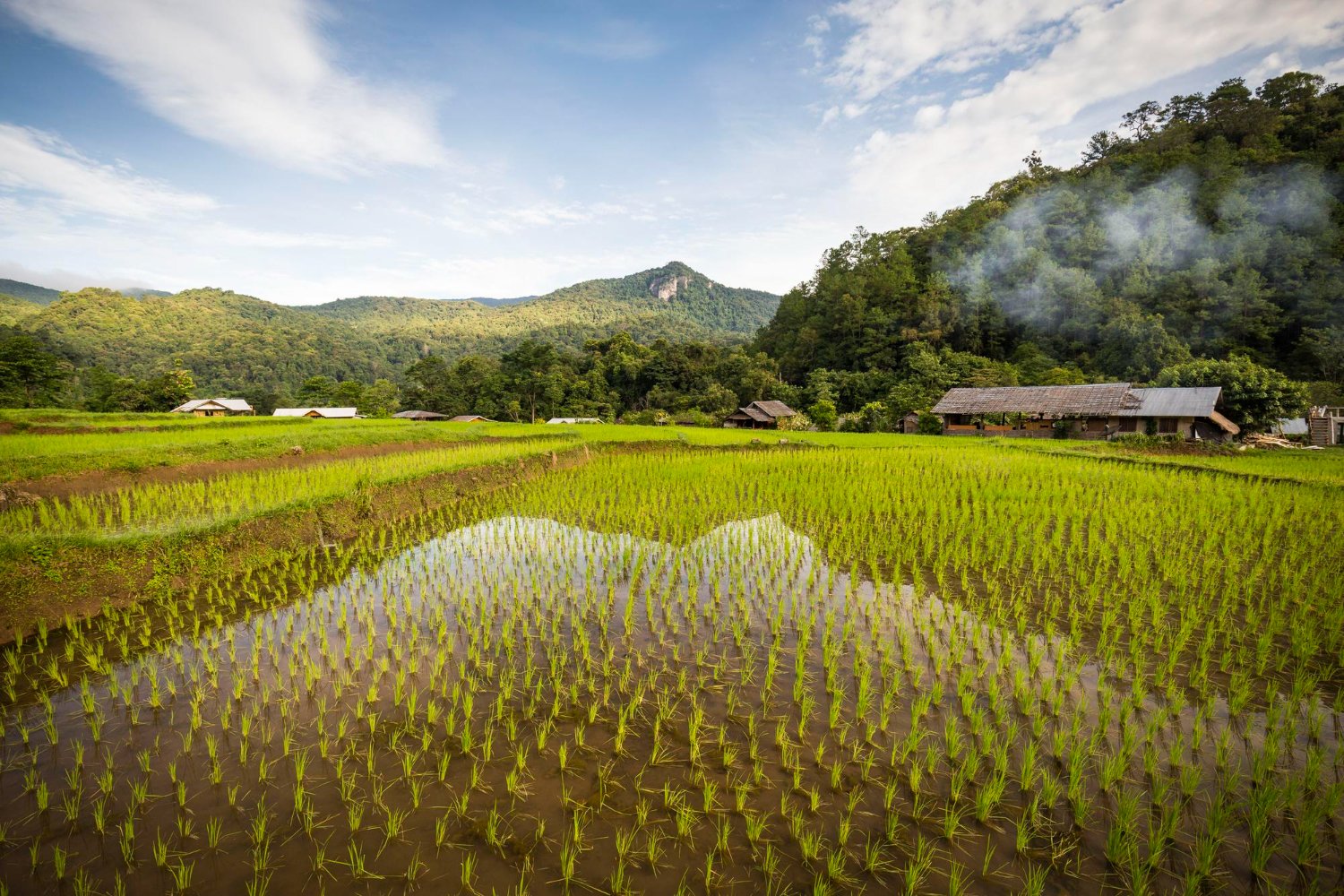
Rice fields in Laos affected by wartime bombing
Travelers walking through Laos participate in this recovery whether they realize it or not. Supporting local communities, learning about land clearance efforts, and approaching landscapes with humility contribute to an ongoing process of healing.
Laos teaches that war memory does not always demand monuments. Sometimes it lives in careful footsteps.
Travel here is not about confronting ruins. It is about acknowledging resilience.
To travel Laos with awareness, not ignorance, is to understand that beauty and trauma can coexist without contradiction. The waterfalls, temples, and mountains are real. So is the history beneath them.
Laos does not ask to be pitied.
It asks to be understood.
Laos is not only rivers and temples.
It is a country that endured a hidden war few remember.
Travel Laos with awareness, not ignorance,
and walk gently across land that still carries history.
Comment (0)