

By the end of World War II, few cities on Earth had suffered devastation comparable to Manila. Entire districts were erased. Hundreds of thousands of civilians were killed. The scale of destruction rivaled Warsaw, Berlin, and Stalingrad. Yet unlike those cities, Manila did not become a permanent symbol of wartime ruin in global memory.
Its destruction was immense. Its remembrance was not.
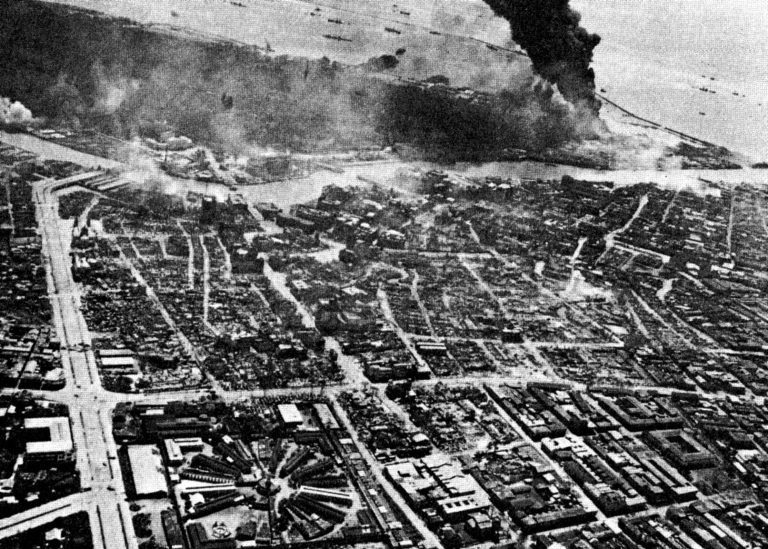
Destruction of Manila during the Battle of 1945
Manila entered the twentieth century already shaped by empire. Once the jewel of Spain’s Asian holdings, the city transitioned into American colonial rule after 1898. By the 1930s, Manila stood as a hybrid capital, blending Spanish-era urban form, American planning ideals, and Filipino life. It was modernizing rapidly, positioned as the symbolic heart of the Philippines.
When World War II reached the Pacific, Manila’s fate became entangled with competing empires once again.
Japanese forces occupied Manila early in the war, transforming the city into a strategic hub. Unlike some occupied capitals, Manila initially avoided total destruction. The city functioned under occupation. Civilian life continued under restriction, fear, and scarcity. War was present, but it had not yet consumed the urban fabric.
That changed catastrophically in 1945.
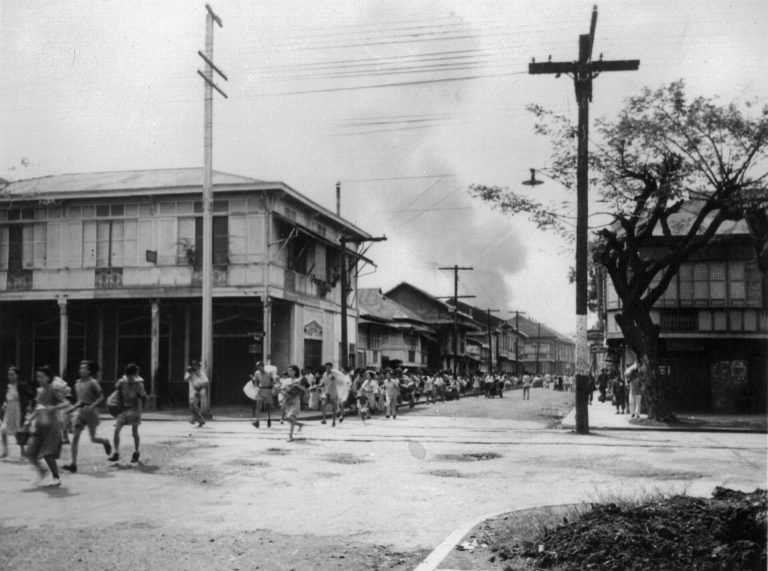
Civilian massacre sites in wartime Manila
As Allied forces advanced to retake the Philippines, Manila became the site of one of the most brutal urban battles of the entire war. The Battle of Manila unfolded as a nightmare for civilians trapped between retreating Japanese forces and advancing Allied troops.
What distinguished Manila was not simply combat, but systematic civilian destruction.
Japanese forces, refusing to surrender the city, carried out widespread massacres. Entire neighborhoods were slaughtered. Women, children, and the elderly were killed deliberately. Hospitals, churches, and schools became sites of atrocity. Fire and explosives reduced historic districts to rubble.
Civilians were not incidental victims. They were targets.
At the same time, Allied bombardment intensified the devastation. Artillery and air strikes aimed to dislodge entrenched forces obliterated what remained of the city. By the time fighting ended, Manila was largely destroyed.
It was the second most devastated Allied capital of the war, surpassed only by Warsaw.
Yet unlike Warsaw, Manila did not become a central symbol of wartime suffering in global consciousness.
One reason lies in timing. The destruction occurred at the end of the war, when attention was shifting toward victory and rebuilding. The narrative momentum favored liberation stories rather than prolonged civilian catastrophe.
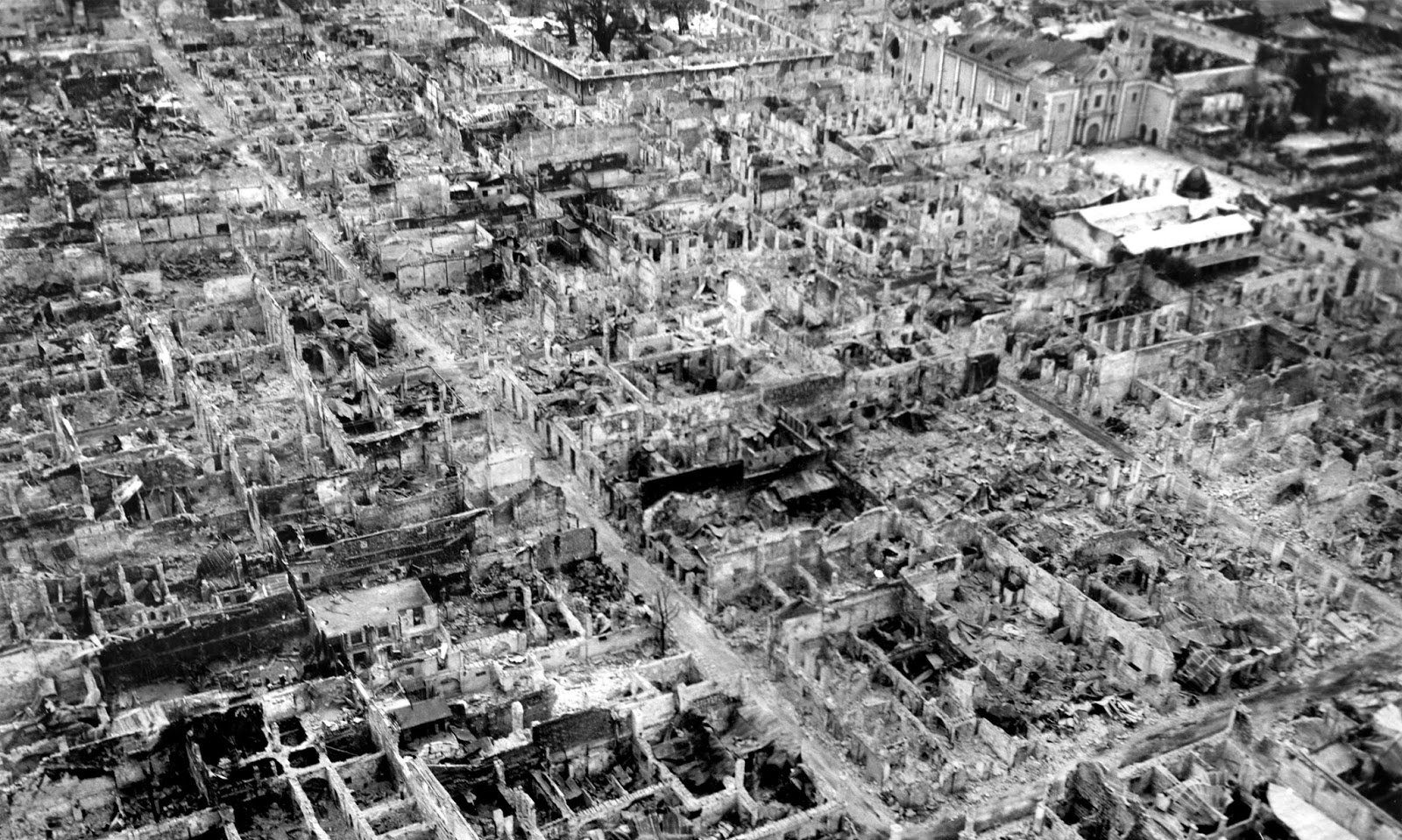
Ruins of Intramuros after World War II
Another reason lies in geopolitics. The Philippines was emerging from colonial status into nominal independence. Its tragedy did not fit neatly into the dominant Allied narrative. Civilian suffering in Manila lacked a political framework that could elevate it into universal memory.
Unlike European cities, Manila did not host postwar tribunals focused on its destruction. Accountability blurred. Responsibility fragmented. Memory lacked institutional reinforcement.
Reconstruction began quickly. The city needed to function. Ruins were cleared. Life resumed. Economic survival took precedence over memorialization. Trauma was absorbed rather than displayed.
This rapid rebuilding buried memory physically.
Modern Manila rose over mass graves, erased streets, and vanished neighborhoods. Unlike cities that preserved ruins as warnings, Manila rebuilt forward. The urgency of survival left little space for public mourning.
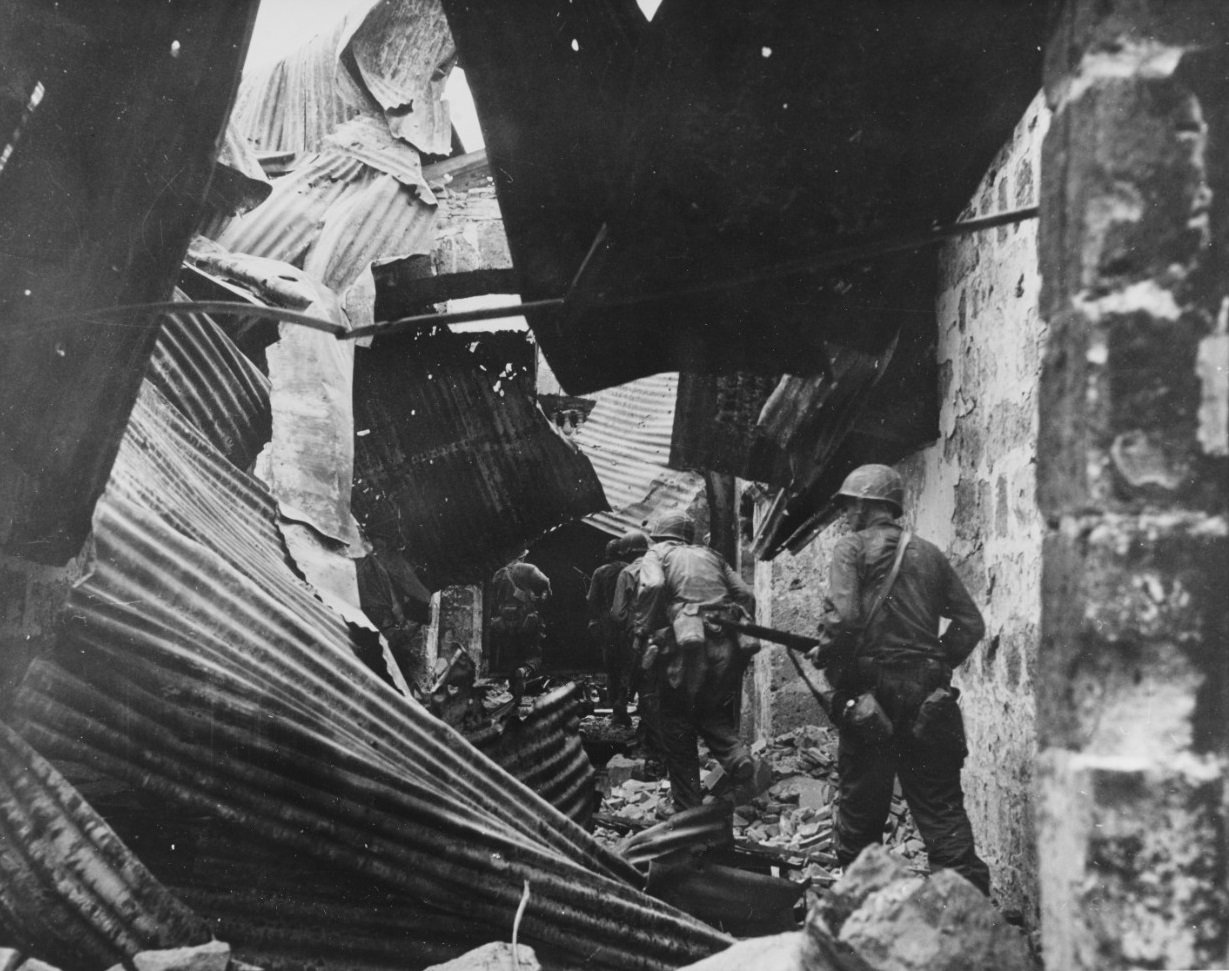
U.S. infantrymen make a house to house search for Japanese inside the ruins of the walled city, from which they had liberated hundreds of Filipino prisoners, 23 February 1945.
As decades passed, the city’s wartime destruction faded from international narratives. Even within the Philippines, memory became uneven. Stories survived in families rather than monuments.
Today, Manila rarely appears in global lists of most destroyed WWII cities. Its absence is striking given the scale of loss.
Yet traces remain for those who look closely.
In Manila, remnants of Spanish-era walls, scattered memorials, and altered street grids hint at what once stood. Intramuros, once the colonial heart, bears scars beneath reconstruction. The city’s layout reveals gaps where history collapsed.
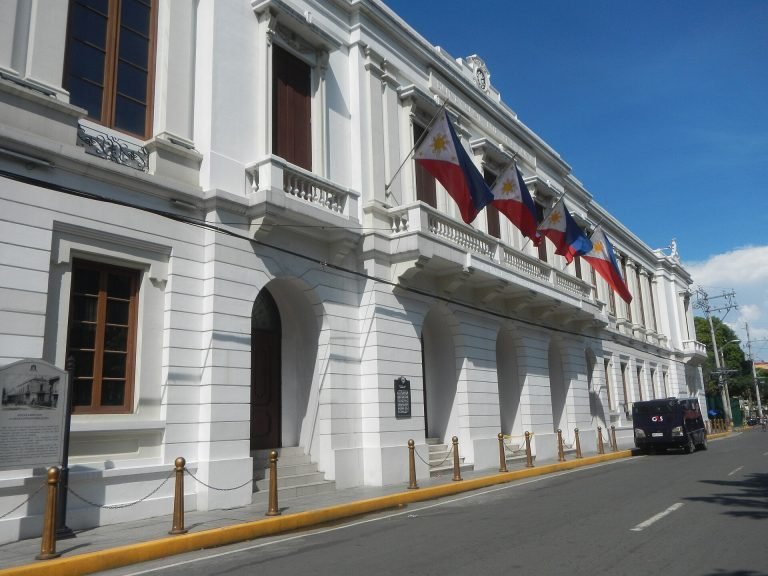
Historical traces of WWII in modern Manila
Walking Manila with historical awareness transforms perception. What appears chaotic becomes legible. The city’s density reflects rebuilding pressure. Its contrasts reflect unresolved memory.
Manila’s destruction matters because it challenges how global history remembers war.
Suffering does not guarantee remembrance. Visibility does not follow scale. Memory follows narrative power.
Manila was destroyed at a moment when the world was ready to move on.
Its tragedy remained local.
Traveling Manila today offers an opportunity not to consume ruins, but to recognize absence. The missing buildings, the rebuilt districts, and the ordinary streets all testify to what was lost.
Manila does not ask to be remembered loudly.
It waits to be understood.
Manila’s past is not preserved in ruins.
It is hidden beneath rebuilding and everyday life.
Walk the city slowly,
and let absence reveal what history forgot.
Comment (0)