

In February 1945, Manila ceased to be a city in the ordinary sense of the word. What unfolded over the course of a single month was not merely a battle for control, but the near-total annihilation of an urban population. When the fighting ended, more than one hundred thousand civilians were dead, entire districts lay in ruins, and one of Asia’s great historical capitals had been reduced to ashes. Yet outside the Philippines, the destruction of Manila remains largely unknown. It is one of the most devastating urban massacres of World War II, and one of the least remembered.
Manila’s tragedy is often overshadowed by better-known wartime horrors in Europe and East Asia. Unlike Hiroshima or Nanjing, Manila lacks a singular symbol that anchors global memory. Its destruction was chaotic, fragmented, and spread across neighborhoods rather than condensed into a single moment. This very fragmentation is why the catastrophe has been forgotten. There was no single explosion, no single order, no single narrative that the world could easily remember.
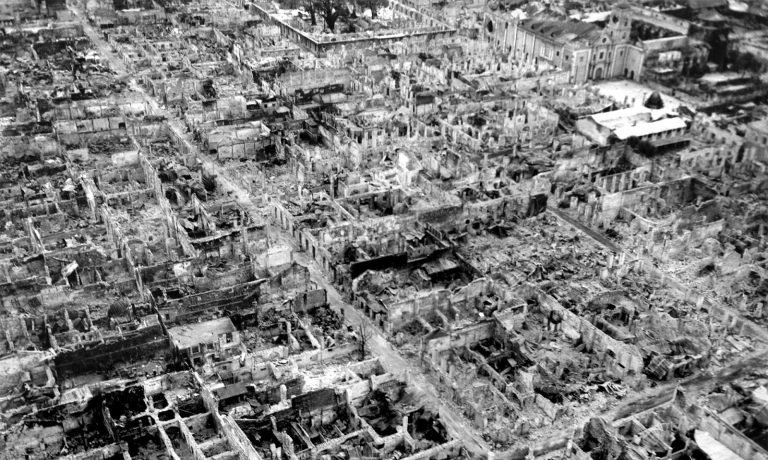
Manila in ruins after the Battle of Manila in 1945
Before the war, Manila was a city shaped by empire. As the capital of the Philippines, it carried layers of Spanish, American, and indigenous history. The walled city of Intramuros stood as a relic of Spanish rule. American colonial governance had reshaped the city into a modern administrative and cultural center. Manila was often called the Pearl of the Orient, not as a metaphor, but as recognition of its architectural beauty and cosmopolitan life.
World War II shattered this continuity. Japanese occupation began in 1942 and quickly destabilized civilian life. As Allied forces advanced toward the city in early 1945, Manila became trapped between retreating Japanese troops and advancing American forces. What followed was not a conventional battle alone, but a descent into systematic violence against civilians.
The Battle of Manila was unlike most urban battles of the war. Japanese forces, ordered to delay Allied advance, fortified themselves within the city. As defeat became inevitable, discipline collapsed. Civilians were no longer collateral damage. They became targets. Entire families were massacred. Hospitals, churches, and schools offered no refuge. Women were assaulted, children murdered, the elderly executed.
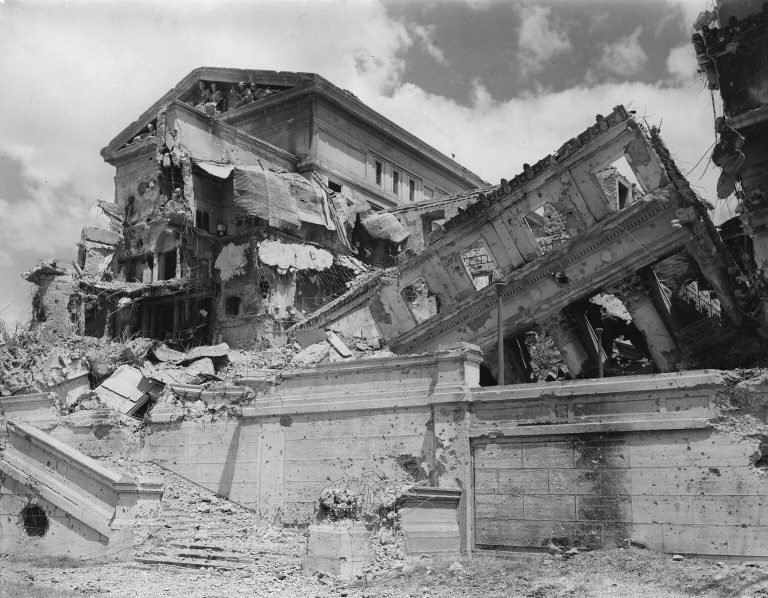
Ruins of Intramuros following wartime bombardment
American forces pushed forward with artillery and aerial bombardment to dislodge entrenched defenders. The city was caught in a vice. From the outside, shells reduced buildings to rubble. From within, atrocities unfolded block by block. Fire spread rapidly. Streets became killing fields. Manila burned.
Unlike other wartime massacres driven by ideology or racial policy, the destruction of Manila was fueled by desperation and collapse. Japanese command structures disintegrated. Units acted autonomously, unleashing violence without strategic purpose. What emerged was not an organized genocide in the bureaucratic sense, but a holocaust of chaos, where civilian life was annihilated systematically through abandonment of restraint.
By the time the battle ended, Manila was one of the most destroyed cities of World War II. More than Warsaw, more than Berlin, more than Tokyo in proportional terms. The historic core was obliterated. Intramuros, once a symbol of colonial continuity, lay in ruins. Cultural heritage accumulated over centuries vanished in weeks.
Liberation came at a terrible cost. For survivors, the arrival of Allied forces did not feel like salvation. It marked the end of killing, but not the return of what had been lost. Families were gone. Neighborhoods erased. Memory itself fractured.
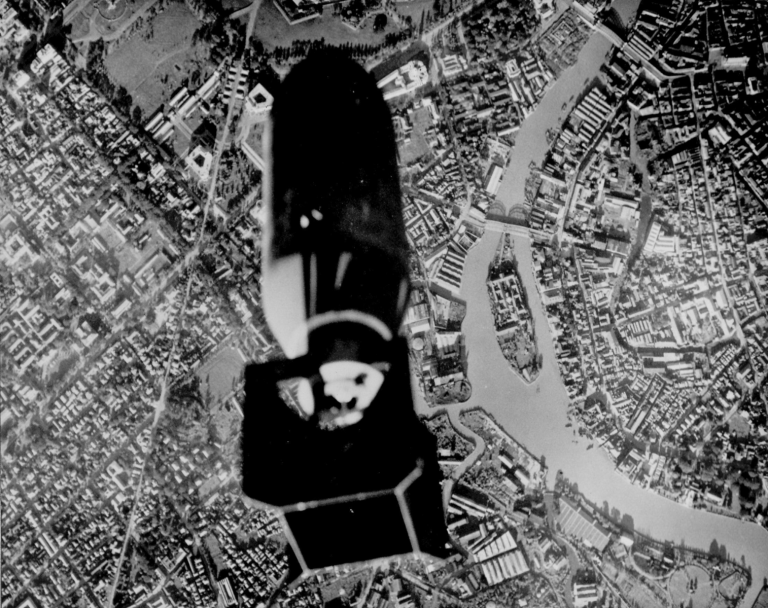
Bombing Manila
Why did Manila disappear from global memory? Part of the answer lies in narrative convenience. The Pacific War is often framed as a story of island battles and decisive victories. Civilian suffering in Asia, particularly outside Japan and China, receives less attention. Manila did not fit neatly into Cold War storytelling. Its destruction complicated the idea of clean liberation.
Postwar reconstruction accelerated forgetting. The Philippines, newly independent, focused on rebuilding rather than memorializing trauma. Ruins were cleared. Streets rebuilt. Economic survival took precedence over remembrance. Unlike European cities that preserved ruins as warnings, Manila rebuilt over its scars.
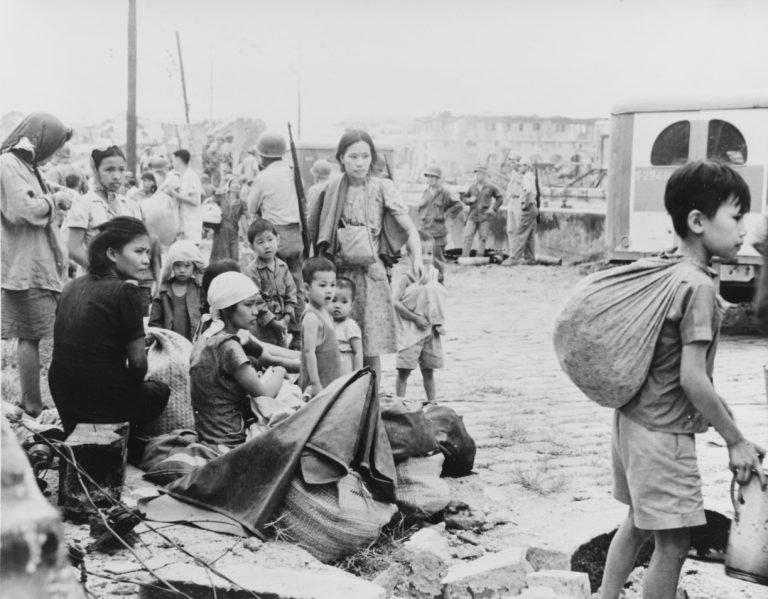
Civilians affected by the Battle of Manila
Walking through Manila today requires imagination. Modern buildings stand where massacre occurred. Traffic flows through streets once soaked in blood. Few markers indicate what happened. The city lives because it had to. Memory retreated into families rather than monuments.
This absence of memory does not diminish the scale of tragedy. It deepens it. Manila stands as a reminder that history does not remember everything equally. Some cities vanish not only physically, but narratively.
Calling Manila the Forgotten Holocaust of Asia is not rhetorical exaggeration. It is an acknowledgment that mass civilian destruction occurred here with a scale and brutality comparable to better-known atrocities, yet without the recognition they received. The victims deserve more than silence.
Understanding Manila’s destruction matters because it challenges how we remember World War II. It forces us to confront whose suffering becomes global memory and whose is allowed to fade. It reminds us that cities can be erased not only by bombs, but by forgetting.
Manila exists today because its people survived the impossible. The city rebuilt not as a monument to tragedy, but as a necessity. Its streets carry history quietly, beneath noise and motion. The past is not gone. It is buried.
Comment (0)