

Okinawa occupies an uneasy place in Japanese history. It is officially part of Japan, yet it has rarely been treated as fully Japanese in memory, policy, or narrative. Its language, culture, and history set it apart, but it was Okinawa that bore the heaviest civilian cost of Japan’s final World War II battle. The island’s suffering does not fit neatly into Japan’s dominant war story, and that discomfort has never been resolved.
To understand why Okinawa remains difficult to remember, one must begin before Japan itself. For centuries, Okinawa was the center of the Ryukyu Kingdom, a maritime state that thrived through trade and diplomacy. It maintained tributary relations with China while engaging Japan cautiously. This in-between status shaped Okinawan identity as adaptive, outward-looking, and distinct.
When Japan formally annexed Okinawa in the late nineteenth century, incorporation did not mean equality. Okinawans were encouraged to abandon their language and customs to become properly Japanese. Difference was framed as backwardness. Assimilation was demanded, but acceptance remained incomplete.
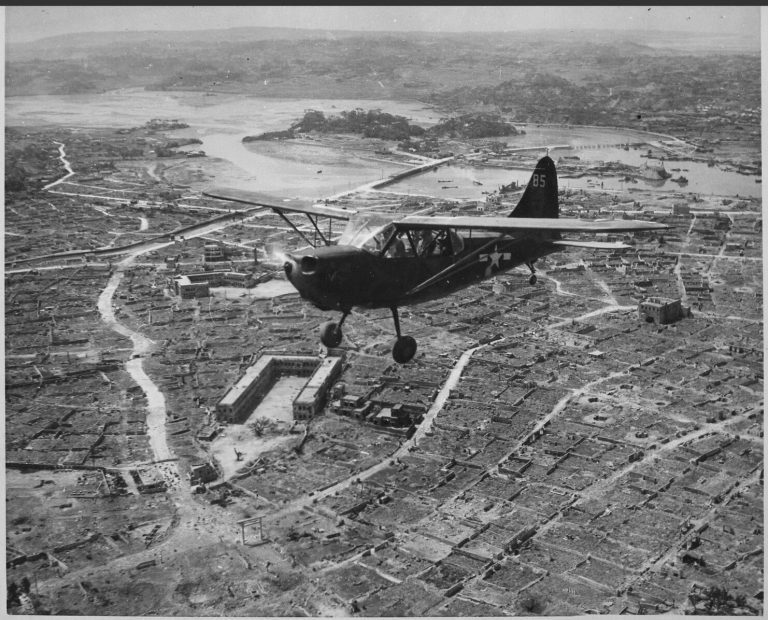
Battle of Okinawa, A Marine observation plane flies low over Naha, capital of Okinawa.
This history mattered deeply when World War II arrived. Okinawa was not only Japan’s southernmost defense line. It was also the place where the state tested the limits of loyalty. Okinawans were Japanese subjects, but they were also expendable.
The Battle of Okinawa was unlike any other conflict fought on Japanese soil. It was a ground invasion fought among civilians, farms, villages, and families. Unlike the air raids on mainland cities, Okinawa experienced prolonged, intimate violence. Civilians could not flee. They were trapped between advancing forces and defensive lines.
During the battle, civilians were not merely collateral damage. They were entangled in military strategy. Some were forced into labor. Others were pressured to commit suicide rather than be captured. Fear was cultivated deliberately. Loyalty was enforced through terror.
In Okinawa, entire communities vanished. Families died together. Survivors carried guilt alongside grief. The war did not distinguish clearly between soldier and civilian. Everyone was consumed.
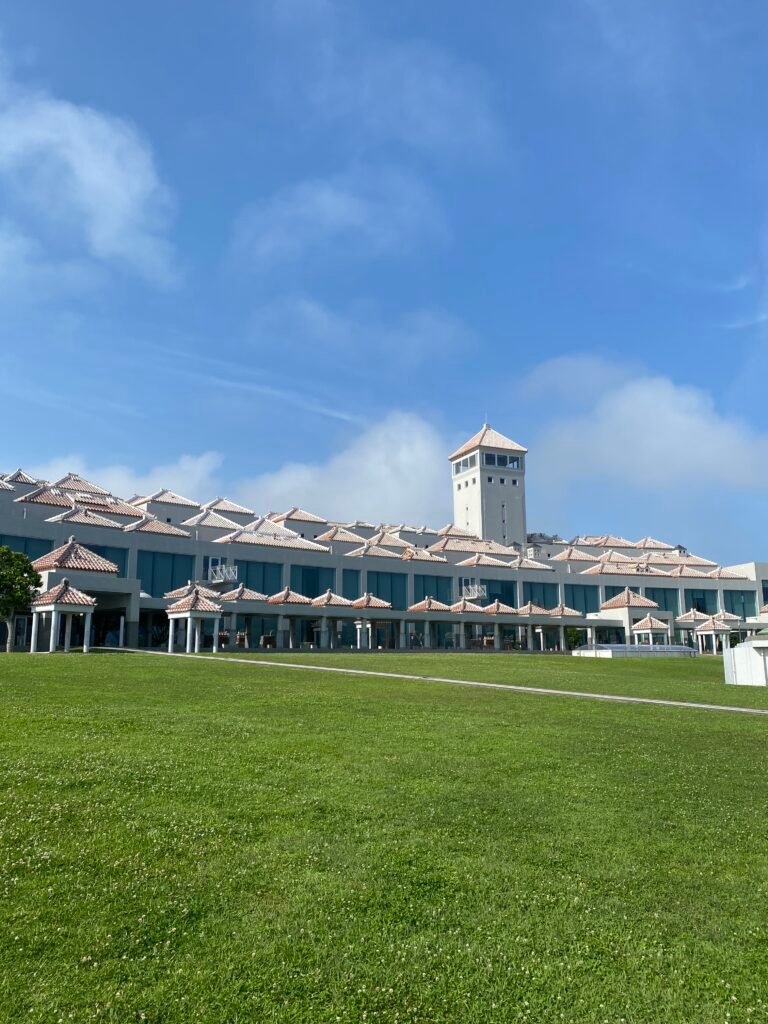
Peace Memorial Park in Okinawa
The trauma of mass civilian death left Okinawa with a memory that does not align with Japan’s dominant narrative of victimhood centered on atomic bombing. Okinawa’s suffering was not sudden or abstract. It was prolonged, personal, and often caused by Japanese forces themselves.
Liberation did not feel like liberation. When the battle ended, Okinawa did not return to Japanese control. It fell under American administration. While mainland Japan rebuilt under sovereignty, Okinawa became a military outpost. Bases replaced villages. Fences replaced homes.
American rule brought economic support, but it also reinforced Okinawa’s sense of dispossession. Decisions were made elsewhere. Land was taken for strategic needs. Okinawans lived with the physical presence of war long after fighting stopped.
When Okinawa was returned to Japan decades later, the sense of alienation did not disappear. Military bases remained. Political priorities remained distant. Okinawa continued to shoulder a disproportionate burden for national security.
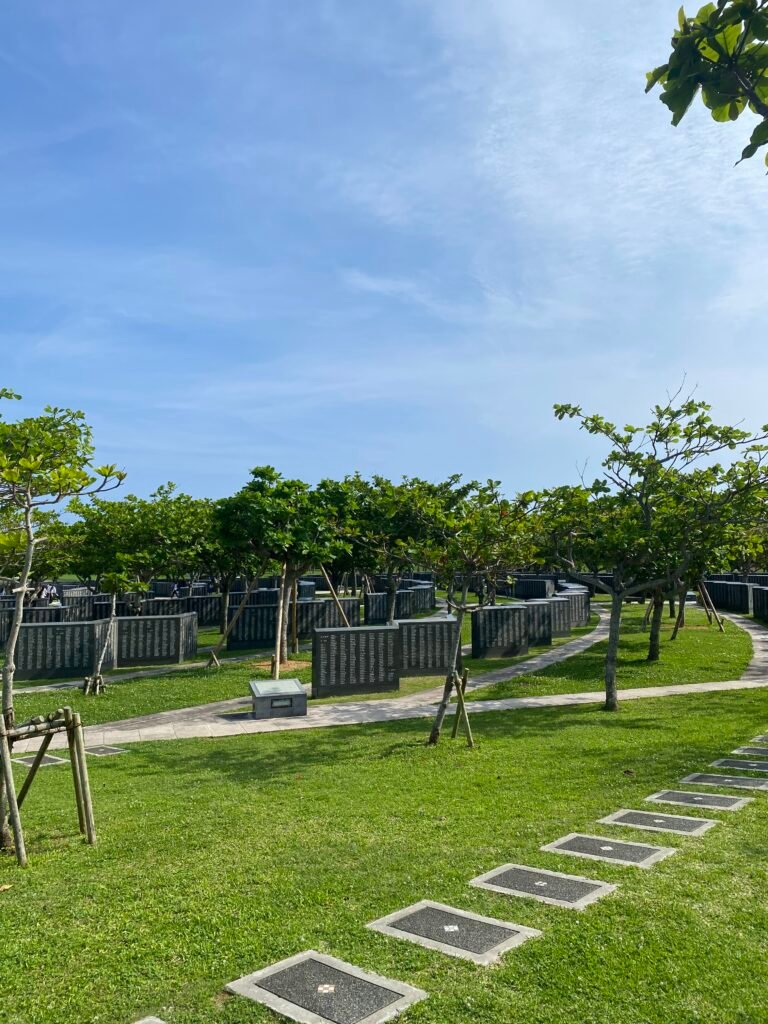
Battle of Okinawa memorial honoring civilian victims
Memory followed a similar pattern. Official Japanese war memory emphasized national suffering, resilience, and peace. Okinawa’s experience complicated this story. Acknowledging Okinawa fully would require confronting how the Japanese state treated its own marginalized population during wartime.
As a result, Okinawa’s war memory has often been sidelined. Textbook language is softened. Responsibility is blurred. Civilian coercion is downplayed. Okinawans are left to remember largely on their own.
In Battle of Okinawa, memory remains raw because recognition remains partial. Memorials exist, but they do not settle questions. Annual ceremonies coexist with political tension.
Okinawan protests against base expansion are not only about land or noise. They are about historical continuity. The island has been used repeatedly for strategic purposes without consent. The war never fully ended here.

Travelers in Okinawa
Travelers often see Okinawa as a tropical destination. Beaches, coral reefs, and sunshine dominate imagery. Yet beneath this surface lies a landscape shaped by trauma. Caves that sheltered families still exist. Memorial stones carry names without closure.
Okinawa does not fit comfortably into Japan’s war story because it exposes contradictions. It reveals how empire treated its periphery. It challenges narratives of unified national suffering. It forces questions about responsibility toward the marginalized.
Japan struggles to remember Okinawa not because the memory is unclear, but because it is too clear. It demands acknowledgment that complicates identity.
Okinawa stands as a reminder that wars are not experienced equally within nations. Some regions pay costs others never see. Remembering them fully requires humility.
Okinawa is not forgotten. It is unresolved.
Comment (0)