

The story of the Thailand and Japan alliance in WWII is a narrative woven from political compromise, regional uncertainty, national aspiration, and the lived experiences of individuals who found themselves in a world defined by shifting power structures. It is a chapter that continues to fascinate historians because it does not fit neatly into a single interpretation. Instead, it exists as a mosaic, composed of diplomacy, resistance, cultural negotiation, and the long-term consequences that shaped Thailand’s modern identity. To understand this chapter, one must step back into the atmosphere of the early 1940s, when Southeast Asia became a focal point of global conflict and Thailand found itself navigating a world where every decision bore immense weight.
In the decade leading up to the war, Thailand had undergone significant political transition. The Siamese Revolution of 1932 had ushered in constitutional change, replacing absolute monarchy with a new political structure that attempted to balance modern principles with traditional cultural identity. Leaders of the era sought a stronger international presence and greater autonomy within a region dominated by colonial powers. Thailand had lost territories in previous decades and carried a desire to restore national pride and negotiate from a position of strength.
Across the region, Japan was expanding rapidly. Manchuria, parts of China, and several Pacific territories had already become stages for escalation. Japan projected itself as a modernizing force in Asia, presenting an image of shared regional destiny that contrasted with Western colonial presence. This narrative resonated with some leaders in Southeast Asia, including elements within the Thai government, who saw potential strategic advantage in aligning with a rising Asian power rather than relying on fragile diplomacy with Western nations. Yet the Thai public sentiment was not monolithic. Some observed Japan’s rise with curiosity, others with caution, and many simply wished to avoid being consumed by conflict altogether.
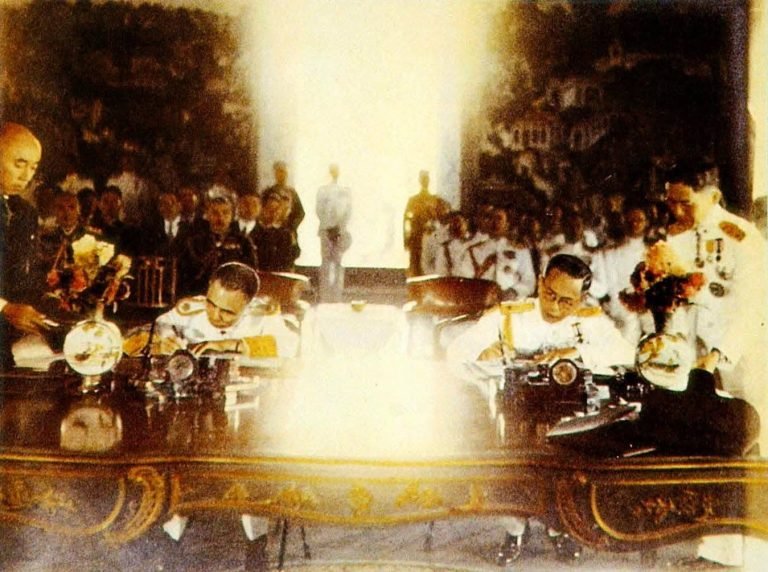
On December 8, 1941, the global climate shifted dramatically. While the world reeled from the attack on Pearl Harbor, Japanese forces advanced simultaneously throughout Southeast Asia. In Thailand, Japanese troops approached through coastal regions and border points, prompting immediate confrontation with Thai forces. For several hours, the nation braced itself in a state of alarm, unsure whether the coming days would bring devastation or compromise. But the geopolitical reality was stark. Japan’s forces were overwhelming in scale and momentum. With Singapore facing collapse and Malaya already under attack, Thailand stood alone in a precarious position. The government faced a decision that would shape its international reputation for decades.
Within hours, orders emerged from Bangkok to cease resistance. Negotiations commenced, resulting in an armistice that allowed Japanese troops passage through Thai territory. Eventually, Thailand formalized an alliance with Japan, joining the Greater East Asia Co-Prosperity Sphere. This alliance formed a central point in the narrative of Thailand and Japan alliance WWII, but it did not unfold in isolation. Beneath the surface, multiple layers of emotion and motive existed. Some leaders hoped that aligning with Japan would protect Thailand’s sovereignty at a time when the nation lacked the resources to stand alone. Others viewed the alliance as a calculated step to regain territories lost decades earlier. Still others disagreed internally, fearing the long-term implications of binding the nation’s future to a wartime superpower.
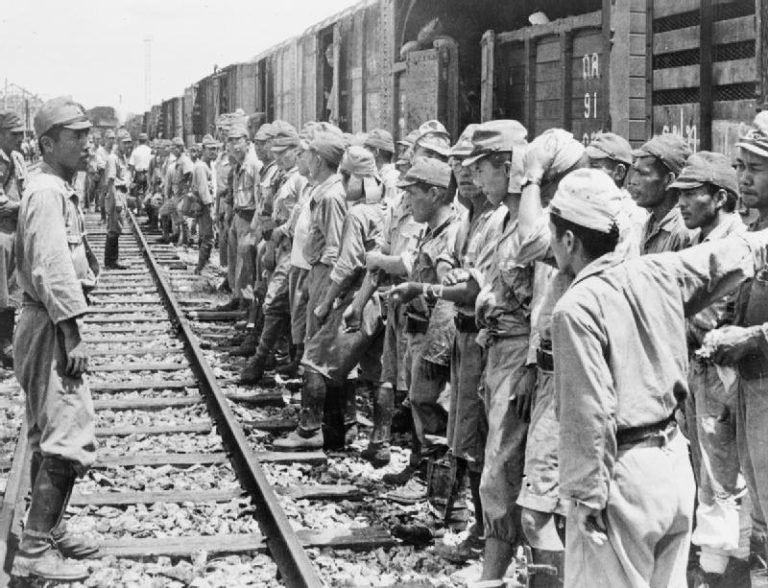
As the alliance deepened, Thailand allowed Japanese forces access to strategic routes, including the western region near the border of Burma. This decision would lead directly to one of the most enduring historical legacies associated with the era: the construction of the Thai–Burma Railway. The project, initiated by the Japanese military, required the rapid movement of troops and supplies through dense forest and mountainous terrain. Although Thailand participated diplomatically, much of the labor force used in the railway came from outside the country and experienced severe hardship. Today, Kanchanaburi stands as the primary landscape where this history is remembered, taught, and contextualized.
Credit: “Image via Wikimedia Commons. Public Domain.”
Yet Thailand’s wartime role cannot be accurately depicted through a single alliance document. Within the country, resistance networks quietly formed. The Free Thai Movement, supported by various international partners, emerged as a symbol of internal dissent against the alliance. Diplomats, students, civil servants, and ordinary citizens risked their safety to maintain communication with Allied forces. They supplied intelligence, facilitated coordination, and worked toward ensuring Thailand’s sovereignty in the post-war settlement. Their efforts demonstrate that Thailand during WWII was far from unified in support of Japan’s wartime ambitions. The alliance, instead, existed as a fragile structure laid atop a society filled with diverse perspectives.
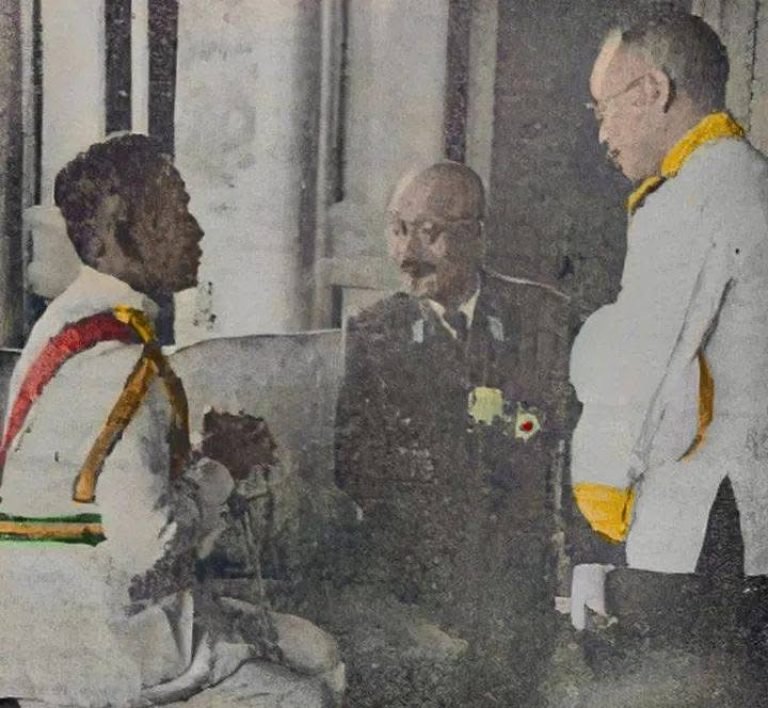
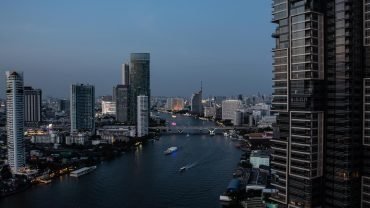
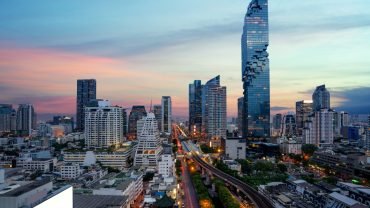
The landscape of Bangkok in the 1940s reflected this complexity. What is now a modern skyline of glass towers and expressways was once a mix of wooden houses, open canals, colonial-era buildings, and emerging governmental complexes. Diplomatic negotiations took place in rooms overlooking the Chao Phraya River. Quiet meetings of the Free Thai Movement occurred in unmarked neighborhoods. International representatives maneuvered politically within embassies not far from bustling marketplaces. Today, walking through Bangkok offers only faint traces of these wartime years, yet the city carries a memory that can be uncovered through research, conversation, and historical sites that still stand quietly amidst the vibrant urban rhythm.
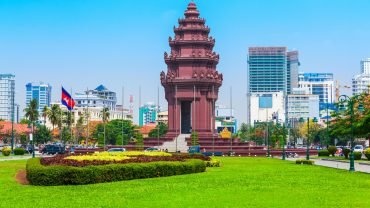
Victory Monument, often mistaken as a symbol of a later era, was originally constructed not to mark WWII but to commemorate a territorial conflict with French Indochina in 1941. During the wartime period, however, it became entangled with Thailand’s national identity and political imagery. Buildings near the river that once hosted diplomatic negotiations remain hidden among modern structures. Older families sometimes recall stories told by grandparents—whispers of curfews, rationing, political uncertainty, and the sense of living under a shifting balance of power.
Credit: “Image via Wikimedia Commons. Public Domain.”
To fully appreciate the Thailand and Japan alliance WWII, one must leave Bangkok and journey westward to Kanchanaburi, a province whose serene natural environment contrasts sharply with the intensity of its historical significance. The river valleys here seem peaceful today, with green hills, calm water, and soft morning mist that settles over small towns. Yet history remains present in places like the Thai–Burma Railway Centre, an institution dedicated to researching and presenting the history of the wartime railway. Exhibits focus on the logistical challenges, the international context, and the lived experiences of those connected to the project, all presented with dignity and careful documentation. The War Cemetery nearby, maintained with great respect, stands as a quiet landscape where visitors pause to reflect on the human cost of wartime decision-making across all nations involved.
Walking along the preserved railway sections today evokes contemplation rather than shock. The wooden beams and steel rails stand as reminders of an era defined by intensity and upheaval. The natural beauty surrounding them underscores how landscapes can carry memory even after decades of transformation. Visitors often describe a sense of gentle sadness, not rooted in specific scenes of conflict but emerging from the realization that decisions made in the halls of power once carried profound consequences for people from every corner of the region.
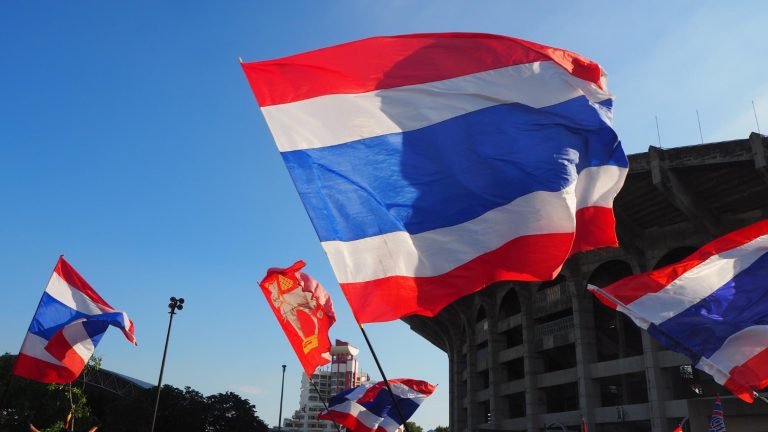
Kanchanaburi serves as a powerful complement to Bangkok in understanding this historical period. While the capital tells a story of diplomacy, political strategy, and internal negotiation, Kanchanaburi embodies the broader impact of wartime infrastructure and international interaction. Together, they offer a holistic understanding of why the Thailand and Japan alliance WWII unfolded as it did and how it shaped modern Thai identity. After the war ended, Thailand engaged in extensive diplomatic work to position itself as a nation that sought peace and stability. The Free Thai Movement played an essential role in negotiations that ultimately helped Thailand avoid severe post-war penalties and reintegrate smoothly into the international community.
Credit: “Image via Wikimedia Commons. Public Domain.”
Today, Thailand and Japan maintain a cooperative and friendly relationship defined by trade, cultural exchange, and tourism. The wartime alliance remains a topic studied in universities and commemorated through historical institutions, but it no longer shapes the emotional tone between the two countries. Instead, it acts as a reminder of how nations evolve, heal, and redefine their relationships across generations. Understanding this historical era adds depth to the experience of traveling through Thailand, allowing visitors to appreciate how the landscapes of Bangkok and Kanchanaburi hold stories beneath their modern surfaces.
Exploring this narrative invites a broader reflection on how nations navigate unpredictable global circumstances. Thailand in the 1940s faced pressures that few modern governments encounter. The decision to align with Japan was not rooted in a single motive, nor did it represent the feelings of every citizen. It was a product of the world as it existed then—uncertain, shifting, and deeply influenced by external forces. Understanding this helps modern readers view the era not through simplistic judgment but through a nuanced appreciation of its complexity.
Comment (0)