

The question appears simple. Was Thailand neutral in World War II? Yet beneath that simplicity lies one of Southeast Asia’s most complex wartime narratives. Neutrality suggests distance from conflict, a refusal to align with major powers. But Thailand’s experience during the Second World War resists such clean definitions.
From the perspective of Bangkok, neutrality was not a fixed position. It was a negotiation under threat. It was a calculation shaped by geography, imperial expansion and survival instincts.
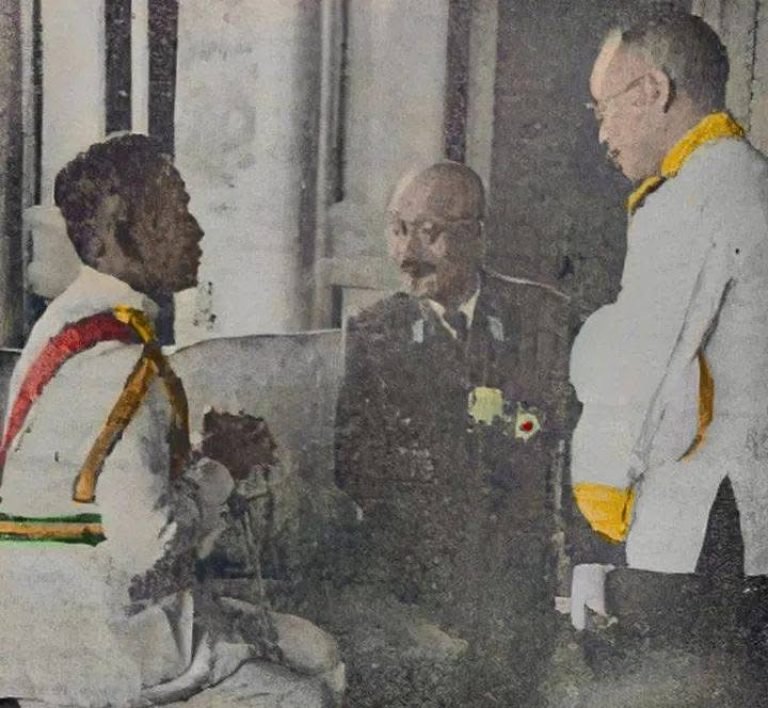
Plaek Phibunsongkhram is talking with Hideki Tojo.
When Japanese forces expanded into Southeast Asia in December 1941, they required transit routes toward British Burma and Malaya. Thailand lay directly in that path. Japanese troops landed on Thai shores on December 8, 1941, just hours after the attack on Pearl Harbor. Skirmishes broke out in several provinces, yet within hours Thai leadership agreed to ceasefire and negotiations.
This decision would define Thailand’s wartime trajectory.
Rather than sustain prolonged resistance, the Thai government chose cooperation. A formal alliance with Japan followed. Japanese troops were granted passage. Railways were used. Ports functioned as logistical arteries.
On paper, Thailand was aligned with the Axis. It declared war on the United States and Britain in early 1942. Yet this declaration would later become central to debates about neutrality and legitimacy.
Across Thailand, the situation was never as simple as ideological commitment. Thai leaders calculated that resistance would invite invasion and destruction. Cooperation, they believed, would preserve sovereignty and prevent Bangkok from becoming battlefield city like Manila or Singapore.
Bangkok thus became capital under pressure rather than city under siege.
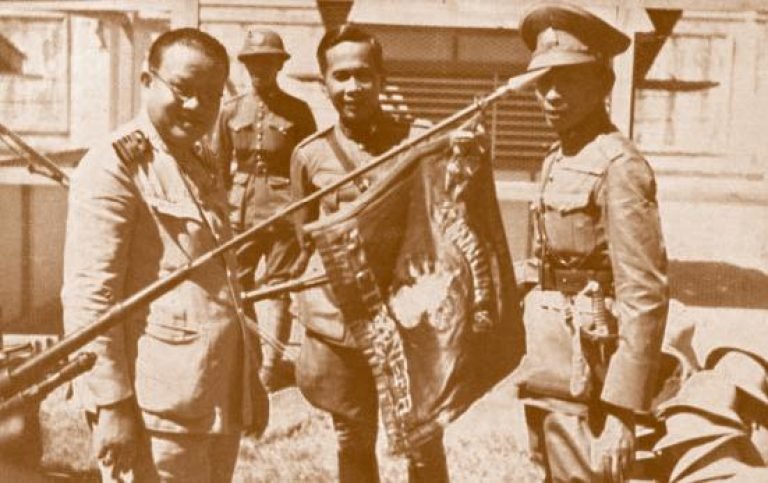
Plaek Phibunsongkhram, The prime minister of Thailand during WW2, observing the army flag of the 2nd Foreign Infantry Regiment, after defeating France at Phum Preav.
Japanese troops were visible in transport corridors and administrative districts, yet Thai institutions remained operational. The monarchy was not abolished. Ministries continued functioning. Markets opened. Temples remained centers of daily life.
From a strict international law perspective, Thailand was not neutral after signing alliance agreements with Japan. It permitted military operations on its soil. That alone contradicts classical neutrality.
Yet inside Bangkok, political currents diverged.
A covert resistance network known as the Free Thai Movement emerged. Its members included diplomats abroad, students in the United States and Britain, and officials within Thailand itself. Their objective was to maintain contact with Allied powers and preserve Thailand’s future diplomatic standing.
In Washington, Thai ambassador Seni Pramoj refused to deliver Thailand’s declaration of war to the United States government. This refusal later provided diplomatic leverage.
Thus while official Bangkok cooperated with Japan, another Bangkok operated in shadow.
Neutrality, then, becomes layered concept.
Thailand was not neutral in action. It allowed Japanese transit and declared war. Yet it was not fully committed Axis power either. It maintained internal resistance and postwar diplomatic maneuvering.
Bangkok embodied this duality.
In Rattanakosin, government buildings carried on administrative work under wartime strain. Along the Chao Phraya, transport vessels moved goods critical to Japanese campaigns. In university lecture halls, students debated ideology carefully. In private homes, conversations reflected uncertainty about the war’s direction.
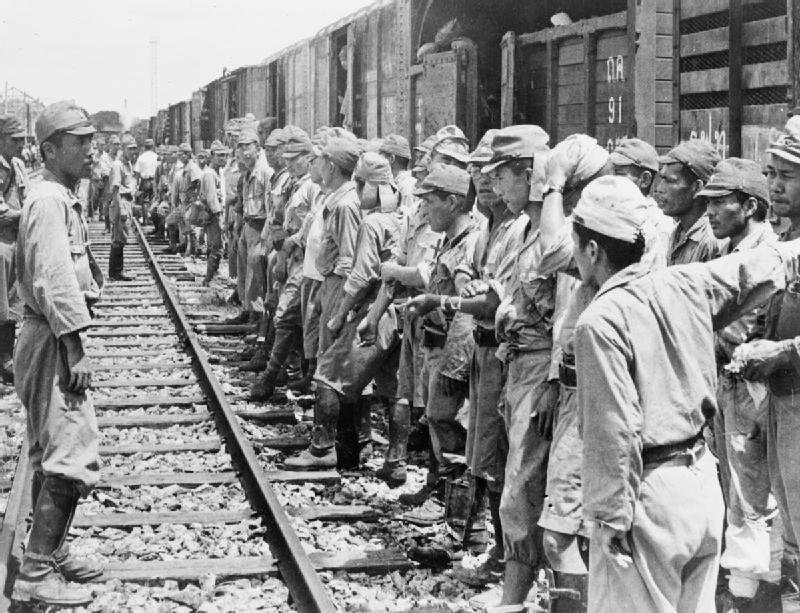
Japanese Troops Leave Bangkok
By 1944, as Japan’s strategic position weakened, Allied air raids targeted infrastructure in Bangkok. Bridges such as Rama VI were struck. Rail yards suffered damage. Yet the capital was never reduced to rubble.
Allied planners recognized Thailand’s ambiguous status. Destroying Bangkok entirely would complicate postwar stabilization in mainland Southeast Asia.
The Free Thai Movement intensified coordination with Allied intelligence during this period. Information about Japanese troop movements and infrastructure passed discreetly.
When Japan surrendered in August 1945, Thailand’s diplomatic strategy unfolded rapidly. The presence of Free Thai networks allowed the country to argue that its wartime alliance had been coerced. The United States accepted this framing.
As a result, Thailand avoided occupation and severe postwar punishment. Bangkok remained administrative center without foreign military administration replacing its institutions.
This outcome profoundly shaped historical memory.

The Free Thai Movement
Was Thailand neutral?
From legal standpoint after 1942, no. It had aligned with Japan.
From moral standpoint, the answer becomes more complicated. Cooperation was seen by Thai leadership as means to avoid colonization or destruction.
From Bangkok’s perspective, neutrality was impossible in December 1941. Geography eliminated that option. The capital lay between British Burma and Japanese ambitions.
Bangkok chose survival through alignment while maintaining covert channels for future repositioning.
Postwar diplomacy reinforced this narrative. Thailand returned territories seized during wartime. It joined the United Nations in 1946. Bangkok quickly integrated into emerging Cold War alignments as partner of the United States.
The capital that had cooperated with Japan repositioned itself as anti-communist ally within a decade.
This rapid pivot was only possible because Bangkok had not been destroyed physically and because diplomatic groundwork had been laid during war years.
Neutrality, therefore, was not static label but evolving strategy.
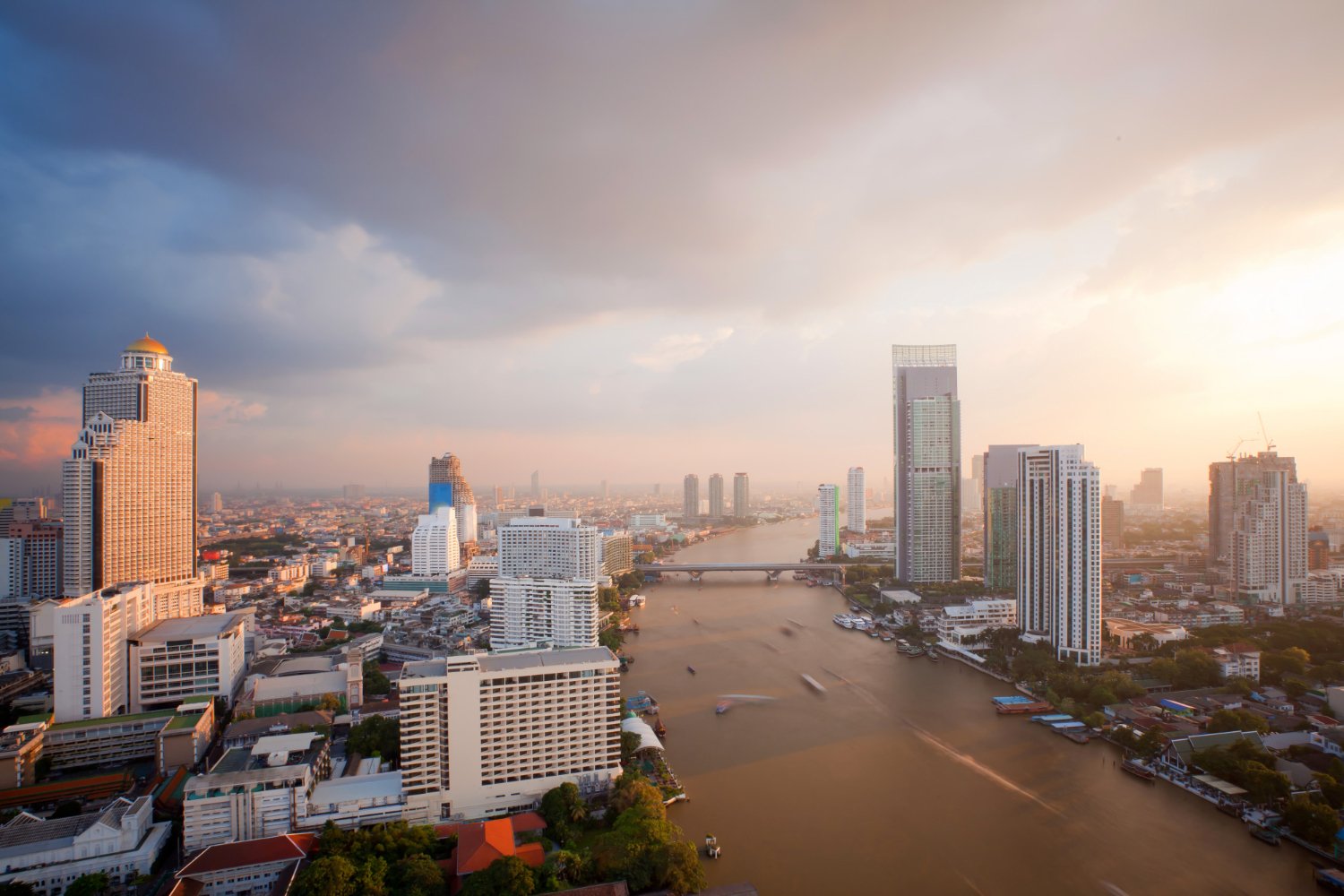
Chao Phraya river Bangkok historical view
Walking Bangkok today offers subtle reminders of this layered history. Along Ratchadamnoen Avenue, government buildings represent continuity of state authority through turbulent decades. The Democracy Monument, completed in 1939, stood during wartime debates about sovereignty and alignment.
Stand there and imagine 1942. Japanese troops moving through rail hubs. Government leaders weighing alliances. Resistance members passing coded messages.
Bangkok was neither victim city nor aggressor capital in simple terms. It was intermediary, navigating between empires.
The debate over neutrality persists in Thai historiography. Some argue that alliance compromised moral standing. Others argue that it preserved independence in era when colonial powers dominated region.
What remains indisputable is that Bangkok survived the war intact.
Unlike Manila, which endured catastrophic destruction during liberation, Bangkok retained its architectural and administrative core. The Grand Palace stood. Wat Phra Kaew remained luminous. Colonial buildings along Bang Rak survived.
This continuity allowed Bangkok to expand rapidly in the 1950s and 1960s. The city’s modern skyline grew atop preserved foundations.
Understanding whether Thailand was neutral requires acknowledging both alliance and resistance. It requires recognizing that neutrality in total war environment may be illusion for small states situated between empires.
Bangkok’s wartime experience reveals survival through complexity rather than purity.
Today, travelers exploring Rattanakosin, walking along Ratchadamnoen, or standing beside the Chao Phraya encounter a capital shaped by those choices.
Visit the Free Thai Museum to understand covert resistance. Walk from the Grand Palace toward Bang Rak to trace routes once used for wartime logistics. Observe how the city’s continuity contrasts with cities that became battlefields.
Bangkok’s perspective reframes neutrality not as absence of war, but as strategy within it.
Thailand was not neutral in strict legal sense. Yet it was not destroyed because it navigated between confrontation and compliance.
The capital endured not by standing outside the war, but by positioning itself within it carefully.
That positioning shaped modern Thailand.
When you walk Ratchadamnoen Avenue today, surrounded by government buildings and monuments, consider the calculations made in those corridors during 1941–1945.
Neutrality was debated. Alliance was signed. Resistance operated quietly. Diplomacy prepared for aftermath.
Bangkok’s survival was not accident. It was outcome of political balancing in era when neutrality was nearly impossible.
Was Thailand neutral? The answer lives in Bangkok’s streets.
Walk Ratchadamnoen Avenue, visit the Free Thai Museum, and explore the river districts to understand how this capital navigated World War II without losing its sovereignty or its skyline.
Comment (0)