

Yangon is often described as one of Asia’s most atmospheric colonial cities. Wide boulevards, fading pastel facades, and weathered balconies suggest elegance rather than conflict. Travelers arrive expecting nostalgia, architecture, and the slow romance of a city suspended in time. What they rarely realize is that Yangon’s beauty was engineered for control, and its survival shaped by war anxiety.
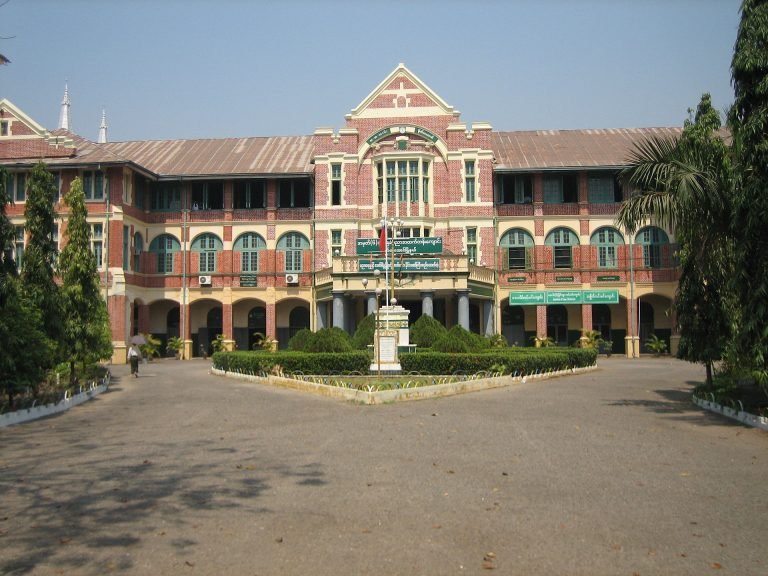
Yangon colonial architecture shaped by British rule
The city once known as Rangoon was not designed organically. It was redesigned under British colonial rule as an administrative and commercial hub within the empire. The grid layout, the monumental buildings, the port infrastructure—all were expressions of imperial logic. Order, visibility, and authority were embedded in architecture.
Colonial cities were not built merely to house populations. They were built to manage them.
Yangon’s position as a port made it strategically vital. Trade flowed through it. Resources left through it. Authority radiated from it. This visibility made it valuable—and vulnerable.
When World War II expanded into Southeast Asia, the logic of control transformed into fear.
Japanese forces advancing westward recognized Rangoon as a gateway. Its port connected British India to China through Burma’s interior. Its railways and river systems formed lifelines. To capture Rangoon was to disrupt Allied logistics across the region.
In early 1942, the city experienced bombing, evacuation, and panic. Colonial order unraveled rapidly. British authorities retreated. Civilians fled inland in chaotic waves. Infrastructure once designed for smooth governance became corridors of escape.
War does not only destroy buildings. It destroys certainty.
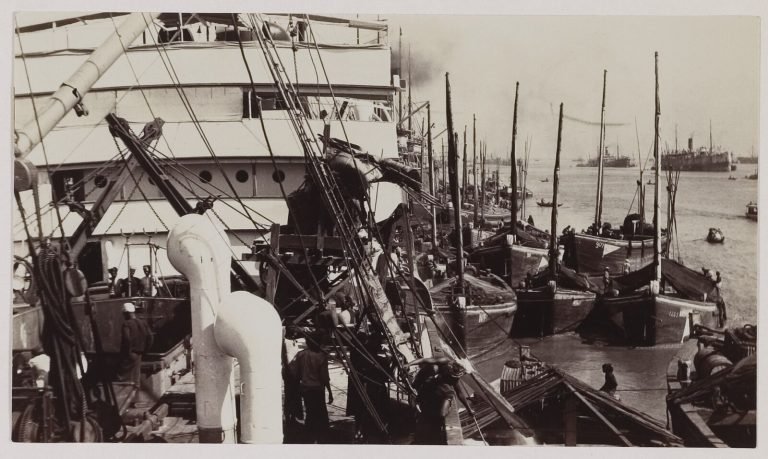
Rangoon port during World War II history
Japanese occupation followed. Rangoon shifted from colonial showcase to occupied city. The architecture remained, but authority changed hands. Surveillance intensified. Resources were redirected. Civilian life tightened.
Across Yangon, fear replaced predictability. The port that once symbolized global connection became a strategic liability. The grid designed for imperial efficiency allowed occupying forces to monitor movement more easily.
Urban design does not disappear during war. It adapts.
Occupation reshaped social dynamics. Local populations navigated new power structures. Collaboration, resistance, and survival intertwined. Food shortages spread. Information became scarce. Rumors moved faster than news.
Rangoon did not experience destruction at the scale of cities like Manila or Hiroshima, yet its psychological transformation was profound. A colonial city built for permanence became temporary in an instant.
After the war, Rangoon did not receive restoration to its former imperial role. Instead, it transitioned into the capital of an independent Burma. The colonial facades remained, but their meaning shifted.
The city was no longer a symbol of empire. It became a symbol of inheritance.
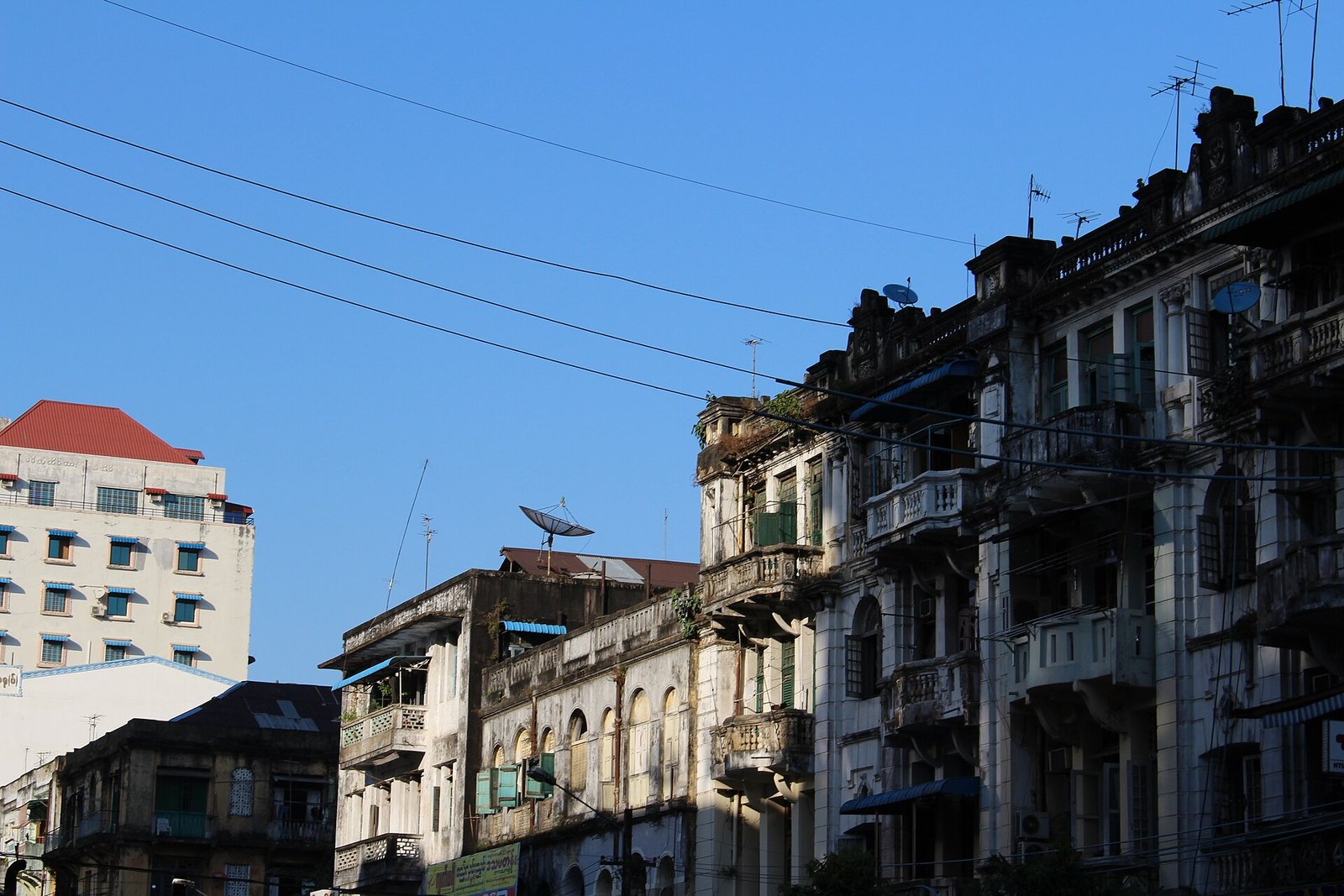
Yangon downtown grid reflecting colonial planning
Across Myanmar, postwar instability and internal conflict complicated reconstruction. Rangoon remained central but no longer unquestioned. Political tensions and military influence shaped its development.
Colonial buildings weathered not only climate but history. Maintenance lagged. Economic constraints limited renovation. What tourists now call atmospheric decay is also evidence of interrupted continuity.
Yangon’s beauty feels preserved not because it was carefully curated, but because history prevented complete modernization.
War anxiety shaped how the city moved forward. Infrastructure planning reflected security concerns. Governance structures absorbed lessons from occupation. Trust in permanence diminished.
Walking through downtown Yangon today reveals this layering. The Secretariat building stands as reminder of colonial administration and nationalist struggle. The port continues operating, though its geopolitical role has shifted. Residential blocks show both resilience and fragility.
Travelers drawn to Yangon for colonial nostalgia often focus on aesthetic detail: peeling paint, arched windows, teak shutters. These details are real and compelling. Yet without context, they risk romanticizing a past defined by hierarchy and fear.
Understanding Yangon WWII history reframes the experience.
The grid becomes a strategic diagram. The port becomes contested space. The silence of certain buildings becomes testimony to evacuation and occupation.
Yangon is not frozen in colonial time. It is suspended between inherited architecture and unresolved political tension.
The city’s atmosphere reflects this suspension.
Unlike heavily restored colonial cities elsewhere in Asia, Yangon’s fabric remains uneven. Some buildings crumble. Others are repurposed. Modern high-rises emerge cautiously.
This unevenness mirrors Myanmar’s broader trajectory: repeated attempts at stability interrupted by conflict.
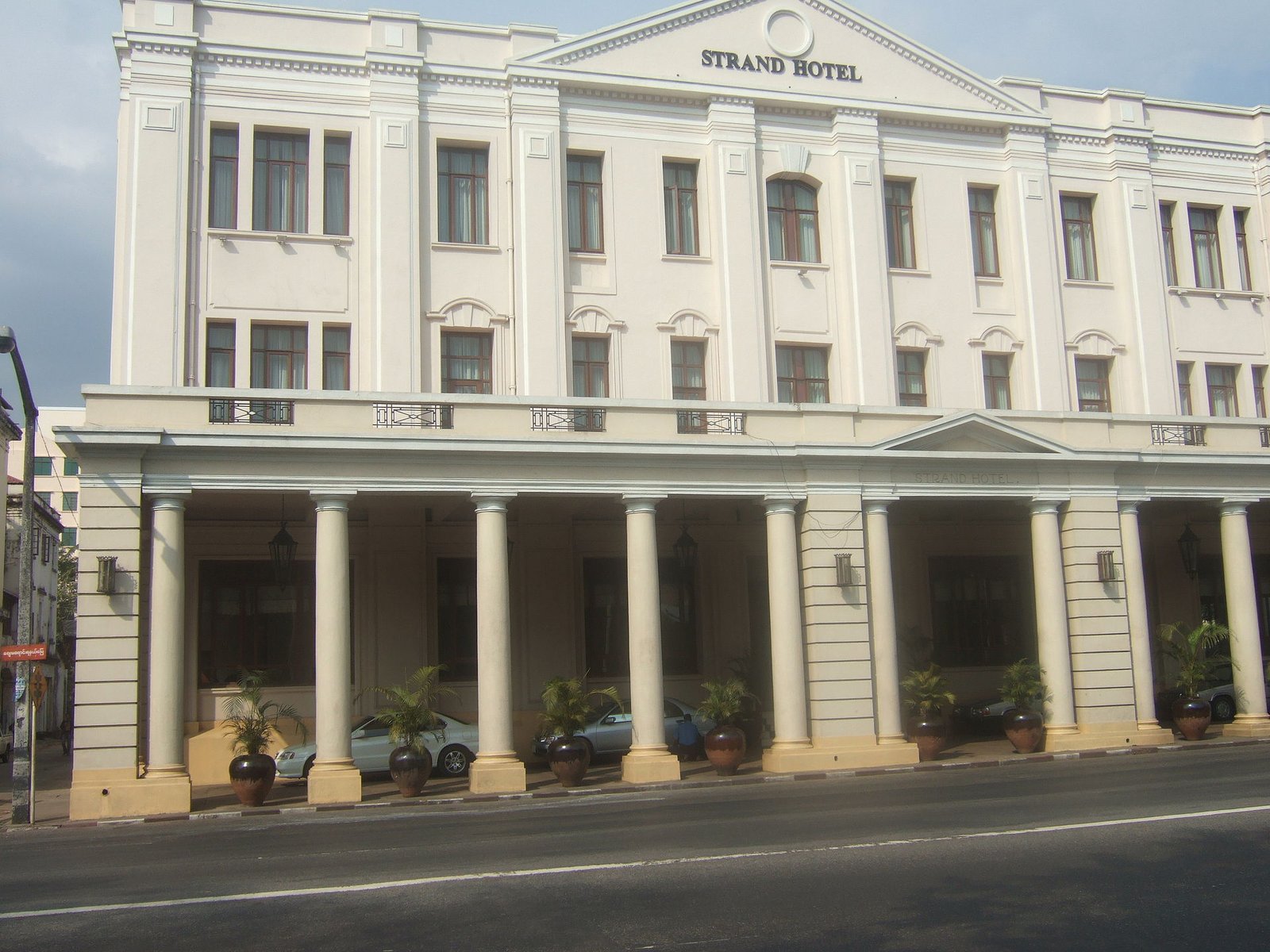
Colonial streets in Myanmar showing layered history
Traveling Yangon beyond colonial nostalgia means recognizing that its beauty was built under imperial ambition and preserved through historical interruption.
It means asking why certain buildings remain and others do not.
It means understanding that Rangoon’s transformation during World War II was not a brief disruption, but a turning point that reshaped the nation’s relationship with authority and space.
Yangon teaches that colonial cities are rarely neutral. They carry embedded power structures. War exposes those structures.
Walking its streets today is an act of reading layers.
The elegance remains.
So does the anxiety.
Yangon is not only a colonial postcard.
It is a city shaped by empire, occupation, and inherited uncertainty.
Walk Yangon beyond colonial nostalgia,
and read the architecture of war beneath its fading facades.
Comment (0)