

Imperial Japan did not rise overnight, nor did it fall in a single moment of defeat. Its story is one of transformation driven by fear, ambition, pride, and a deep desire to survive in a rapidly changing world. To understand how Japan evolved from a secluded island nation into a global empire, and how that empire ultimately collapsed, one must look beyond battles and treaties. The true story lies in the intersection of history, culture, and what many scholars describe as the Japanese spirit, a collective mindset shaped by centuries of tradition, discipline, and adaptation.
Before the Meiji Restoration, Japan existed in a state of controlled isolation. Under the Tokugawa shogunate, the country limited foreign contact for more than two centuries, cultivating internal stability at the cost of global engagement. This isolation allowed Japanese culture to flourish in unique ways. Samurai ethics, Confucian hierarchy, and agricultural self-sufficiency defined society. Yet beneath the surface, the world was changing rapidly. Western powers, fueled by industrialization and colonial ambition, expanded across Asia. Japan’s isolation, once a strength, became a vulnerability.
The arrival of Western naval forces in the mid-nineteenth century shattered the illusion that Japan could remain untouched by global power dynamics. The sight of modern warships exposed the technological gap between Japan and the West. For many Japanese leaders, this moment triggered a profound existential crisis. The question was no longer whether Japan should change, but how quickly it could do so without losing its identity.
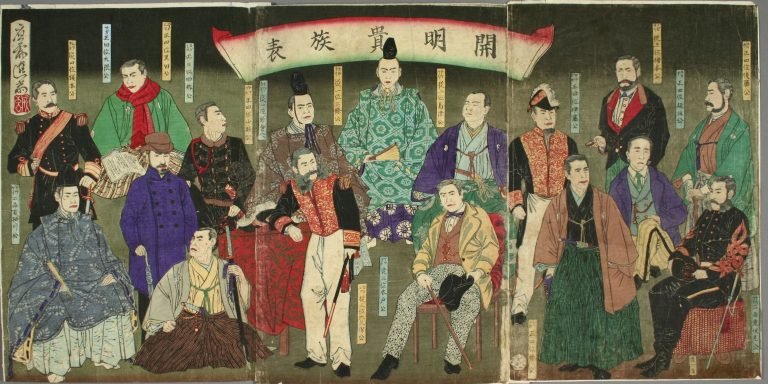
Credit: “Image via Wikimedia Commons. Public Domain.” Kaimei kizokuhyō by Shinsai
The Meiji Restoration of 1868 marked a radical turning point. Power shifted away from the shogunate and toward the emperor, who became a symbol of national unity and renewal. The new leadership embarked on an unprecedented program of modernization. Feudal structures were dismantled. Western technology, education systems, military organization, and industrial practices were adopted at astonishing speed. Japan sent students and officials abroad to study European and American institutions, absorbing ideas while carefully selecting what aligned with national values.
What made Japan’s modernization unique was not imitation alone, but synthesis. Western science and military organization were fused with traditional Japanese ethics. The emperor was elevated not merely as a political figure, but as a sacred embodiment of the nation. Loyalty to the state became intertwined with spiritual duty. This fusion laid the foundation for a new form of nationalism, one that justified sacrifice in the name of progress and survival.
As Japan industrialized, it also expanded outward. Victories in conflicts with neighboring powers reinforced the belief that Japan had discovered its destiny. Military success was interpreted not only as strategic achievement, but as moral validation. Japan saw itself as proof that an Asian nation could stand equal to Western empires. This belief deeply influenced national identity and public consciousness.
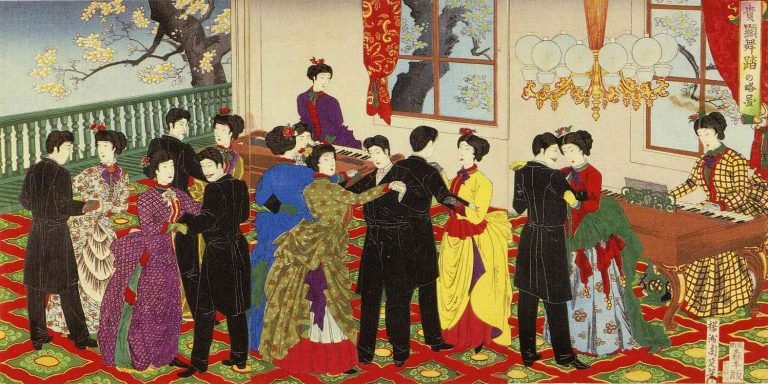
Central to this identity was the reinterpretation of bushido, the ethical code traditionally associated with the samurai. Originally a flexible set of values emphasizing honor, loyalty, and personal discipline, bushido was reshaped into a state ideology. It became a moral framework that glorified obedience, endurance, and self-sacrifice. In schools and military institutions, young people were taught that devotion to the emperor and nation transcended individual life. This was not merely propaganda, but a deeply internalized worldview reinforced by education, ritual, and social expectation.
The emperor’s role in Imperial Japan cannot be understood purely in political terms. He existed simultaneously as a human ruler and a spiritual symbol. This dual identity created a powerful emotional bond between citizens and the state. Loyalty was not framed as allegiance to a government, but as devotion to a sacred lineage. This concept helped unify a rapidly changing society, but it also made dissent morally difficult. Questioning state policy could be interpreted as betraying the nation itself.
As Japan expanded across East Asia and the Pacific, ambition increasingly outpaced reality. Industrial growth required resources that Japan lacked domestically. Expansion was justified as a necessity for survival and framed as liberation of Asia from Western colonialism. Yet the realities on the ground were far more complex. The empire’s reach stretched supply lines thin, and the costs of maintaining control over vast territories grew heavier each year.
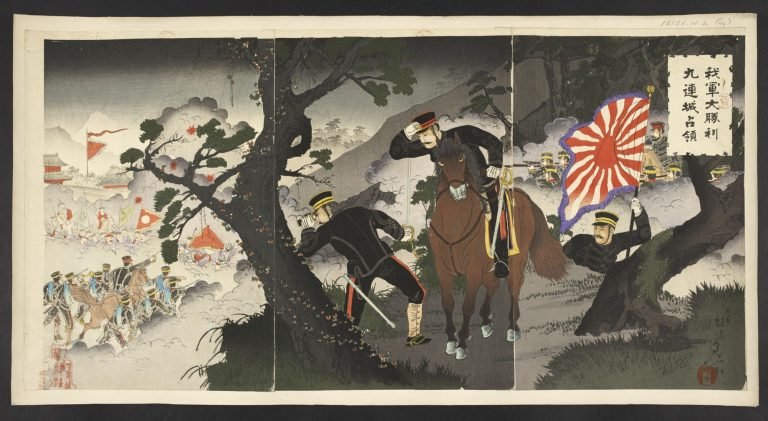
The Japanese army occupies Jiuliancheng
By the time Japan entered the Pacific War, the nation was deeply committed to an imperial vision that left little room for retreat. The Japanese spirit, shaped by decades of ideological reinforcement, emphasized perseverance even in the face of overwhelming odds. This mindset influenced strategic decisions that prioritized honor over practicality. Withdrawal was seen as disgraceful, compromise as weakness. The empire advanced forward, even as warning signs accumulated.
As the war intensified, the gap between ideal and reality widened. Industrial capacity lagged behind that of opposing powers. Cities faced destruction. Civilians endured shortages and uncertainty. Yet public discourse continued to emphasize endurance and spiritual strength. The belief that moral resolve could compensate for material disadvantage persisted, reinforced by a cultural legacy that valued inner strength above all else.
The eventual defeat of Imperial Japan was not merely a military outcome; it was a profound psychological rupture. The collapse of the empire forced a reckoning with long-held beliefs. The emperor, once viewed as divine, addressed the nation in human terms. The ideology that had driven expansion lost its authority almost overnight. For many Japanese citizens, the postwar period brought confusion, grief, and an urgent need to redefine national identity.
The occupation that followed introduced sweeping reforms. Militarism was dismantled. Democratic institutions were established. Education shifted away from emperor-centered ideology toward individual rights and global cooperation. Yet the transformation was not a complete erasure of the past. Elements of discipline, collective responsibility, and resilience remained embedded in Japanese society. The Japanese spirit did not disappear; it adapted.
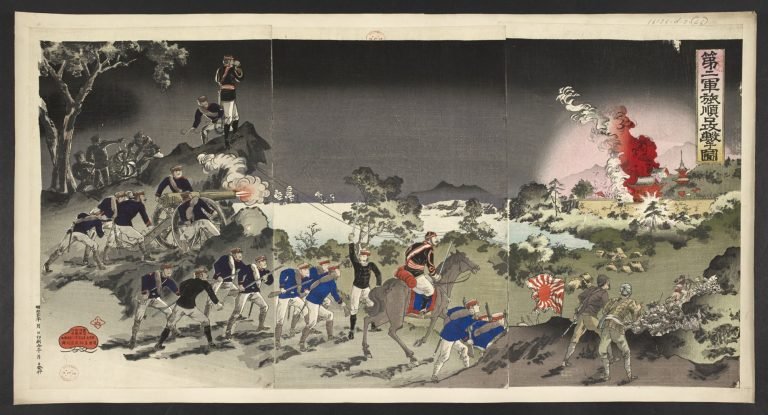
The Japanese 2nd Army attacks Port Arthur
Modern Japan continues to grapple with the legacy of Imperial Japan. Public memory balances reflection with restraint. Museums, memorials, and academic discourse examine the era with increasing openness, yet emotional sensitivity remains. The nation’s postwar identity emphasizes peace, innovation, and cultural preservation, while the shadows of empire serve as reminders of the consequences of unchecked ambition.
Understanding the rise and fall of Imperial Japan requires resisting simplistic judgments. It demands recognition of the fears that motivated modernization, the pride that fueled expansion, and the cultural values that shaped decision-making. It is a story of a society that transformed itself at remarkable speed, achieved extraordinary growth, and ultimately confronted the limits of its vision.
For travelers exploring Japan today, this history is not confined to textbooks. It is present in architecture, rituals, and attitudes toward work and community. The discipline of craftsmanship, the respect for hierarchy, and the emphasis on harmony all carry echoes of the past. Visiting historical sites connected to the Meiji era or the wartime period reveals a nation that remembers carefully, seeking understanding rather than glorification.
Imperial Japan’s legacy is complex and often uncomfortable, but it remains essential to understanding modern Japan. It shows how culture and ideology can empower a nation to rise, and how the same forces can lead it toward collapse when left unexamined. In tracing this journey from restoration to defeat, one gains insight not only into Japanese history, but into the universal dynamics of power, identity, and transformation.

Comment (0)