

World War II transformed Southeast Asia into one of the most contested regions of the twentieth century. Empires collapsed, armies moved across jungles and coastlines, and entire cities found themselves caught between powerful forces. Among the most fascinating stories of the war are the experiences of three capitals that survived the conflict in dramatically different ways: Bangkok, Yangon, and Ho Chi Minh City.
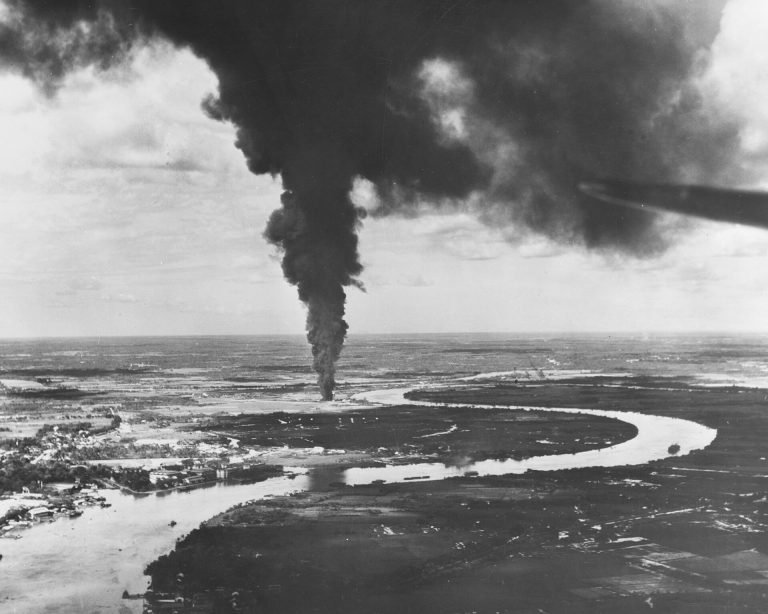
Saigon city view in the 1940s wartime era
Each of these cities stood at the crossroads of Japanese expansion, Allied strategy and colonial collapse. Yet the outcomes were strikingly different. Some cities endured heavy destruction while others emerged largely intact. Some became battlefields while others functioned as logistical centers or administrative hubs. Understanding why these three cities experienced the war differently reveals how geography, politics and imperial strategy shaped Southeast Asia’s wartime landscape.
Before the war, Southeast Asia was largely controlled by European colonial empires. British power dominated Burma and Malaya. The Dutch ruled the East Indies. France governed Indochina, which included Vietnam, Laos and Cambodia. Thailand stood apart as the region’s only independent kingdom, maintaining sovereignty through diplomacy and careful political balancing.
When Japan launched its rapid expansion across Asia in late 1941, these colonial systems collapsed with surprising speed. The Japanese military sought resources, strategic territory and control of key transport routes across the region. Southeast Asia became essential to Japan’s war economy because it offered oil, rubber, rice and access to shipping lanes connecting the Pacific and Indian Oceans.
The invasion of Southeast Asia unfolded with astonishing momentum. British defenses in Malaya fell quickly. Singapore surrendered in February 1942, shocking the world. The Philippines faced devastating battles. The Dutch East Indies collapsed soon afterward. Across the region, colonial governments fled or surrendered as Japanese forces advanced.
Amid this sweeping transformation, the three cities of Bangkok, Yangon and Saigon found themselves in different positions within the Japanese strategy. Their experiences would diverge because each city occupied a unique role in the geography of war.
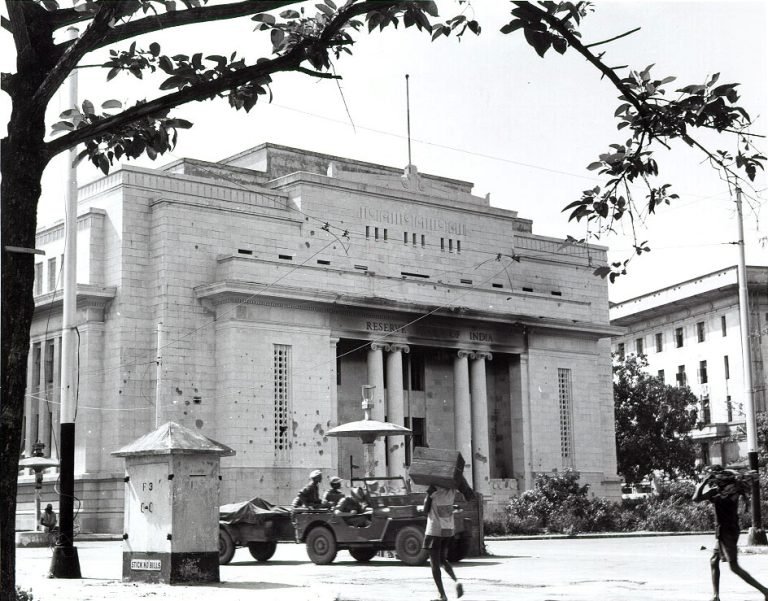
Reserve Bank of India building , Colonial downtown Yangon historical architecture
Bangkok represented a rare case in Southeast Asia. Rather than becoming a battlefield city during the initial invasion, Thailand chose cooperation with Japan after brief clashes in December 1941. Thai leaders concluded that resisting Japan militarily would lead to invasion and destruction. Instead, they negotiated an alliance that allowed Japanese troops to pass through Thailand toward British territories in Burma and Malaya.
As a result, Bangkok became a logistical partner rather than a conquered colonial capital. Japanese troops were present in the city and its infrastructure supported military campaigns, but Thai institutions continued functioning. Government ministries remained in place. The monarchy survived. Markets, temples and universities continued daily activities under wartime pressure.
Bangkok therefore experienced the war as a city under strategic alliance rather than occupation through battlefield conquest. Allied bombing raids later targeted railways, bridges and infrastructure supporting Japanese logistics, but the city never became a site of large-scale urban combat.
The situation in Yangon was dramatically different. Before the war, Yangon—then known internationally as Rangoon—served as the capital of British Burma and one of the most important colonial ports in Southeast Asia. Its harbor connected rice exports to global markets, and its colonial architecture symbolized British imperial power.
When Japan launched its campaign to conquer Burma in early 1942, Yangon quickly became a major objective. The city’s port and infrastructure were vital for both Japanese strategy and Allied defense. British forces attempted to defend Burma but were overwhelmed by rapid Japanese advances supported by experienced troops and air power.
The fall of Yangon in March 1942 marked a devastating moment in the war in Southeast Asia. Allied forces withdrew northward while thousands of civilians fled the city. The collapse triggered one of the largest refugee crises in the region as people attempted to escape toward India through dangerous jungle routes.
Unlike Bangkok, Yangon experienced the war as a contested colonial city. Control shifted and military activity disrupted daily life. Infrastructure suffered damage. The city’s role as a strategic port meant it remained militarily important throughout the Burma campaign.
Later in the war, as Allied forces prepared to retake Burma, Yangon again became a strategic objective. Military operations across the region placed pressure on Japanese positions. The city’s infrastructure endured damage and disruption as battles across Burma intensified.
Saigon, the capital of French Indochina’s southern region, experienced a third type of wartime reality. The city was not initially conquered through a major invasion because Japan used a different strategy in French territories.
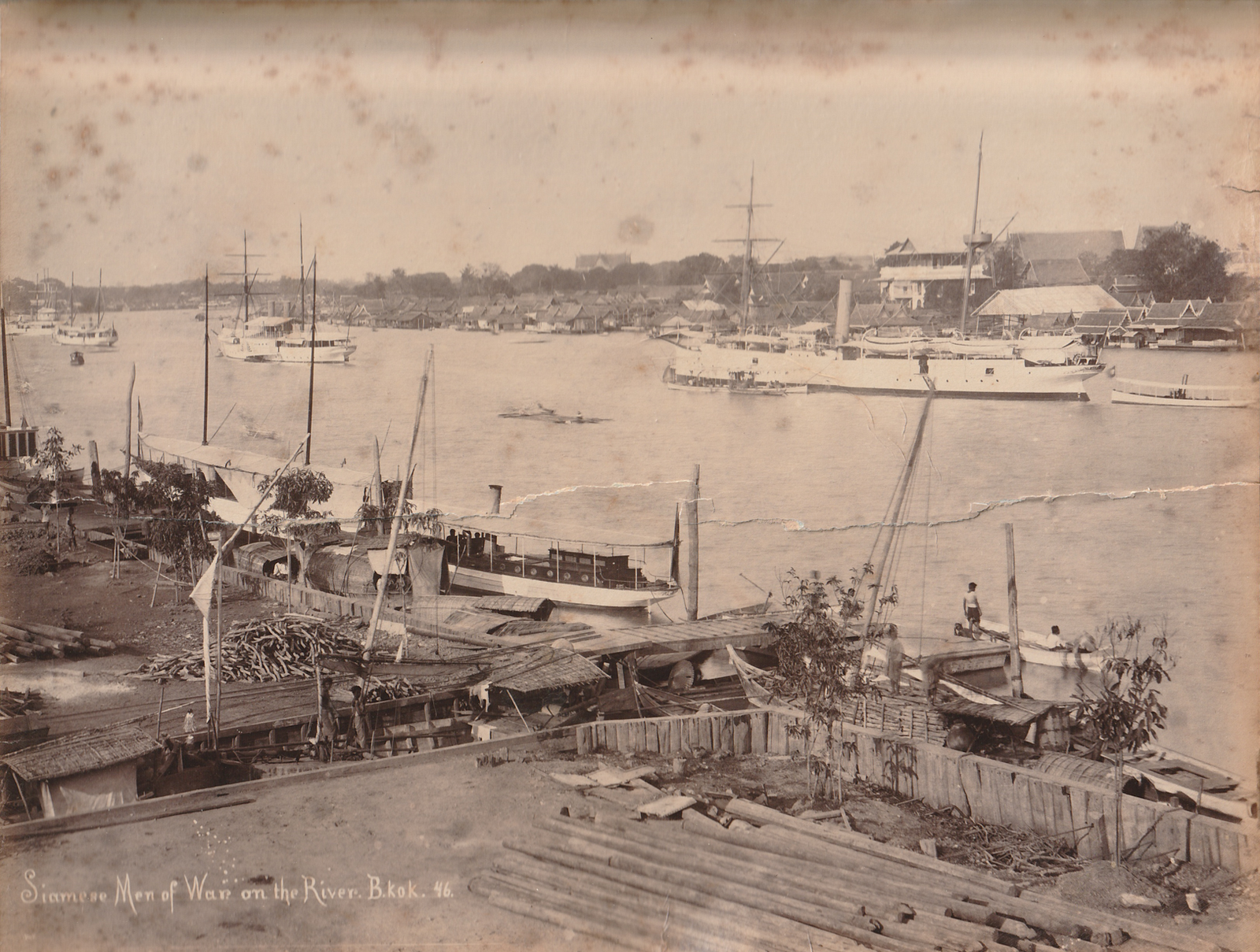
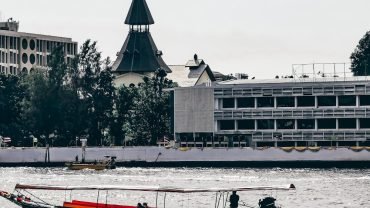
Bangkok city view in the 1940s – 1946s during World War II
In 1940, following the collapse of France in Europe, the Japanese government pressured the Vichy French colonial administration in Indochina to allow Japanese troops to station themselves in the territory. The arrangement meant that French colonial authorities technically remained in power while Japan exercised military control.
Saigon therefore functioned as an administrative and logistical hub within Japanese-controlled Indochina. Its port and transportation networks supported Japanese military operations across the region.
Unlike Yangon, Saigon did not experience immediate large-scale combat during the early years of the war. The city continued operating under a complex system where French colonial administrators governed civilian life while Japanese forces controlled military strategy.
However, the situation changed dramatically in 1945 when Japan dismantled French colonial authority in Indochina during a coup that eliminated remaining French administrative control. This event destabilized the region and accelerated the collapse of colonial rule after the war.
Saigon thus experienced the war through political upheaval rather than early battlefield destruction. Yet its strategic importance made it central to later conflicts that would reshape Vietnam in the decades following World War II.
When comparing these three cities, it becomes clear that wartime experience depended largely on strategic role rather than simply geography. Bangkok’s alliance with Japan allowed it to avoid becoming battlefield city during the invasion phase. Yangon’s position as British colonial capital placed it directly in the path of Japanese conquest. Saigon’s status within French Indochina created a hybrid system where colonial administration and Japanese military presence overlapped.
The physical landscapes of these cities today still reflect those wartime paths.
Bangkok retains much of its historic core because the city never endured prolonged urban combat. Temples of the Rattanakosin district still stand as they did during the war years. Colonial buildings in Bang Rak remain part of the cityscape. Bridges along the Chao Phraya River that once served wartime logistics continue carrying traffic across the capital.
Yangon’s colonial center also survives, but its wartime disruptions and post-independence transformations altered the city’s trajectory. The colonial buildings around Sule Pagoda and the waterfront still reflect British architectural influence, yet the city’s development slowed during later decades of political isolation.
Saigon, now known as Ho Chi Minh City, underwent even more dramatic transformation. The city became the center of later conflicts including the Vietnam War. Its colonial boulevards remain visible around landmarks such as Notre Dame Cathedral and the Central Post Office, but the skyline now reflects rapid economic growth and modern development.
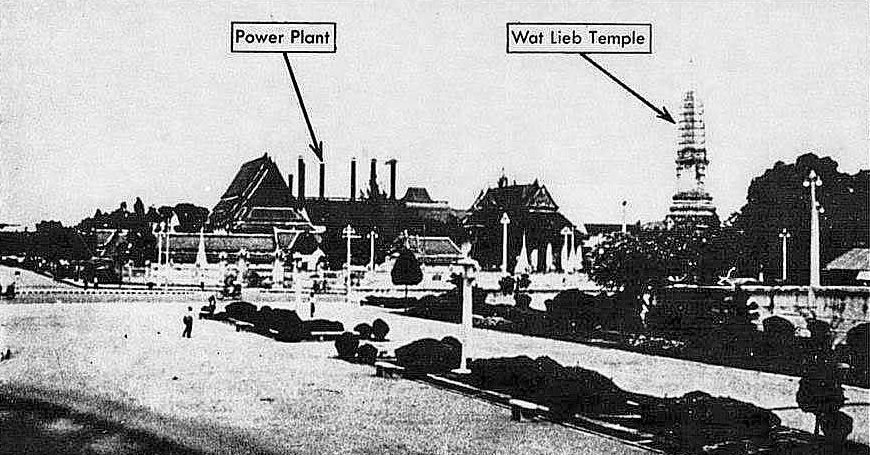
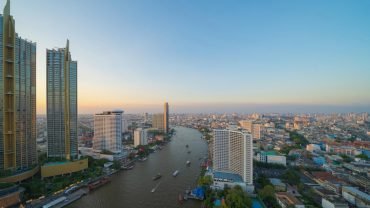
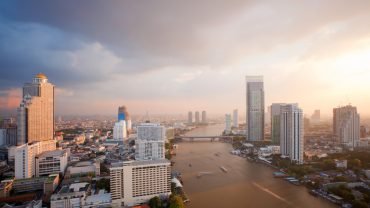
City view in historical Bangkok
These cities therefore represent three different forms of wartime survival in Southeast Asia. Bangkok survived through strategic alliance and diplomatic maneuvering. Yangon endured conquest and battlefield disruption as part of the Burma campaign. Saigon functioned as administrative center under Japanese military control before later upheaval reshaped the region.
Exploring these cities today offers travelers a powerful way to understand how World War II reshaped Asia. Walking through historic districts reveals how global conflict left marks not only on battlefields but also in urban landscapes, political systems and collective memory.
Bangkok invites visitors to explore temples, riverfront neighborhoods and museums that tell the story of Thailand’s wartime diplomacy and the Free Thai resistance movement. The capital’s survival without total destruction allows travelers to see architectural continuity stretching from the prewar era into modern Thailand.
Yangon offers a different perspective. Its colonial downtown and historic port reflect the era when British Burma became a central front in the war against Japanese expansion. Exploring the city reveals how imperial architecture and wartime history intersect in Southeast Asia.
Saigon provides yet another lens. The city’s museums and colonial landmarks connect World War II to the later conflicts that transformed Vietnam and shaped global politics in the twentieth century.
Together, these three capitals illustrate the complexity of Southeast Asia’s wartime experience. War does not affect every city equally. Some become battlefields. Some become administrative centers. Others navigate survival through diplomacy and strategic alignment.
Understanding these differences helps travelers see Southeast Asia not just as a collection of destinations but as a landscape shaped by global history.
Walking through Bangkok’s river districts, Yangon’s colonial streets or Saigon’s historic boulevards allows visitors to encounter traces of the twentieth century’s most transformative conflict.
Each city tells a different story of how Southeast Asia survived World War II.
World War II shaped the cities of Southeast Asia in very different ways.
Bangkok survived through diplomacy, Yangon through battlefield struggle, and Saigon through political upheaval.
Today you can walk these historic streets and still see traces of the war hidden in temples, colonial buildings and riverside districts.
Travel through Bangkok’s old riverfront, explore Yangon’s colonial downtown, or discover Saigon’s historic boulevards to experience how Southeast Asia’s cities survived one of the most turbulent periods in modern history.
Comment (0)