

When the attack on Pearl Harbor erupted in December 1941, the world’s attention snapped suddenly toward the Pacific. For many in the West, this moment marked the beginning of a new chapter in World War II. For Asia, however, the war had already been unfolding for years. Pearl Harbor did not introduce Asia to global conflict; it revealed to the world that Asia had become its central stage. From that moment onward, the Pacific War transformed the region in ways that still shape modern Asia’s political boundaries, identities, and collective memories.
Before Pearl Harbor, Asia stood at a crossroads of collapsing empires and rising ambitions. European colonial powers controlled vast territories across Southeast Asia, extracting resources and governing diverse populations through imperial systems that appeared stable but were deeply strained. Japan, having modernized rapidly since the late nineteenth century, viewed these empires not as permanent fixtures but as opportunities. The Asian continent became the arena where competing visions of power, sovereignty, and modernity collided.
Long before December 1941, war had already consumed large parts of East Asia. China had been locked in conflict for years, its cities and countryside reshaped by prolonged struggle. The scale of this war, though enormous, remained underrepresented in global narratives dominated by European theaters. Asia’s suffering unfolded largely outside Western headlines, yet it was here that modern total war tested societies’ capacity for endurance long before Pearl Harbor.
Pearl Harbor shattered the illusion that the Pacific was peripheral. The attack was not merely a military strike; it was a declaration that the balance of global power would be contested across Asia and the Pacific Ocean. In rapid succession, Japanese forces advanced across Southeast Asia, capturing strategic ports, resource-rich territories, and colonial capitals that had long symbolized European dominance. The speed of these advances stunned the world and demonstrated that imperial authority in Asia was far more fragile than previously assumed.
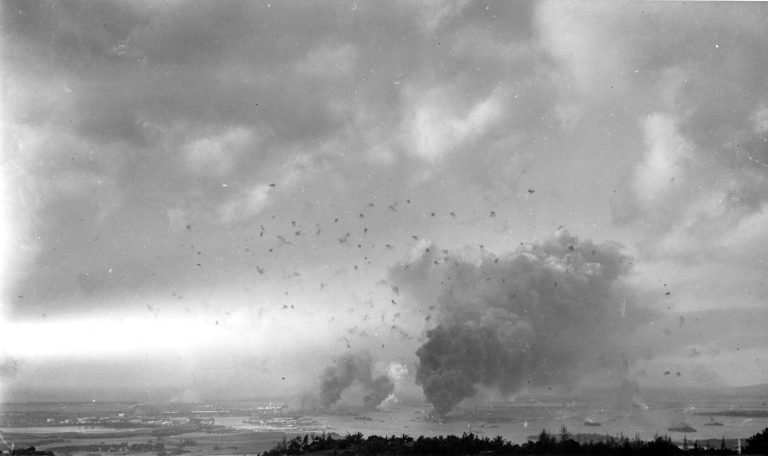
Credit: “Image courtesy of the U.S. National Archives (NARA). Public Domain.”
As the Pacific War spread, Asia became interconnected through conflict. What happened in one region reverberated across others. Supply lines stretched from island chains to inland jungles. Airfields, railways, and ports became nodes in a vast wartime network. Civilians across Asia experienced displacement, scarcity, and uncertainty as front lines shifted rapidly. The war was no longer confined to battlefields; it penetrated daily life in cities, villages, and coastal communities.
Southeast Asia exemplified the collapse of old empires. British, Dutch, and French colonial systems faltered under military pressure and internal contradictions. The fall of colonial strongholds exposed the vulnerability of imperial rule and altered how local populations perceived authority. For many, the war became a catalyst for political awakening. Nationalist movements gained momentum as colonial legitimacy eroded, even as new forms of occupation imposed fresh hardships.
China’s experience underscored Asia’s centrality to the war. The conflict there was not a sudden eruption but a prolonged ordeal that shaped national consciousness. Cities were transformed into symbols of resistance and survival. The scale of China’s involvement challenged simplified narratives that positioned Asia as merely reactive to events elsewhere. Instead, China’s endurance highlighted that the Pacific War was inseparable from Asian realities long before global attention arrived.
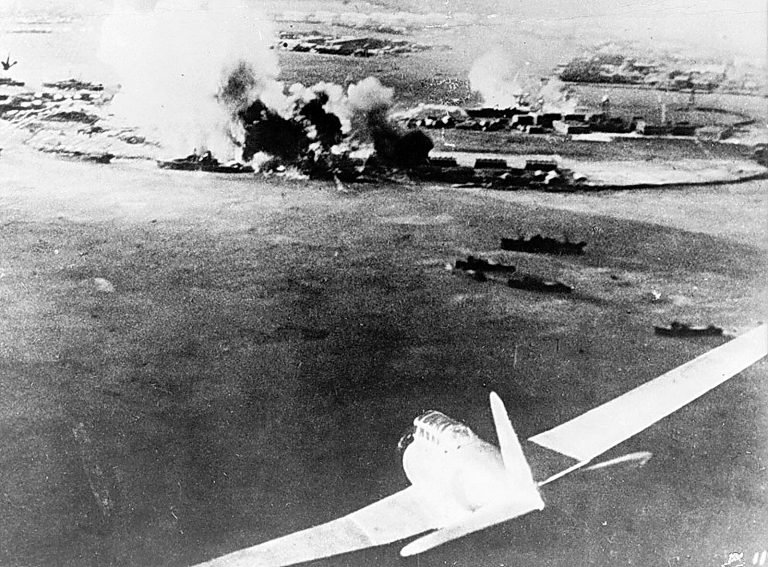
Credit: “Image courtesy of the U.S. National Archives (NARA). Public Domain.”
Japan’s imperial vision lay at the heart of the Pacific War’s expansion. Framed as a project of regional leadership and self-sufficiency, this vision sought to reorder Asia’s political and economic structures. Yet it was constrained by strategic limitations and internal contradictions. Rapid expansion strained resources and logistics. The same speed that brought early victories also created vulnerabilities. As the war progressed, the gap between ambition and capacity widened, reshaping the conflict’s trajectory.
The war eventually reached the Japanese homeland, reversing the earlier flow of power. Cities that had once projected authority across Asia faced destruction and loss. This shift marked a profound turning point, forcing a reckoning with the consequences of total war. The end of the Pacific War did not simply close a military chapter; it initiated a regional transformation whose effects rippled across Asia.
The conclusion of the Pacific War reshaped Asia’s political landscape. Colonial empires retreated or collapsed, giving way to new nations and contested borders. The war accelerated decolonization, altered alliances, and embedded memories of occupation and resistance into national identities. Asia emerged from World War II fundamentally changed, no longer a peripheral theater but a central force in global history.
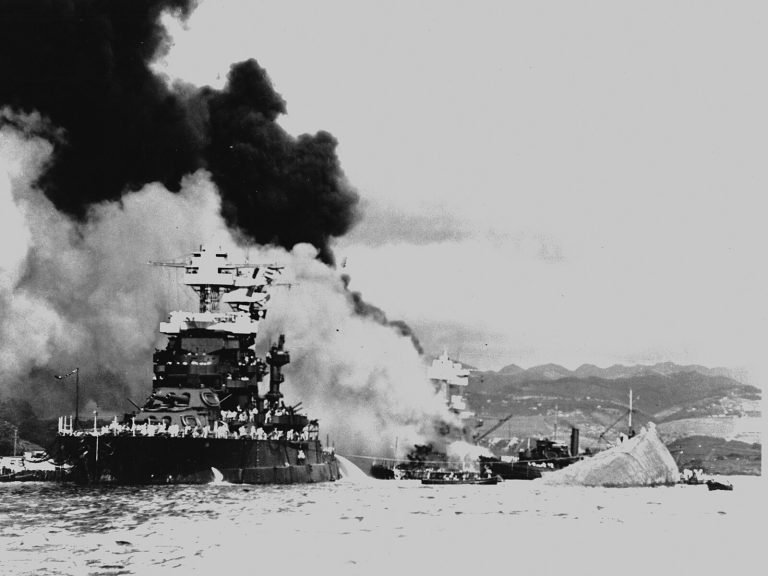
Credit: “Image courtesy of the U.S. National Archives (NARA). Public Domain.”
Remembering the Pacific War across Asia today reveals diverse approaches to memory. Some societies emphasize education and reflection, others focus on resilience and rebuilding. Museums, memorials, and preserved sites across the region tell interconnected stories that resist singular narratives. Together, they illustrate that the Pacific War was not a uniform experience but a mosaic of histories shaped by geography, culture, and circumstance.
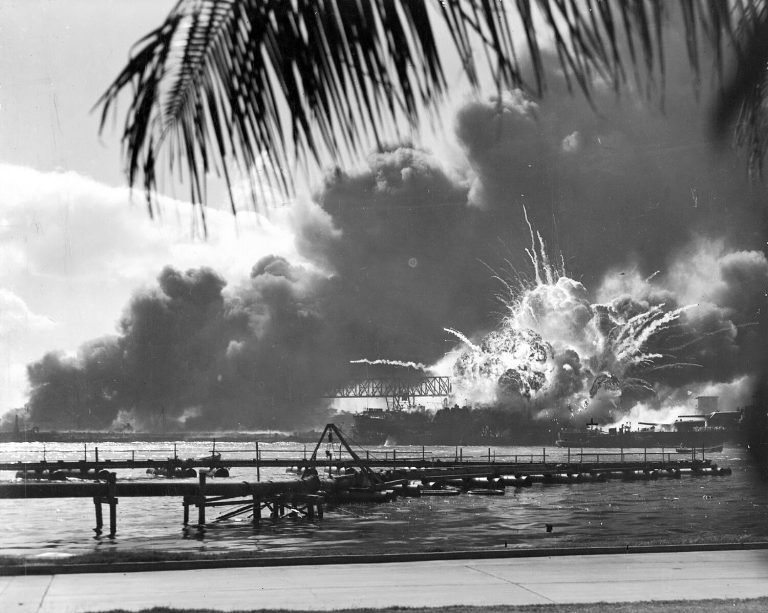
Credit: “Image courtesy of the U.S. National Archives (NARA). Public Domain.”
Understanding how Asia became the center of World War II requires moving beyond event-based timelines toward a regional perspective. Pearl Harbor was a dramatic moment, but it was also a doorway through which the world finally recognized Asia’s central role in the conflict. The Pacific War was not simply an extension of European war; it was a defining chapter in Asia’s modern history, one whose legacies continue to influence the region today.
Comment (0)