

World War II is often remembered through European imagery. Soldiers storming beaches. Cities reduced to rubble. Liberation and reconstruction. This narrative, while accurate in part, obscures a deeper and more devastating truth. The war in Asia was not simply larger in scale. It was deadlier for civilians in ways Europe did not experience to the same extent.
More civilians died in Asia during World War II than anywhere else on earth. These deaths were not accidental. They were the result of how the war was fought, how power was exercised, and how human life was valued across the Asian theater.
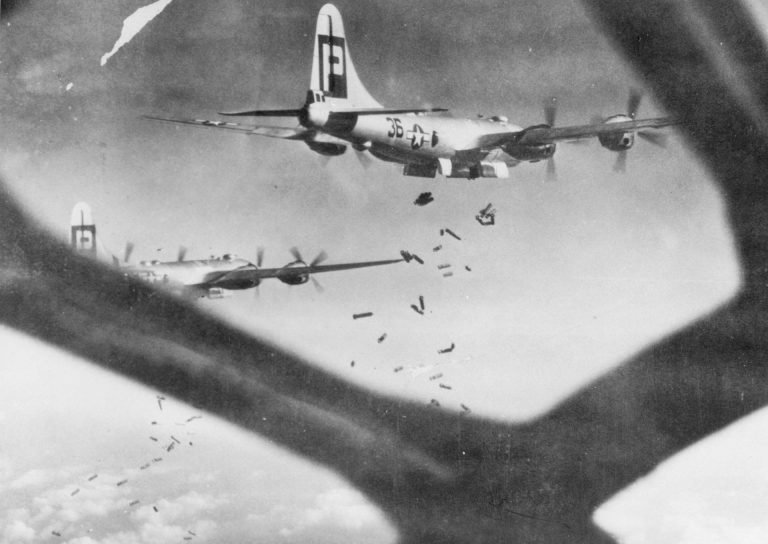
Bombing Destruction of asian during World War II
World War II was not a single, unified conflict. It was multiple wars unfolding simultaneously under different conditions. In Europe, war increasingly shifted toward industrialized military confrontation between states. In Asia, it became a war of occupation, domination, and survival.
Asia was not merely a battlefield. It was a space to be controlled, exploited, and reordered.
In East Asia, Southeast Asia, and South Asia, war unfolded amid dense civilian populations. There were few clear front lines. Villages, towns, and cities became arenas of violence.
Occupation defined the Asian war. Large portions of Asia lived under prolonged military rule. Civilians were not shielded from combat. They were governed by it.
In China, Japanese invasion turned vast civilian regions into zones of terror. Mass killings, forced labor, and systematic violence targeted non-combatants as a strategy of control. The war blurred any distinction between soldier and civilian.
In Nanjing, mass civilian death was not a byproduct of battle. It was an expression of domination. Violence against civilians was used to break resistance and impose fear.
Across occupied Asia, civilians were treated not as protected populations but as resources to be exploited or obstacles to be removed. This logic differed sharply from Europe, where international norms, though imperfect, were more frequently acknowledged.
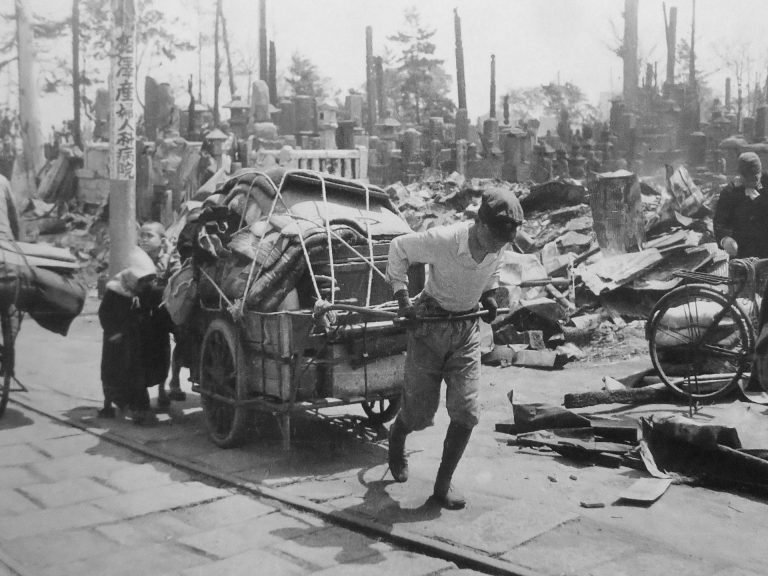
Tokyo firebombing in World War II
Total war arrived in Asia without safeguards. Many European cities developed air raid shelters, evacuation systems, and postwar humanitarian narratives. Much of Asia did not.
Cities in Asia were bombed without warning and without protection. Firebombing destroyed neighborhoods built of wood and paper. Entire districts burned within hours.
In Tokyo, firebombing killed more civilians in a single night than many European air raids combined. In Hanoi, and Manila, urban life collapsed under aerial assault.
Famine became a weapon of war. Supply lines were destroyed. Crops were seized. Transportation collapsed. Civilians starved not because food was unavailable globally, but because war prevented access locally.
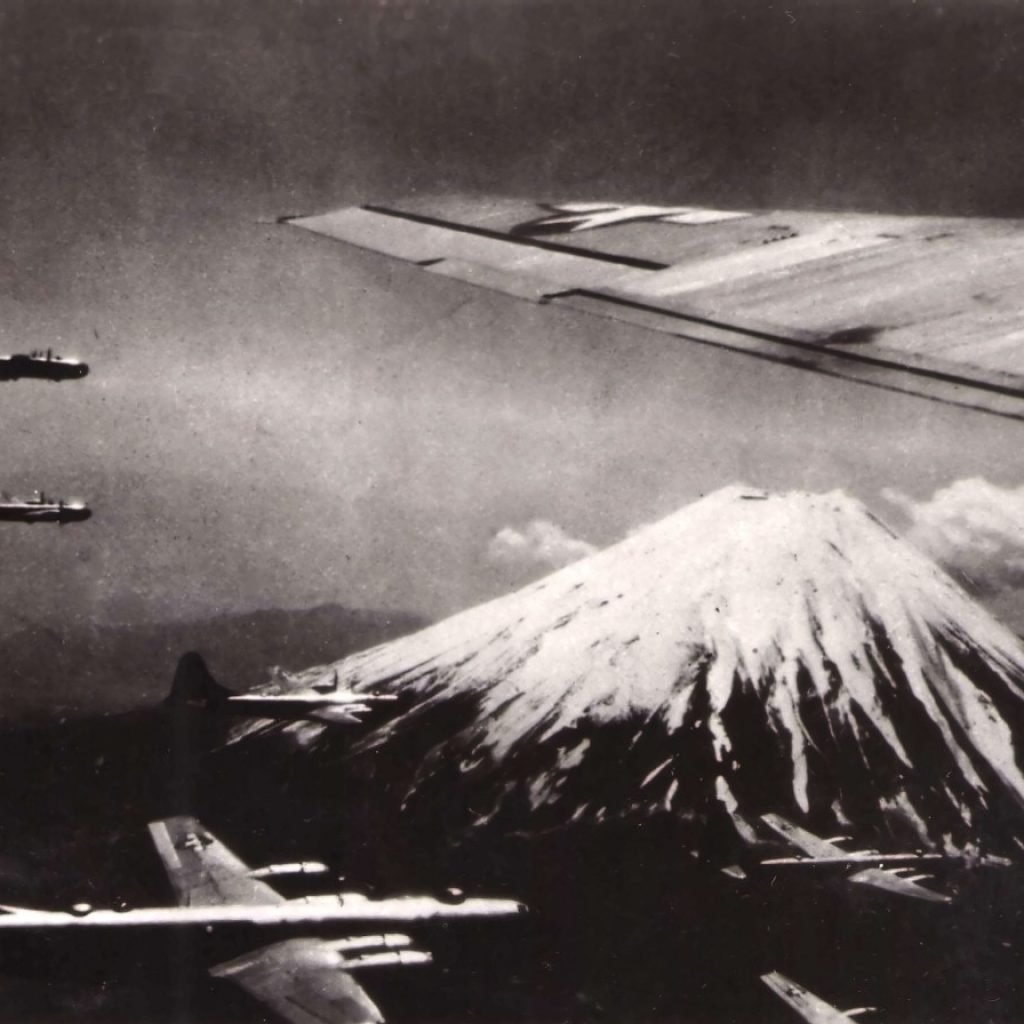
US Bombers near Mount Fuji
In Tokyo, firebombing killed more civilians in a single night than many European air raids combined. In Hanoi, and Manila, urban life collapsed under aerial assault.
Famine became a weapon of war. Supply lines were destroyed. Crops were seized. Transportation collapsed. Civilians starved not because food was unavailable globally, but because war prevented access locally.
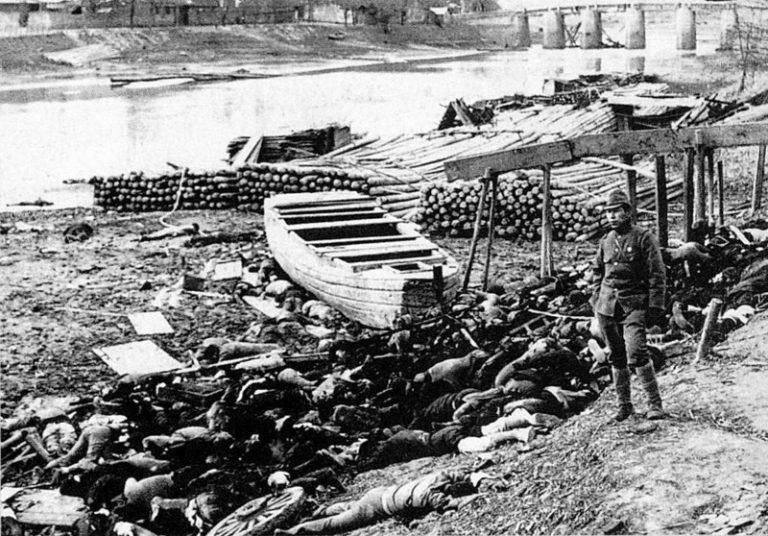
Civilians affected during the Nanjing Massacre
In Bengal, famine killed millions under wartime conditions shaped by imperial priorities. Death occurred quietly, outside the spectacle of battle, and was therefore less visible in postwar memory.
Ideology intensified violence. Asian civilians were frequently dehumanized by occupying forces. Racial hierarchies justified brutality. Mercy was not expected.
This dehumanization was systemic. It shaped policy, training, and conduct. Civilians were expendable in a war aimed at remaking Asia’s political and social order.
Resistance movements further complicated civilian survival. Guerrilla warfare blurred lines between combatant and non-combatant. Retaliation was often collective. Villages were punished for resistance they did not organize.
In Philippines, civilian populations endured massacres during occupation and liberation alike. In Indonesia, forced labor and deprivation became routine.
After the war, Europe rebuilt around a shared narrative of civilian suffering and recovery. Asia did not receive the same space.
Postwar justice was uneven. Many Asian civilian deaths were never fully acknowledged. Trials focused on state responsibility rather than civilian experience. Memory fragmented along national lines.
Silence followed survival. Many families never spoke of what they endured. Trauma passed quietly through generations.
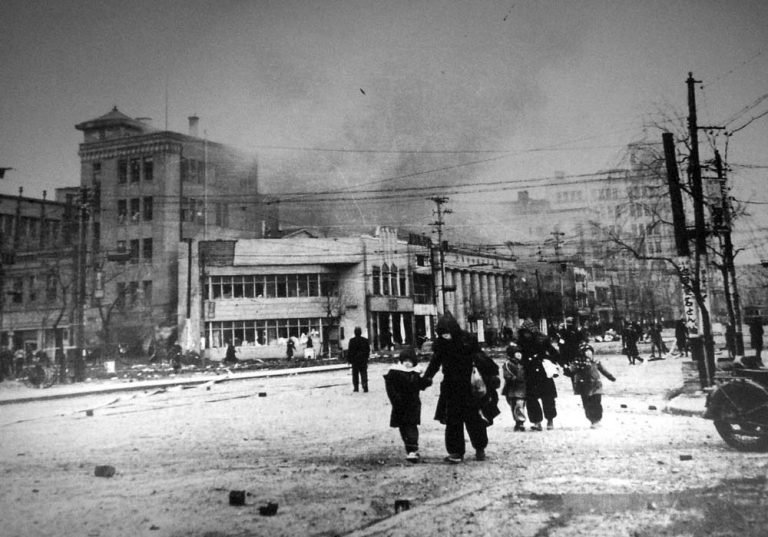
Aftermath of Tokyo firebombing in World War II
Asia’s civilian dead remain less known not because they mattered less, but because global memory was shaped elsewhere. European suffering fit a narrative of reconstruction and moral reckoning. Asian suffering complicated colonial legacies and power structures.
Understanding why Asia suffered more civilian deaths in World War II requires abandoning the idea of a single war. It requires recognizing that Asia experienced a war of occupation, famine, and dehumanization rather than conventional battle alone.
The civilian cost was not incidental. It was structural.
World War II in Asia was a war fought on bodies, not just battlefields.
And those bodies were overwhelmingly civilian.
Comment (0)