

By 1944, the global balance of World War II had shifted. Japanese expansion across Southeast Asia was no longer unstoppable. Allied forces had regained momentum in the Pacific. Strategic bombing campaigns intensified across Asia, targeting infrastructure rather than simply territory. In this new phase of the war, Bangkok emerged not as a battlefield city, but as a logistical node.
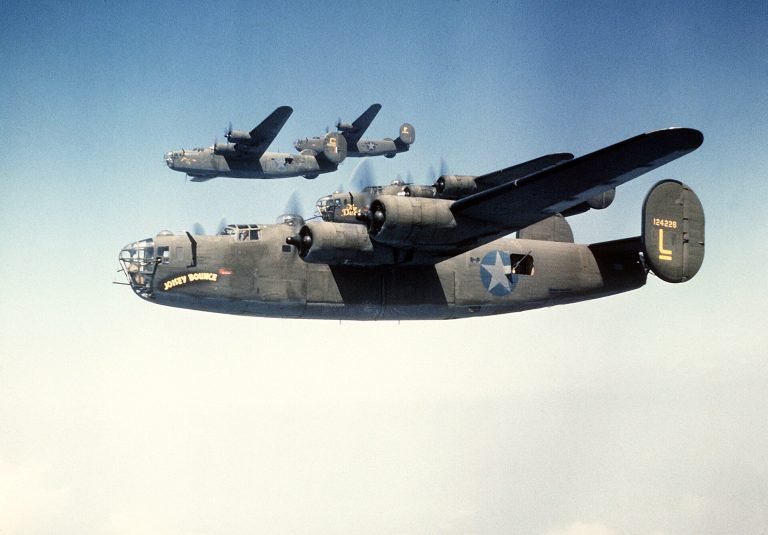
Bomb Group flying in formation, circa in Bangkok 1943-1945
Across Bangkok, the war had been present since 1941, yet it had not devastated the skyline. The capital functioned under alliance with Japan, allowing military transit, railway usage, and port operations. This cooperation, pragmatic from Thailand’s perspective, inevitably transformed Bangkok into a legitimate Allied target.
The Allied objective was not to reduce Bangkok to rubble. It was to disrupt Japanese military capacity. Rail yards, bridges, power stations, warehouses, and transport corridors became focal points. By striking these arteries, the Allies aimed to weaken Japan’s ability to reinforce campaigns in Burma and Malaya.
Bangkok’s importance lay in geography. The Chao Phraya River cut through the capital like a strategic spine. Rail lines extended outward toward the western frontiers. The port facilitated cargo movement. The city’s infrastructure connected Japanese operations across mainland Southeast Asia.
Thus when Allied bombers approached Bangkok between 1944 and 1945, they did so with specific objectives.
Railway installations were among the primary targets. Hua Lamphong station, though iconic today, functioned as a crucial rail hub. Trains transported military equipment and personnel westward. Rail yards storing fuel and rolling stock became vulnerable. Bombs aimed to cripple mobility rather than demolish neighborhoods.
Bridges carried even greater strategic weight. The Rama VI Bridge, spanning the Chao Phraya, connected critical rail routes. Damaging it would slow military logistics. Allied strikes targeted bridge structures and rail crossings repeatedly. Some sections were damaged, repaired, and struck again.
Power plants also fell under Allied focus. Disrupting electricity could hinder industrial production and communication systems. Bangkok’s electrical facilities, modest compared to larger industrial cities, nevertheless supported wartime logistics.
Unlike Manila or Tokyo, Bangkok was not subjected to firebombing campaigns designed for urban annihilation. The bombing here was selective, infrastructure-driven. Civilian casualties occurred, but the city did not become a smoking ruin.
This distinction shaped Bangkok’s postwar landscape.
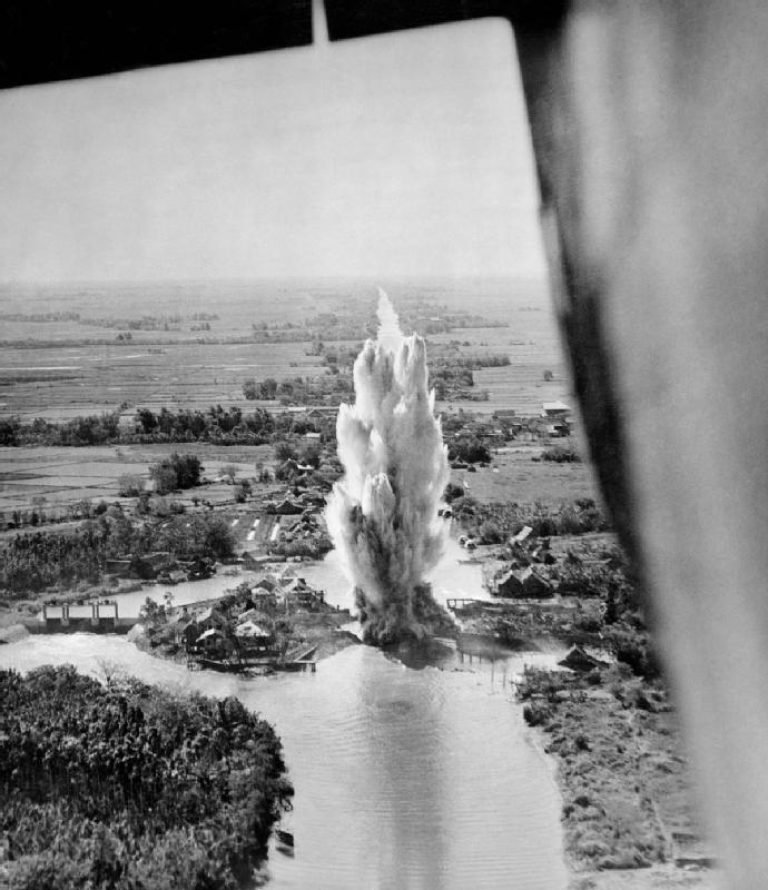
Bomb damage in Bangkok during World War II
Across Thailand, Allied planners calculated carefully. Thailand’s political situation was ambiguous. Though aligned with Japan, internal resistance movements, particularly the Free Thai network, maintained covert communication with Allied governments. This duality influenced strategic restraint.
Bombing Bangkok required balance. Enough force to disrupt Japanese logistics. Not so much as to alienate postwar diplomatic possibilities.
Residents of Bangkok experienced these raids with a mixture of fear and disbelief. Sirens pierced humid afternoons. Blackout curtains covered windows at night. Families dug shallow shelters in courtyards. Children learned to recognize the drone of aircraft engines.
The psychological impact exceeded the physical damage.
Railway districts bore visible scars. Sections of track twisted. Storage depots burned. Bridges showed fractured steel. Yet temples in Rattanakosin stood. The Grand Palace remained intact. Colonial buildings along Bang Rak survived.
Bangkok absorbed shockwaves without losing its architectural core.
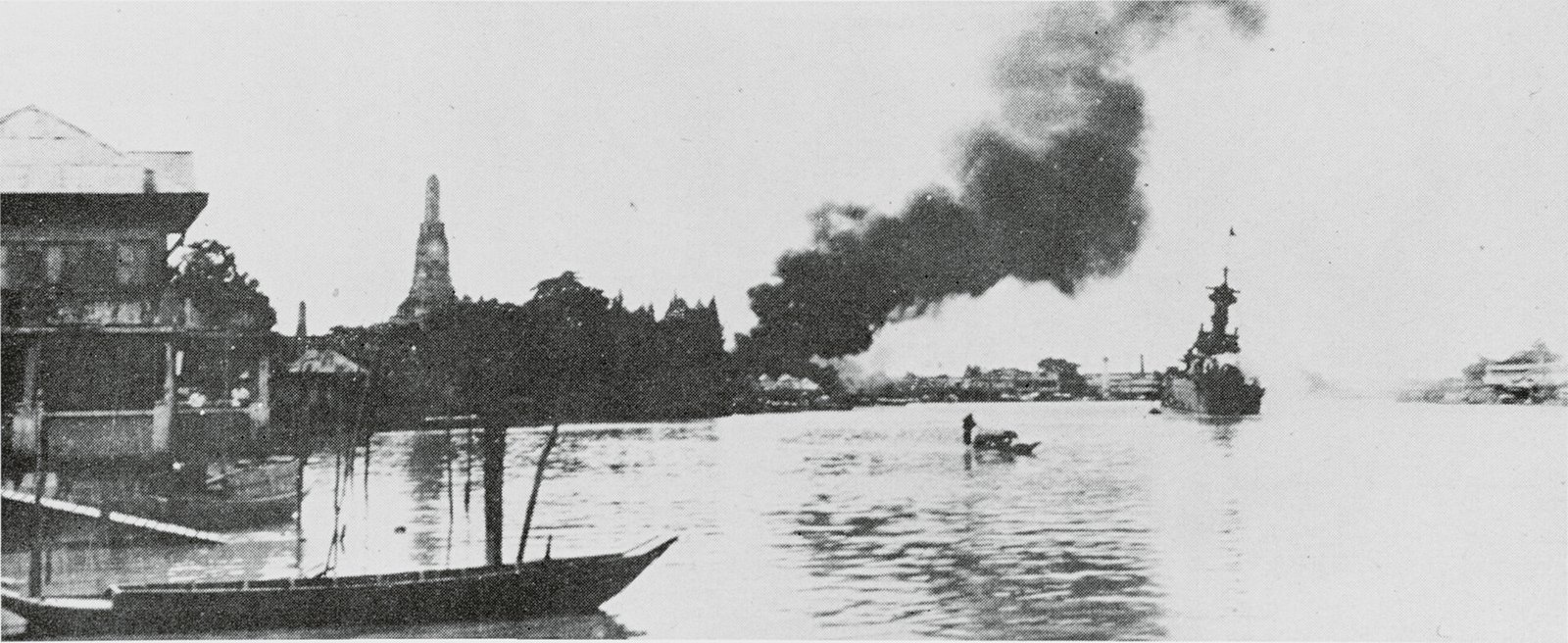
Chao Phraya river in historical Bangkok
The Chao Phraya River became both target and witness. Barges carrying supplies were vulnerable from above. Ferries paused during raids. The river’s currents carried debris and rumors alike.
Bombing intensified in late 1944 as Allied advances in Burma gained strength. Each strike sought to sever connections between Bangkok and western fronts. Military convoys slowed. Repair crews worked urgently. Civilians adapted routines around potential air raid windows.
Daily life contracted but did not collapse. Markets reopened after raids. Monks continued alms rounds. Government ministries resumed paperwork amid cracked windows.
The Rama VI Bridge endured repeated attention. Its importance as rail crossing meant it could not be ignored. While damaged, it was never permanently erased during the war. Postwar reconstruction reinforced its structure. Today it carries traffic as quiet reminder of wartime targeting.
Bangkok’s survival reflected both strategic calculation and circumstance. The city was not central battlefield like Manila in 1945, where urban combat reduced entire districts to rubble. Nor was it subjected to massive incendiary bombing like Tokyo.
Bangkok’s wartime identity became that of pressured intermediary.
Infrastructure damage accumulated in layers. Rail lines bent. Power disruptions flickered across neighborhoods. Warehouses near Bang Rak smoldered. Yet the capital never experienced comprehensive urban collapse.
By early 1945, Japan’s strategic position deteriorated rapidly. Allied air superiority increased. Bangkok remained vulnerable, yet the war’s end approached before systematic destruction could occur.
When Japan surrendered in August 1945, Bangkok stood battered but intact. Bridges required repair. Rail systems needed rehabilitation. Electrical networks demanded stabilization. Yet the administrative heart of Thailand remained functional.
This continuity shaped postwar recovery.
Bangkok did not rebuild from ruins; it rebuilt from damage. That difference accelerated modernization in subsequent decades.
Understanding what was actually hit clarifies why modern Bangkok retains prewar architectural continuity. The Royal Palace still anchors Rattanakosin. Colonial façades still line parts of Bang Rak. Historic temples rise unchanged.
The scars lie less in missing districts and more in reinforced structures.
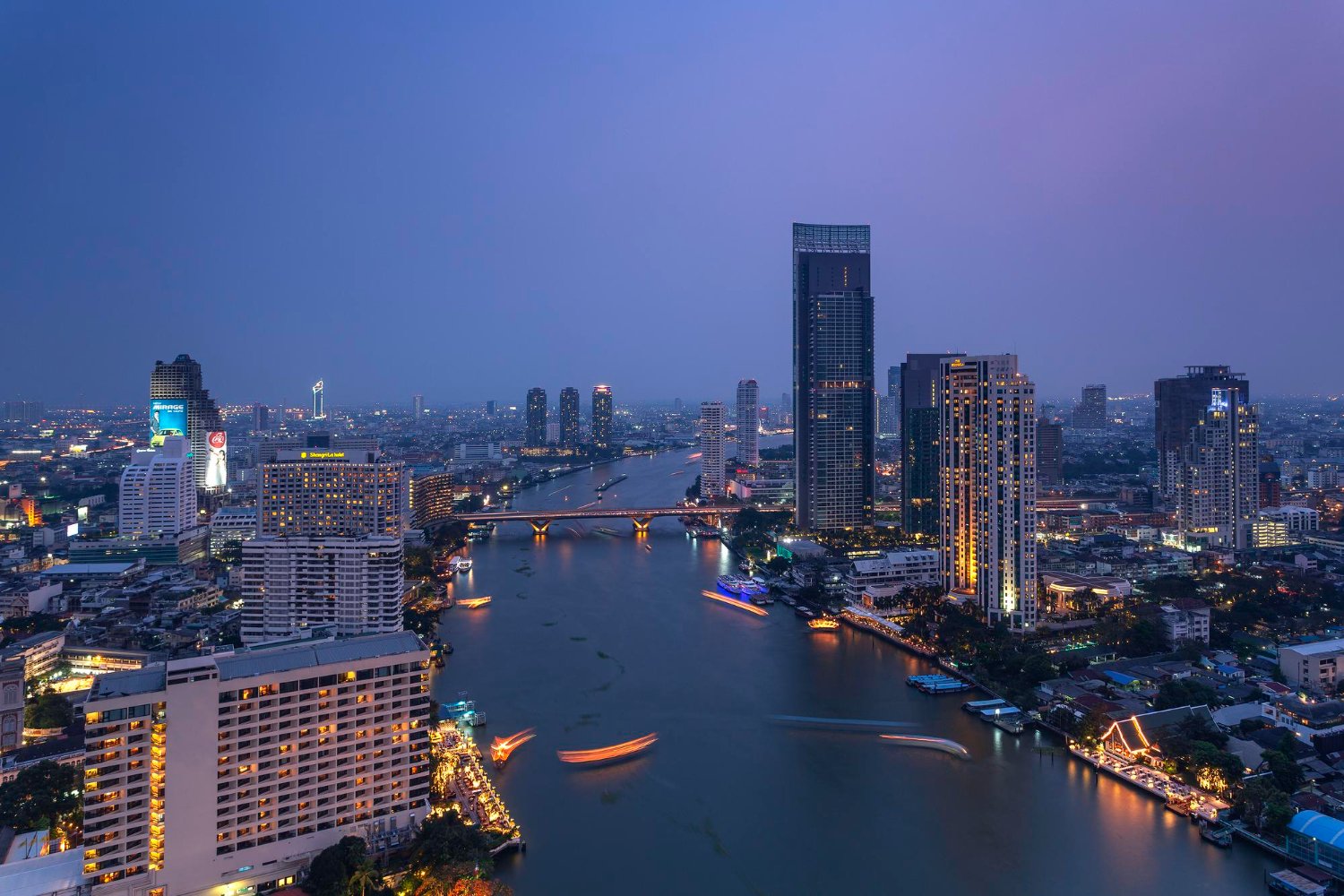
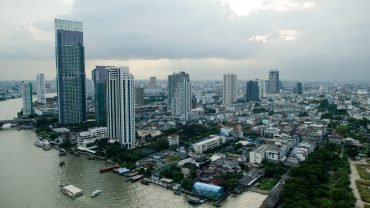
City view in historical Bangkok
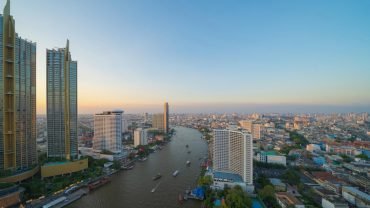
Walking Bangkok today rarely evokes images of aerial bombardment. Elevated train lines cross above traffic. Skyscrapers reflect glass against the river. Yet beneath contemporary infrastructure lie wartime calculations.
The Chao Phraya remains the city’s strategic spine. Bridges like Phra Phuttha Yodfa and Rama VI continue linking districts once considered military targets.
To stand on these bridges at sunset is to stand where bombers once aimed.
Bangkok’s bombing narrative reveals an important truth about war in Southeast Asia. Not all cities were destroyed equally. Some were reduced to ashes. Others were strategically pressured.
Bangkok survived because it was targeted with purpose, not fury.
The selective nature of Allied raids demonstrates how geopolitical nuance influenced military decisions. Thailand’s ambiguous alliance status and internal resistance shaped restraint.
The result is visible today.
Bangkok is not a reconstructed city like Warsaw. It is an evolved city whose wartime damage did not erase its core.
Understanding this difference enriches travel.
Explore the river corridor. Visit the Rama VI Bridge. Observe Hua Lamphong’s architecture. These are not merely transport landmarks; they were wartime objectives.
Bangkok endured bombs aimed at its arteries. It survived because those arteries, though damaged, were not severed entirely.
The city emerged from World War II altered but not annihilated.
Its skyline did not fall.
Its bridges bent but held.
Its river kept flowing.
Bangkok was bombed for its bridges, railways and power plants, not for total destruction.
Walk the Chao Phraya corridor, stand on Rama VI Bridge, and explore the old rail districts to see how this capital survived World War II by absorbing damage without losing its identity.
Comment (0)