

In 1945, Manila lay in ruins. Entire districts were flattened by artillery and fire. Churches collapsed. Colonial streets disappeared. Civilian casualties reached catastrophic levels as Japanese forces made a final stand against returning American troops.
Yet during the same global conflict, Bangkok survived.
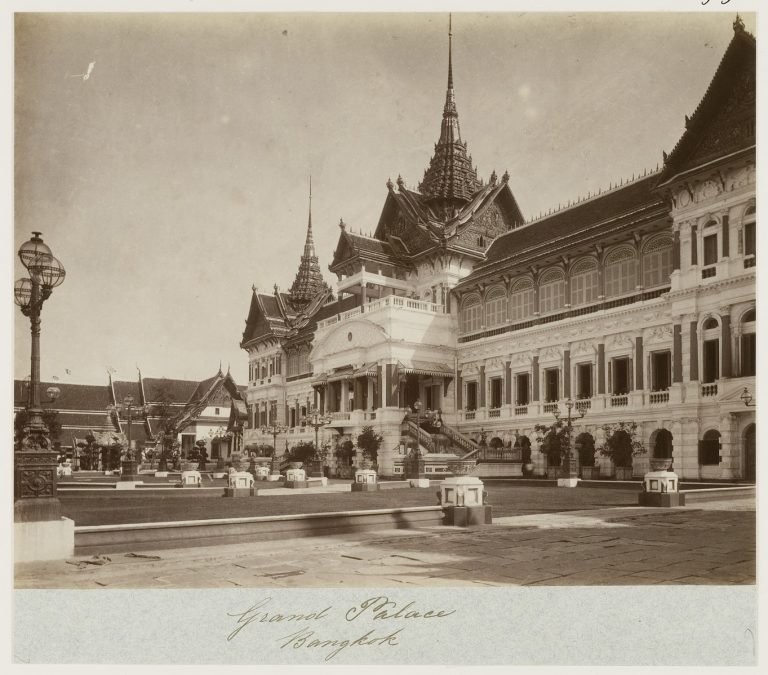
Grand Palace Bangkok before postwar expansion
While it experienced Allied bombing, infrastructure damage and economic strain, the Thai capital did not become a battlefield city. Its royal palace remained intact. Its temple skyline stood. Its colonial façades survived.
Why?
To understand why Bangkok was not destroyed like Manila, one must look beyond simple narratives of luck or geography. The answer lies in wartime strategy, political positioning, regional military objectives and the brutal logic of urban warfare.
Across Bangkok, World War II unfolded not as a siege but as a negotiation under pressure. In contrast, Manila became a battleground during liberation. The difference reshaped both capitals permanently.
Southeast Asia in the early 1940s was a corridor of empire. Japan expanded rapidly after December 1941, targeting British Malaya, Burma, the Dutch East Indies and the American-controlled Philippines. Thailand stood directly in the path of that expansion.
When Japanese troops entered Thai territory in December 1941, brief resistance occurred in several provinces. Within hours, ceasefire negotiations began. The Thai government chose to cooperate rather than resist prolonged invasion. This decision remains debated in historical memory, yet strategically it prevented Bangkok from becoming an immediate battlefield.
Unlike Manila, which was an American colonial capital defended by U.S. and Filipino forces, Bangkok was the seat of a sovereign state that chose alignment rather than open war against Japan.
This choice transformed Bangkok into a logistical partner rather than a target for conquest.
Across Thailand, the alliance with Japan allowed military transit toward Burma and Malaya. Railways were used. Ports operated. Government institutions remained intact. The monarchy continued symbolically.
Manila’s situation differed fundamentally. The Philippines was under American control. Japanese invasion met organized military resistance. When U.S. forces returned in 1945 to liberate Manila, the city became a battlefield between retreating Japanese troops and advancing Allied forces.
Urban warfare does not spare architecture.
The Kawasaki Ki-61-II-kai Tony is one of several fighter aircraft models used in kamikaze attacks.
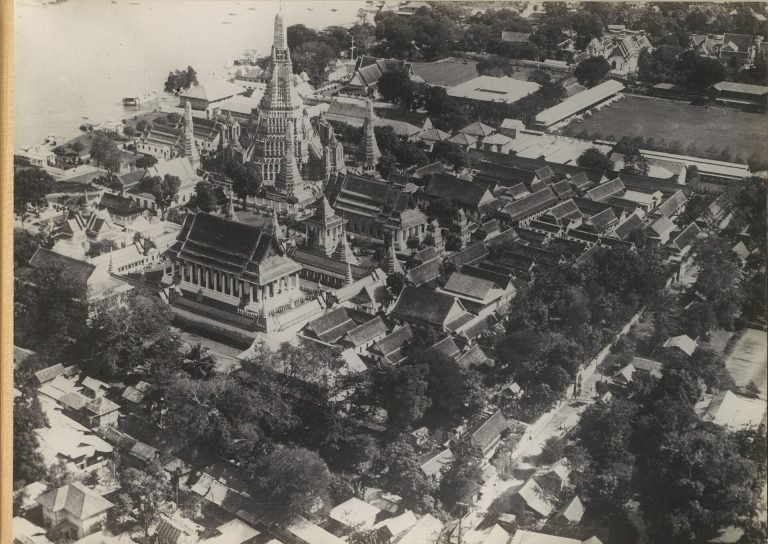
Bangkok city view in the 1940s
Japanese forces in Manila, facing defeat, fortified the city and resisted intensely. Artillery and house-to-house combat reduced entire districts to rubble. Civilian casualties soared. Churches such as San Agustin survived narrowly while surrounding neighborhoods vanished.
Bangkok never entered that phase.
It experienced Allied air raids, particularly in 1944–1945, targeting bridges, rail yards and power plants. These strikes were strategic, not annihilative. The objective was to disrupt Japanese logistics, not destroy the Thai capital.
The difference between targeted bombing and urban siege explains much of Bangkok’s survival.
Bangkok’s infrastructure mattered to Japanese campaigns in Burma, yet the city itself was not heavily fortified as last-stand territory. Japan’s strategic calculations did not require transforming Bangkok into fortress city.
Moreover, Thailand’s internal political complexity influenced Allied restraint. The Free Thai Movement, operating quietly within and beyond Bangkok, established communication with Allied powers. This resistance network ensured that Thailand could present itself as coerced ally rather than committed Axis partner.
Diplomatic nuance shaped bombing decisions.
Destroying Bangkok completely would complicate postwar stabilization in a region where Allied forces required political flexibility.
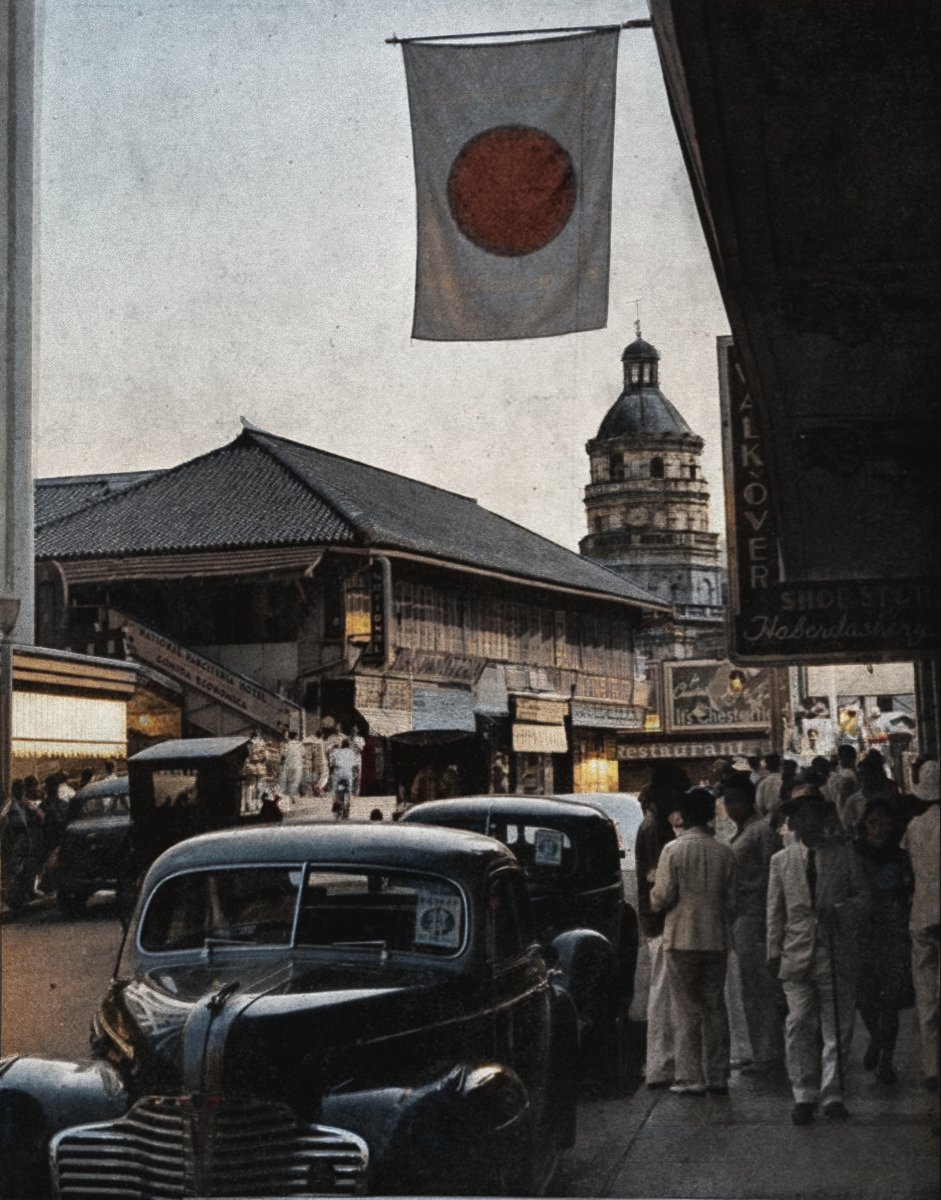
Manila Philippines during Japanese occupation
Manila, by contrast, was liberation objective central to American Pacific strategy. Japanese defenders chose destruction rather than surrender. The result was catastrophic urban devastation.
Geography also played a role. Manila’s harbor and colonial core were compact and heavily contested. Bangkok’s layout in the 1940s was more dispersed, defined by river corridors and canal networks rather than dense European-style stone districts.
Yet geography alone does not explain survival. Political choice did.
Bangkok under Japanese alliance functioned as transit state capital, not occupied colonial battlefield. Its government calculated that cooperation would preserve sovereignty and urban continuity.
This calculation carried moral complexity.
The alliance allowed Japanese troops to move through Thai territory. Railways linking to Burma supported military campaigns involving forced labor. Bangkok became logistical partner in imperial expansion.
Yet this same cooperation prevented immediate urban annihilation.
When Allied air raids struck Bangkok in 1944 and 1945, they targeted specific objectives such as the Rama VI Bridge and rail infrastructure. Civilian areas were affected, but the capital did not endure sustained artillery duels.
When Japan surrendered in August 1945 following atomic bombings and Soviet entry into the war, Bangkok transitioned into postwar era without undergoing siege.
Manila emerged from war scarred physically and psychologically. Its colonial architecture required rebuilding. Entire neighborhoods were erased.
Bangkok emerged strained but intact.
This continuity allowed Thailand to pivot rapidly into Cold War geopolitics. Bangkok became regional partner to the United States. Infrastructure modernized. Roads widened. New institutions formed atop preserved historical core.
Today, visitors walking Rattanakosin Island see temples and palaces that predate the war. The Grand Palace gleams. Wat Phra Kaew remains intact. Bang Rak’s colonial façades survive along the river.
In Manila, by contrast, entire districts such as Intramuros required reconstruction from near-total destruction.
Urban memory differs accordingly.
Bangkok’s war memory is layered and subtle. It centers on diplomatic maneuvering, strategic bombing, and internal resistance. Manila’s war memory centers on siege, massacre and liberation.
Understanding why Bangkok was not destroyed like Manila requires accepting uncomfortable truths. Survival sometimes depends on compromise.
Thailand’s wartime neutrality was not absolute neutrality. It was strategic alignment under threat, balanced by covert resistance. This ambiguity preserved the capital physically while complicating moral narratives.
Bangkok’s skyline today reflects that preservation. Its temples were not flattened by artillery. Its royal compounds were not shelled into rubble. Its canals continued flowing.
Yet beneath this continuity lies awareness of geopolitical fragility.
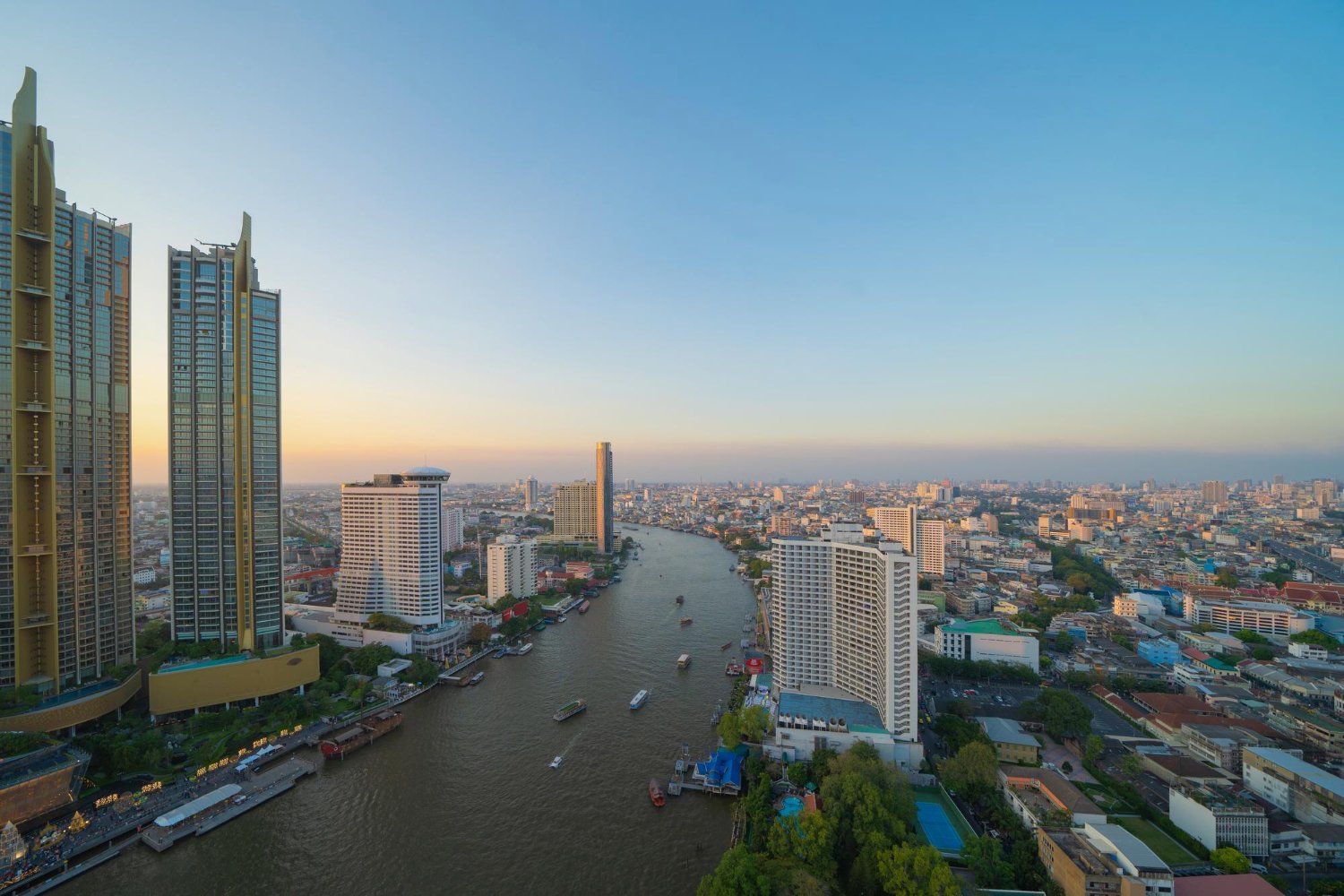
Chao Phraya river Bangkok historical view
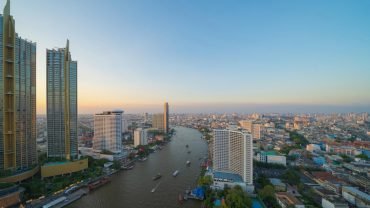
Walking Old Bangkok with knowledge of World War II changes perspective. The Chao Phraya River, now lined with hotels and ferries, once carried wartime logistics. Hua Lamphong station once dispatched trains supporting military transit. Bridges across the river were bomb targets, not sunset photo spots.
Bangkok survived because it was not turned into fortress city. It survived because Thailand chose alignment over open resistance in December 1941. It survived because Allied planners balanced military objectives with political strategy.
Manila was destroyed because it became final battlefield.
This difference reshaped two capitals permanently.
Bangkok’s modern expansion rests upon continuity. Manila’s rebuilding rests upon reconstruction.
Understanding this contrast deepens appreciation for Southeast Asia’s wartime complexity. Not all survival is heroic. Not all destruction is inevitable.
Bangkok stands today as capital that navigated war without losing its architectural heart.
Walk through Old Bangkok. Stand before the Grand Palace. Cross the river at sunset. Imagine sirens in the distance yet no artillery flattening the skyline.
Bangkok was not destroyed like Manila because it was never transformed into battlefield city.
Its leaders chose strategy over confrontation. Its geography supported dispersion. Its resistance movement preserved diplomatic leverage.
The capital endured bombs aimed at infrastructure but avoided siege aimed at annihilation.
That distinction defines its survival.
Bangkok survived World War II without becoming battlefield city.
Walk Old Bangkok through geopolitical eyes. Visit the Grand Palace, explore the river corridor, and imagine a capital that navigated empires and endured bombs without losing its heart.
Comment (0)