

When people imagine World War II in Southeast Asia, they often think of destroyed cities, battlefield campaigns, and large military confrontations. Manila burned in 1945. Singapore fell in 1942. Burma became a brutal front line between empires. Yet Thailand’s wartime experience unfolded differently. Beneath the appearance of alliance with Japan, a quiet resistance movement grew in shadows.
This movement, later known as the Free Thai movement, became one of the most important yet least internationally understood resistance networks of the Second World War. Its story is inseparable from the city where it quietly operated, the capital of Bangkok.
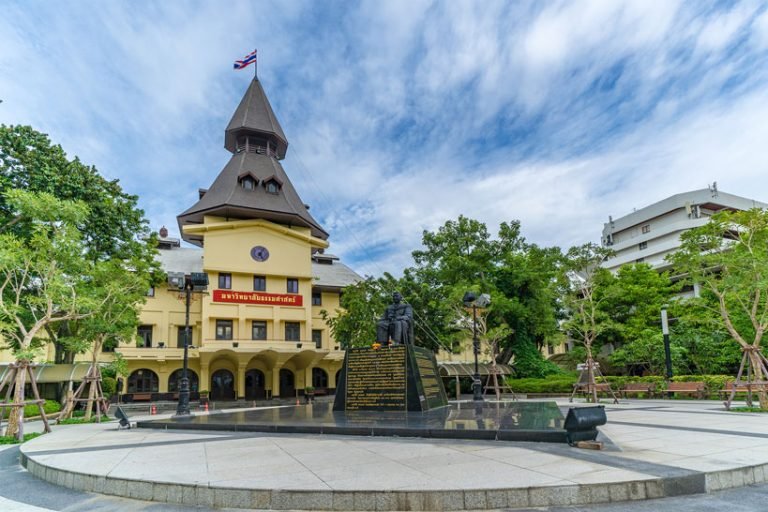
Historic Thammasat University campus near Chao Phraya River
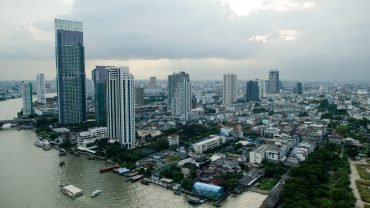
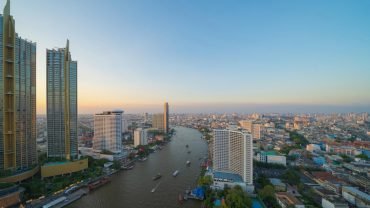
Bangkok during the war did not collapse into ruins. Government institutions continued to function. Temples remained open. Markets operated along the Chao Phraya River. Yet beneath this surface normalcy, intelligence networks formed inside universities, government offices, and diplomatic channels.
The Free Thai movement represented Thailand’s hidden war.
To understand why such a resistance movement emerged, one must return to December 1941. When Japanese forces entered Thailand during their rapid expansion across Southeast Asia, the Thai government chose cooperation rather than prolonged military resistance. Within hours of initial clashes, negotiations produced an agreement allowing Japanese troops to move through Thai territory toward British Malaya and Burma.
This decision prevented Thailand from becoming an immediate battlefield. However, it also placed the country in formal alliance with Japan.
Across Thailand, this alliance created deep political tension. Many Thai leaders believed cooperation was necessary to avoid invasion and destruction. Others feared the alliance compromised Thailand’s sovereignty and international standing.
Out of this tension, resistance quietly formed.
The Free Thai movement was not a conventional guerrilla army. It was a network of diplomats, students, military officers and civilians working both inside Thailand and abroad. Its members aimed to maintain contact with Allied powers while preparing for the eventual collapse of Japan.
Bangkok became one of the movement’s most important centers.
Unlike occupied colonial capitals where resistance required armed insurgency, Bangkok’s situation allowed a subtler form of opposition. Government institutions remained intact. Universities continued functioning. Civil servants retained positions within ministries. These spaces provided cover for intelligence activity.
One of the most influential figures connected to the movement abroad was Seni Pramoj, Thailand’s ambassador to the United States. When the Thai government declared war on the United States in 1942 under pressure from the Japanese alliance, Seni Pramoj refused to deliver the declaration to Washington.
Instead, he organized Thai students and expatriates into a resistance group that cooperated with American intelligence.
This external wing of the Free Thai movement provided the diplomatic foundation for Thailand’s postwar negotiations.
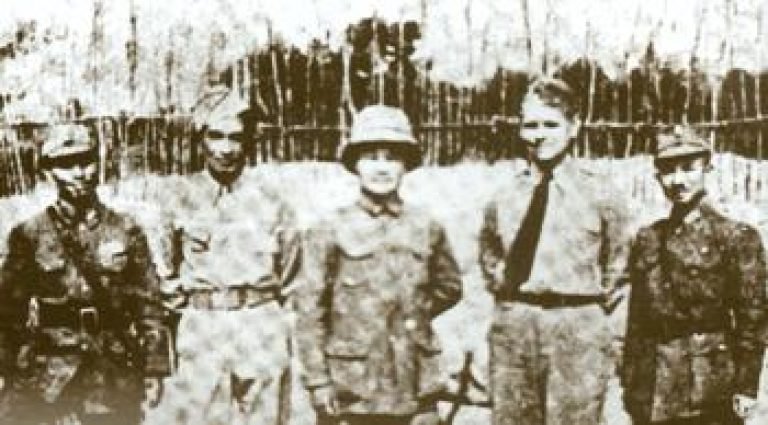
Free Thai movement in China
Inside Bangkok, resistance activities were quieter but equally significant. Communication channels developed between sympathetic officials, academics and Allied contacts in neighboring territories. Information about Japanese troop movements, infrastructure usage and logistical routes was quietly transmitted.
Universities played a particularly important role.
At Thammasat University, intellectual debate about Thailand’s wartime direction intensified. The campus, located near the Chao Phraya River in the historic Tha Phra Chan district, became an environment where political awareness flourished. Students and faculty discussed nationalism, sovereignty and the future of Thailand in a rapidly changing Asia.
Although the university did not operate openly as resistance headquarters, its intellectual networks contributed to the broader Free Thai movement.
Bangkok’s geography also helped facilitate quiet resistance. The city’s river and canal systems allowed movement and communication without relying entirely on monitored road networks. Boats traveling along khlongs could carry messages and materials discreetly.
Diplomatic buildings provided another layer of complexity. Foreign legations maintained contact with international networks even as the war disrupted formal diplomacy. Through these channels, fragments of information moved beyond Thailand’s borders.
The Free Thai movement thus developed into multi-layered structure.
Abroad, Thai students trained with Allied intelligence services. Some received military instruction from the American Office of Strategic Services, the predecessor to the CIA. These operatives later parachuted into Southeast Asia to coordinate intelligence gathering.
Within Thailand, sympathizers prepared local networks capable of assisting Allied operations should invasion or liberation occur.
Bangkok remained central to these efforts.
The city’s administrative institutions allowed resistance members to observe Japanese activity closely. Government departments interacting with Japanese military officials could quietly note logistics patterns. Railway administrators understood transport routes. Civil servants monitored supply flows.
All of this information proved valuable to Allied strategists planning operations across Southeast Asia.
The Free Thai movement did not operate without risk. Japanese intelligence monitored political activity closely. Open opposition could result in imprisonment or worse. Resistance therefore required careful balance between caution and communication.
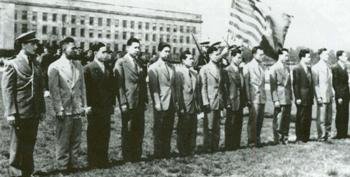
Free Thai movement
By 1944, the tide of war had turned against Japan. Allied forces gained momentum in the Pacific and Burma. Air raids began targeting infrastructure in Bangkok, particularly bridges and railways used for Japanese logistics.
For the Free Thai movement, this shift accelerated preparations for postwar diplomacy. Members worked to ensure Thailand would not be treated simply as defeated Axis state once Japan collapsed.
Their strategy succeeded.
When Japan surrendered in August 1945, Thailand was able to argue that its wartime alliance had occurred under coercion and that a significant internal resistance had supported the Allied cause.
The United States accepted this argument, partly because of the intelligence cooperation provided by the Free Thai movement.
As a result, Thailand avoided full Allied occupation. Bangkok remained administrative capital without foreign military government replacing Thai institutions.
This diplomatic outcome shaped Thailand’s modern history profoundly.
While other nations in Southeast Asia experienced direct colonial restoration or prolonged conflict after World War II, Thailand transitioned more smoothly into the postwar world. Bangkok retained political continuity and quickly became regional diplomatic center during the early Cold War.
The hidden war fought through intelligence and diplomacy thus preserved Thailand’s sovereignty.

The Free Thai Movement
Today, the story of the Free Thai movement remains less visible than battlefield histories elsewhere in Asia. There are no massive ruins marking its struggle. Instead, its traces lie in institutions, museums and historical memory.
Visitors interested in this history can explore the Free Thai Movement Museum, which preserves documents, photographs and artifacts from the resistance. Exhibits reveal how students, diplomats and officials cooperated quietly to influence the outcome of the war.
Walking through the historic districts surrounding Tha Phra Chan and Ratchadamnoen Avenue also provides insight into the political atmosphere of wartime Bangkok. These streets witnessed debates about national survival and international alignment.
The story of the Free Thai movement demonstrates that resistance during World War II did not always take the form of armed rebellion. In Bangkok, resistance meant intelligence, diplomacy and patience.
The movement’s success ensured that Thailand emerged from the war with its independence intact.
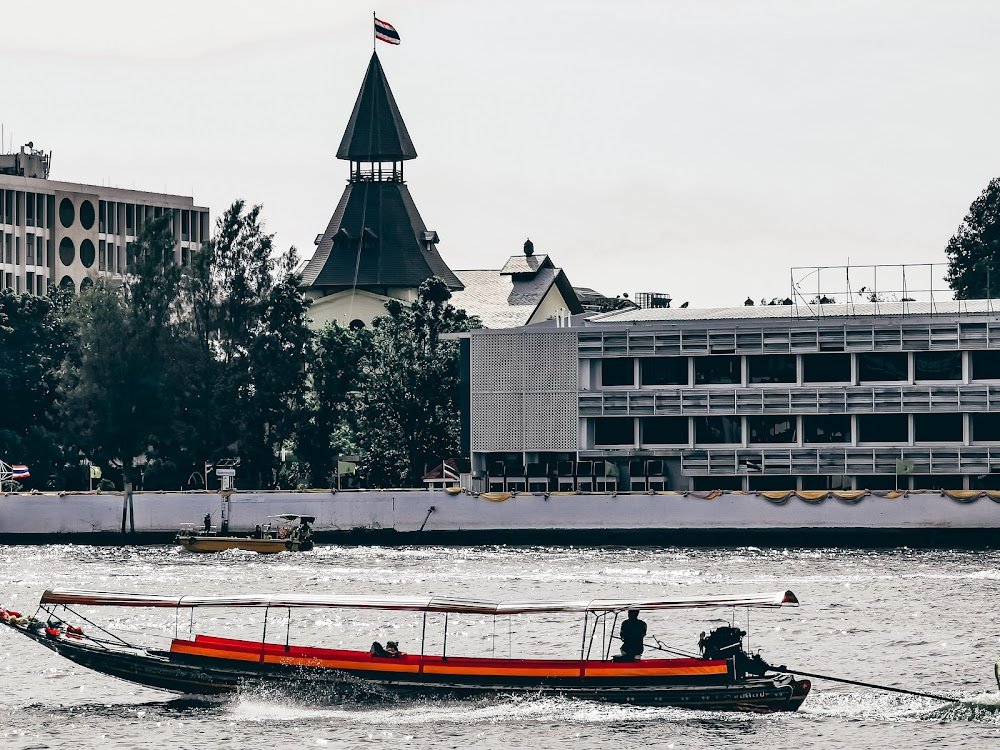
Tha Phra Chan riverside district historical Bangkok
Bangkok survived not because it avoided the war entirely, but because individuals within the capital quietly worked to shape its outcome.
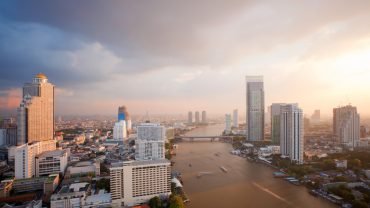
Today’s bustling city of elevated trains, markets and temples still carries that legacy. Beneath modern Bangkok lies a history of hidden war, fought not with tanks but with information and strategy.
Understanding this story adds depth to any visit.
The quiet riverfront of Tha Phra Chan, the academic halls of Thammasat University, and the preserved exhibits of the Free Thai Museum all remind visitors that Bangkok once stood at the center of one of Southeast Asia’s most remarkable resistance movements.
The hidden war of Bangkok was fought through intelligence and diplomacy.
Visit Thammasat University and the Free Thai Movement Museum to explore the places where students, diplomats and quiet resistance networks helped shape Thailand’s survival in World War II.
Comment (0)